

Interconnected Systems
Interconnected Physical and Socio‑Economic Systems. As new policies and technologies are developed amid climate and other global changes, they interact with environmental processes and institutions in ways that can alter the Earth’s critical life‑support systems. Fundamental mechanisms that determine many of these systems’ behaviors, including those related to interacting climate, water, food and socio‑economic systems, remain largely unknown and poorly quantified. Better understanding can help society mitigate the risks of abrupt changes and “tipping points” in these systems.
News + Media
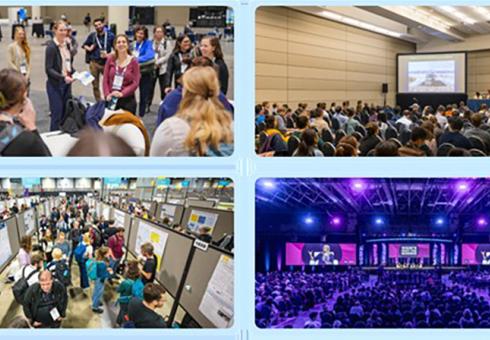
MIT CS3 presentations and sessions explore multiple sustainability challenges and solutions
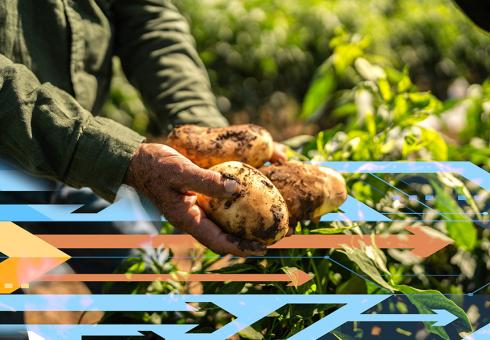
In some regions of the world, the poorest people may spend about 50 percent of their income on food, while the richest spend about 5 percent, finds paper co-authored by MIT CS3 Principal Research Scientist Jennifer Morris (MIT News)

MIT Prof./CS3 faculty affiliate Susan Solomon joins Cleo Abram’s “HUGE* If True” to discuss her 1985 research uncovering how chlorofluorocarbons were depleting the ozone layer, which led to the Montreal Protocol that banned the use of those chemicals. (“HUGE* If True)
Publications
Kroll, J.H., A.M. Fiore et al. (2026)
American Geophysical Union Fall Meeting, GC44F-01
Selin, N.E. and H. Selin (2026)
American Geophysical Union Fall Meeting, A34E-07
Chen, A., J. Senga, A. White, A.Y.H. Wong, L. Freese, M.L. Bell and N.E. Selin (2026)
American Geophysical Union Fall Meeting, GH34B-08