
Advancing integrated science. Informing decision‑makers. Addressing global change.
Our research improves understanding of sustainability challenges and helps decision‑makers address global change, enhancing well‑being for current and future generations.
Spotlight
Research
Our research advances fundamental understanding of the complex, interconnected physical and socio‑economic systems that affect human well‑being. We apply state‑of‑the‑art computational tools, integrating modeling and data analysis across disciplines in an era of increasing volumes of observational data. Ultimately, we aim to produce actionable science that supports equity and justice within and across generations.
Interconnected Physical and Socio‑Economic Systems. As new policies and technologies are developed amid climate and other global changes, they interact with environmental processes and institutions in ways that can alter the Earth’s critical life‑support systems. Fundamental mechanisms that determine many of these systems’ behaviors, including those related to interacting climate, water, food and socio‑economic systems, remain largely unknown and poorly quantified. Better understanding can help society mitigate the risks of abrupt changes and “tipping points” in these systems.

Integrated Modeling and Data Analysis. We conduct modeling and data analysis across disciplines in an era of increasing volumes of observational data. MIT multi‑system models and data products, building on and extending from the well‑known Integrated Global System Modeling framework and the MIT Economic Projection and Policy Analysis (EPPA) model, provide robust information to inform decision‑making and shape the next generation of sustainability science and strategy.

Actionable Research for Equity and Justice. Our research is designed to inform action associated with measurable outcomes aligned with supporting human well‑being across generations. This requires engaging a broad range of stakeholders, including not only nations and companies, but also NGOs and communities that take action to promote sustainable development—with special attention to those who have historically borne the brunt of environmental injustice.
Annual Report
News
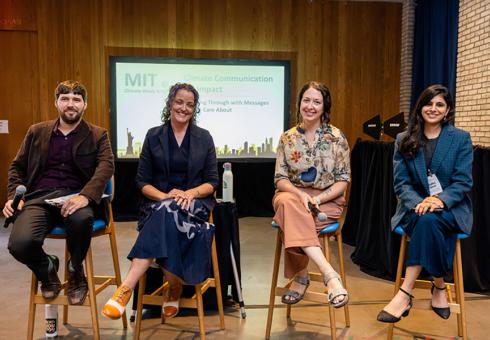
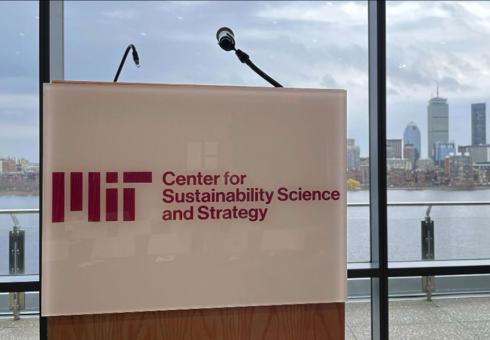
A cross-section of the MIT community convened discussions on topics ranging from data centers and super pollutants to agriculture and education. CS3-affiliated presenters included Professor Jesse Kroll and postdoc Dominic White. (Office of the Vice President for Energy and Climate)
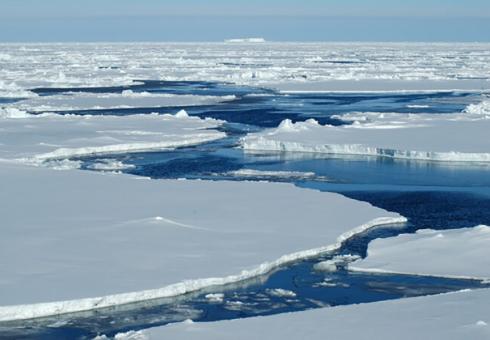
By separating the effects of cold seawater, Antarctic sea ice, and changing ocean circulation on deep-ocean carbon storage, new research co-authored by MIT Professor Raffaele Ferrari and Research Scientist Jonathan Lauderdale--both CS3 affiliates--sheds light on how these interactions influence climate patterns (MIT Department of Earth, Atmospheric and Planetary Sciences)
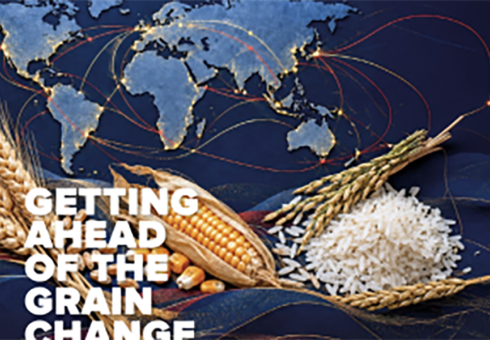
Jameel Index for Food Trade and Vulnerability and J-WAFS/CS3-affiliated Research Scientist Kenneth Strzepek featured in October issue of Miller Magazine (Miller Magazine)
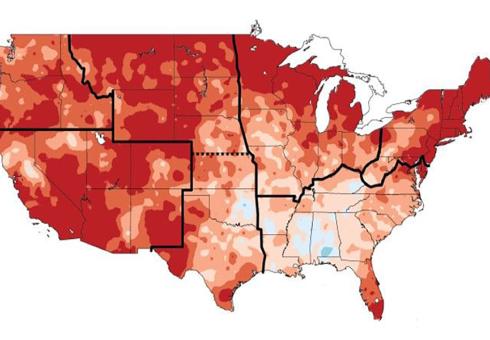
Findings indicate where adaptive measures are needed most