News Release
MIT CS3 presentations and sessions explore multiple sustainability challenges and solutions

MIT CS3 presentations and sessions explore multiple sustainability challenges and solutions
In some regions of the world, the poorest people may spend about 50 percent of their income on food, while the richest spend about 5 percent, finds paper co-authored by MIT CS3 Principal Research Scientist Jennifer Morris (MIT News)
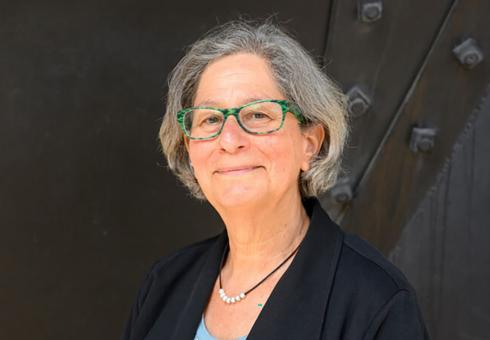
MIT Prof./CS3 faculty affiliate Susan Solomon joins Cleo Abram’s “HUGE* If True” to discuss her 1985 research uncovering how chlorofluorocarbons were depleting the ozone layer, which led to the Montreal Protocol that banned the use of those chemicals. (“HUGE* If True)
Commentary co-authored by MIT Professor/CS3 faculty affiliate Christopher Knittel argues for a mileage-based approach (WBUR)
MIT Professor/CS3 faculty affiliate John Sterman and co-author of a forthcoming book chapter find that AI’s biggest climate threat isn’t the power draw of data centers — it’s the economic growth AI unleashes (MIT Sloan School of Management) (MIT Sloan Commentary: Can AI’s climate benefits outweigh its costs?)
MIT CS3 and MITEI Principal Research Scientist describes her career path and its potential impact
Award supports distinguished faculty advancing global environmental research and education
Using modern tools, MIT Professor/CS3 faculty affiliate Susan Solomon and co-authors also determined that carbon tetrachloride, used as a dry-cleaning and degreasing agent as early as the 1930s, was at the root of early ozone loss (MIT News) (Coverage: Gizmodo)
CS3-affiliated work on carbon dioxide removal and climate change uncertainty among recent titles from Institute faculty and staff (MIT News)
MIT EAPS Professor/CS3 faculty affiliate recognized for "groundbreaking advances and leadership in atmospheric and climate sciences that shaped global policy for Sustainable Development” (MIT Department of Earth, Atmospheric and Planetary Sciences) (Coverage: Taipei Times)
Strong and consistent evidence shows that the entire climate system is continuing to heat, driving rapid global warming, finds the latest Indicators of Global Climate Change (IGCC) report, which was co-authored by MIT CS3 Research Scientist Luke Western (University of Leeds School of Earth, Environment and Sustainability)
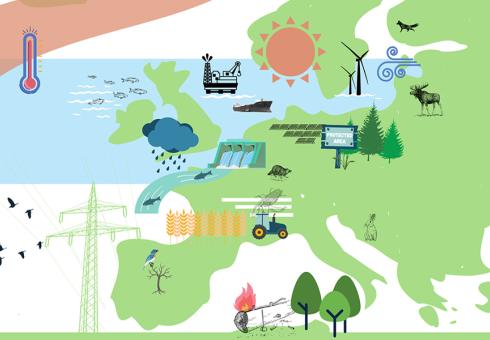
A new MIT CS3 study evaluates economic impacts of combining climate and biodiversity action