
News Releases

MIT researchers develop tool to assess regional risks of climate change, potential impacts on local infrastructure and planning. Climate scientists cannot attribute any single weather event — whether a drought, wildfire or extreme storm — to climate change. But extreme events, such as Hurricane Sandy, are glimpses of the types of occurrences the world could be more vulnerable to in the future. As the devastation left by Sandy continues to reverberate, decision-makers at every level are asking: How can we be better prepared?
MIT researchers have developed a new tool to help policymakers, city planners and others see the possible local effects of climate change. Its regional projections of climate trends — such as long-term temperature and precipitation changes — allow local planners to evaluate risks, and how these risks could shape crops, roads and energy infrastructure.
“As we see more extreme events like Sandy, the importance of assessing regional impacts grows,” says lead researcher Adam Schlosser, assistant director for science research at MIT’s Joint Program on the Science and Policy of Global Change. “Our approach helps decision- and policy-makers balance the risks … so they can better prepare their communities for future impacts climate change might bring.”
For example, Schlosser says, if a community is planning to build a bridge, it should look at — and plan for — the expected magnitude of flooding in 2050.
“In areas devastated by Sandy, the rebuilding of lost property and infrastructure will come at considerable cost and effort,” Schlosser says. “But should we rebuild to better prepare for future storms like these? Or should we prepare for stronger and/or more frequent storms? There remains considerable uncertainty in these projections and that implies risk. Our technique has been developed with these questions in mind.”
Schlosser’s research partner, Ken Strzepek, a research scientist at the Joint Program on the Science and Policy of Global Change, notes policymakers are now often given little more than a set of extreme circumstances to consider.
“Policymakers don’t like extremes or worst-case scenarios,” Strzepek says, “because they can’t afford to plan for the worst-case scenarios. They like to see what is the likelihood of different outcomes. That’s what we’re giving them.”
Getting results
In this new method, the researchers quantify the likelihood of particular outcomes and add socioeconomic data, different emission levels and varying degrees of uncertainty. Their technique combines climate-model projections and analysis from the Coupled Model Intercomparison Project used by the Intergovernmental Panel on Climate Change, and the MIT Integrated Global System Modeling (IGSM) framework. The MIT framework is itself a combined computer model that integrates an economic, human system with a natural, earth system.
“This approach allows us to widen the scope and flexibility of climate analysis,” Schlosser says. “It provides us with efficient capabilities to determine climate-change risks.”
The initial study using this approach — accepted by the Journal of Climate and available on the journal’s website — compares a business-as-usual case with a scenario that reduces emissions. The researchers find that lowering emissions reduces the odds of regional warming and precipitation changes. In fact, for many places, the likelihood of the most extreme warming from the business-as-usual case could be eliminated almost entirely.
The study finds diverse climate-change outcomes: southern and western Africa, the Himalayan region, and the area around Hudson Bay in Canada are expected to warm the most; southern Africa and western Europe see the greatest chance of drier conditions. Meanwhile, the Amazon and northern Siberia may become wetter.
Putting the method to work
Schlosser and Strzepek are pursuing partnerships with communities to put their method to work. But while it’s important for every community to begin building climate adaptation into its infrastructure plans, developing countries could reap the greatest benefits.
Malcolm Smart, senior economic adviser for the U.K. Department for International Development, who was not involved in this research, says, “This is not only an innovative and multidisciplinary approach to the problem of deep uncertainty, but also a potentially very valuable tool to help vulnerable developing countries cut the cost of damages from climate change.”
Strzepek explains why: In the United States, infrastructure plans are designed based on a high standard of risk, while in developing countries projects are typically built to a lower standard of risk. “But if we find that [a developing country] will see greater flooding, and if we’re fairly certain of this, then they would save money in the long run if they built roads to withstand those flooding events,” Strzepek says.
Schlosser and Strzepek traveled to Finland earlier this fall to present their research at a United Nations University-World Institute for Development Economics Research conference. They’ve partnered with this organization to inform developing countries of this new tool for assessing climate change.
“Our approach allows decision-makers to cut down on the level of risk they’re taking when allocating their limited funds to development projects,” Schlosser says. “This can help them see where there are economic benefits to taking a risk-averse approach today, before the damage is done.”
Related research: Climate Change: A Developing Challenge for Poor Nations
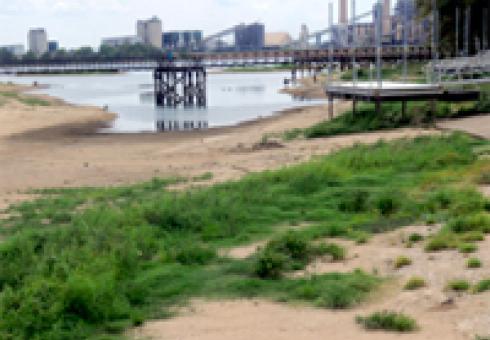
The 2012 drought in America brought to light the challenges we face when there isn't sufficient water to cool our nation's power plants. Conventional fossil-fuel and nuclear power plants require water to cool the steam they generate to make electricity. In 2005, power plants accounted for over 40 percent of all freshwater withdrawn in the U.S. Many power plants need a huge, steady supply of water to operate, and in hot dry summers, that water can become hard to secure.
On October 18, 2012, the Union of Concerned Scientists hosted a webinar discussion on the challenges and opportunities for electricity production in a water-constrained future.
The webinar featured:
Camille Calimlim, committee staff, Water and Power Subcommittee, U.S. House of Representatives, who discussed the energy-water policy landscape and opportunities, including the Energy and Water: Connection and Conflict report prepared by Rep. Edward Markey (D-MA) for the Committe on Natural Resources.
John Rogers, senior energy analyst and co-manager of the Energy and Water in a Warming World Initiative (EW3), Union of Concerned Scientists, who presented on current power plant water use and highlighted the findings from the EW3 report, Freshwater Use by U.S. Power Plants: Electricity's Thirst for a Precious Resource.
C. Adam Schlosser, principal research scientist and assistant director of science research in the Joint Program on the Science and Policy of Global Change, MIT, who discussed the water implications of an 80 percent renewable energy future as articulated in the NREL Renewable Electricity Futures Study for which he was a lead author.
RELATED - News Release: Double the Benefits, Clean Energy Also Saves Water

Tibetan Buddhist leader urges a more enlightened view of self-interest in remarks at MIT conference. The Dalai Lama called for increasingly enlightened stewardship of Earth’s environment and resources in public remarks on the MIT campus on Monday.
“We have the responsibility to take care of the whole planet,” said the Dalai Lama, the exiled leader of Tibetan Buddhism, adding: “It is not a luxury, it is a matter of our own survival.”
The Dalai Lama’s remarks came during a pair of panel discussions he participated in, along with a series of high-profile scholars, focused on the ethical and social challenges of climate change and resource scarcity — including the limited availability of food and water for a global population that is 7 billion and growing rapidly.
The event was hosted by the Dalai Lama Center for Ethics and Transformative Values at MIT, in association with MIT’s Office of Religious Life, and was part of a three-day visit to MIT and the Boston area by the Dalai Lama.
‘Wise-selfish, rather than foolish-selfish’
Both panel discussions on Monday featured 10-minute presentations by four scholars, with the Dalai Lama commenting on each set of remarks. Many of the presentations converged on related questions about how members of society can balance their own material self-interest with the altruistic actions needed to slow global warming and distribute resources fairly.
In the first panel on Monday, “Ethics, Economics and Environment,” Kerry Emanuel, the Cecil and Ida Green Professor of Earth and Planetary Sciences at MIT, outlined the ominous trajectory of global warming.
“If we choose to do something about this, we have to make that decision very soon,” Emanuel said, adding: “How can we be persuaded to make material sacrifices to reduce the serious risk of climate change?”
The Dalai Lama suggested that educating people about the dangers was a critical part of any response to climate change — and one that falls not just upon scientists, but cultural leaders as well.
“For some people, the message from religious leaders can be more effective,” the Dalai Lama explained.
“Maybe you and I should have a road show,” Emanuel joked in response.
Rebecca Henderson, a professor at Harvard Business School, suggested that despite the pressures business executives feel to show short-term profits, most would be open to changing their practices if presented with clean-energy solutions. She also noted the possible impact: The world’s largest 1,000 firms account for 30 percent of the planet’s energy consumption. For companies or nations, she added, “To say we can’t move until the whole world moves is really a cop-out.”
In response, the Dalai Lama noted that although our actions will always have an inherently selfish element, it is still possible to act in a way that is “wise-selfish, rather than foolish-selfish.”
Penny Chisholm, the Lee and Geraldine Martin Professor of Environmental Studies at MIT, made the case against geoengineering as a strategy for dealing with climate change. “We don’t understand enough, nor can we understand enough about our world, to be able to control it one parameter at a time,” said Chisholm, who also noted that “the risks are enormous, it is irreversible, and the gains are questionable.”
However, the Dalai Lama, while noting his own lack of scientific expertise, seemed willing to entertain the idea of such new approaches, commenting that, in general terms, “It is our responsibility to look.”
Concluding the first panel, Thomas Malone, the Patrick J. McGovern Professor of Management at the MIT Sloan School of Management, made the case for networked technologies as a means of creating solutions to our current problems, noting that networks “can harness the collective intelligence of thousands of people around the world.”
‘Maximum inner peace through inner strength’
The second panel, “Peace, Governance and Diminishing Resources,” examined specific resource-scarcity issues. Jonathan Foley, director of the Institute on the Environment at the University of Minnesota, noted that about 1 billion of the world’s 7 billion people already suffer from a lack of food. He suggested a series of ways to address the problem, from better production efficiency to rethinking diets and reducing waste.
“We have the tools to do this, but we maybe don’t have the will or compassion or ethical framework,” Foley said.
James Orbinski, a professor of medicine at the University of Toronto and former head of the humanitarian group Doctors Without Borders, heralded the “revolution in global health” stemming from new technologies developed in the last 15 years, but noted that significant disparities in health remain in place, which he called a “morally unacceptable set of outcomes.”
Zeynep Ton, an adjunct associate professor of operations management at MIT Sloan, argued that the world suffers from another shortage as well: too few good jobs. Companies that treat employees better and pay them more, she said, can perform better as a result. Employees, she said, should be seen “not as a cost to be minimized, but as an asset to be maximized.”
John Sterman, the Jay W. Forrester Professor of Management at MIT Sloan, gave the final presentation, speaking in broad terms about the need for the world’s wealthy to reduce consumption so as to lessen greenhouse-gas emissions. Technological innovation, he said, would be a necessary but insufficient part of any climate-change solution.
“The core problem is around this sense of what it is that buys people happiness and well-being,” Sterman said. “Those of us who are so rich but not so happy can change the way we live.” Otherwise, he warned, the “spiritual pollution” of unchecked materialism means we will “destroy the planet and our own future.”
In his comments during the afternoon session, the Dalai Lama praised the scholars for not just making diagnoses about the world’s needs, but because “they also have ideas to lessen these problems.”
In response to Sterman’s observations, the Dalai Lama said “I fully agree” that people needed to re-evaluate their sources of happiness, adding, “We have to cultivate these moral principles.” Individuals, the Dalai Lama said, could find “maximum inner peace through inner strength,” not material possessions.
For many people, he added, that kind of change could come through better education. Still, the Dalai Lama added, “Some of these [civic] problems are truly urgent,” leaving an unresolved matter for everyone: “how to influence decision-makers.”

Representatives of Obama, Romney camps lay out differences in crucial policy domains of energy and the environment.
Video: Watch the debate 
There could hardly be a more pressing issue than energy policy at a time of global warming, but it has rarely featured in this year’s presidential campaign. Until last Friday night at MIT, that is, when representatives of the Obama and Romney campaigns squared off in a crisp, serious-minded debate about energy, revealing significant differences between the candidates.
At the event, hosted by the MIT Energy Initiative (MITEI), Oren Cass, policy director for Republican candidate Mitt Romney, summarized the challenger’s positions by noting that the former Massachusetts governor believes increased domestic fossil-fuel production should be a principal focus of energy policy.
There has been a recent “energy revolution” in the techniques used to extract fossil fuels, Cass asserted, making “energy independence on this continent … a potential reality for the first time in decades.” The pressing issue, he said, is whether “we embrace the revolution that actually has occurred … or do we attempt to stifle it?”
The Obama administration, Cass charged, has invested too heavily in promoting alternative energy, and has been insufficiently aggressive in backing fossil fuels: not opening up enough public lands and offshore waters for oil and gas drilling, and not yet approving the Keystone XL pipeline, which is intended to deliver oil to the United States from Canada.
“The administration’s policies are misaligned with the goal of increased production,” Cass said. Representing President Barack Obama, Joe Aldy, a professor at Harvard University’s Kennedy School of Government who served as a special assistant to Obama for energy and environment in 2009 and 2010, made the case that an “all-of-the-above strategy” is needed to address America’s energy needs — increasing production, technological innovation and efficiency.
“When I think about what the American public wants, it’s to look for the kind of balanced approach the president is pursuing,” Aldy said, adding: “We’re going to use every tool we have available. Let’s not just focus on fossil fuels. We can do a lot in renewables, whether it’s for biofuels, wind or solar. We need to be creative in how we do this. We need to take advantage of opportunities [for] energy efficiency.” While domestic oil production is at a 14-year high, Aldy said, Obama has also signed new fuel-efficiency standards for the nation’s automotive fleet that will mandate an average of 54.5 mpg by the year 2025.
Cass and Aldy also presented differing views on the government’s proper role in fostering energy innovation. Cass said that Romney supports ARPA-E, the federal government’s program to develop new clean-energy technologies, which was first funded with $400 million from the economic stimulus act that Obama signed in early 2009. However, Cass noted a few times, Romney would prefer to see the lion’s share of government backing for innovation go toward early stage basic research
“Ultimately the biggest source of difference [between the campaigns] … is the question of what is the right way to promote innovation,” Cass said, adding that Romney believes in “government support in the very early stages of research, and reliance on the private sector to commercialize technologies to bring down their costs and to hopefully succeed in the market.” By contrast, Cass asserted, Obama has supported “massive subsidies for chosen industries ... which, in our judgment, has not been a success.”
Aldy countered that the Obama administration has helped advance clean energy through its ARPA-E subsidies and created 250,000 jobs in the process. “We need to continue to diversify … and continue to advance wind and solar,” he said, asserting that there is “a lot of job creation going on, it’s high-quality jobs in the manufacturing sector.”
Let moderation be your guide
The 90-minute debate, in front of a crowd of several hundred in MIT’s Kresge Auditorium, was moderated by Jason Pontin, editor-in-chief and publisher of Technology Review. The campaign representatives hewed closely to their time allowances throughout the debate, and Pontin permitted them a few unscheduled but concise rebuttals to address areas of particular disagreement. Four other journalists and three students from area universities offered questions as well at the forum, formally called the MITEI Presidential Energy Debate.
In addition to debating energy production and innovation, the discussion also turned to the environmental effects of industrial production. One of the sharpest areas of disagreement pertained to the Environmental Protection Agency’s Mercury and Air Toxics Standards, issued in 2011, which regulate emissions from coal-fired powerplants.
“The mercury standard makes incredible sense in terms of health,” Aldy said, mentioning the EPA’s estimate that the law will prevent 11,000 premature deaths per year.
Cass underscored Romney’s opposition to it, arguing that the benefits did not equal the costs of the measure, including the “unemployment of a significant number of workers” at coal plants that could be shuttered on account of the measure. All told, the measure constitutes “one of the most outrageously unjustified regulations the country has ever seen,” Cass said.
In his reply, Aldy described that characterization of the regulation as “shocking.”
Cass also repeatedly criticized Obama for not being more direct about his position on so-called cap-and-trade legislation, among other matters. In response, Aldy noted that Obama “could not find any Republicans willing to work on a bill in the Senate in 2010” involving cap-and-trade, after the House of Representatives passed legislation for it in mid-2009.
The two representatives did find common ground on a statement Aldy made early on in Friday evening’s proceedings: “There is a clear choice in this election.”

Read more from the Mozambique News Agency.
MIT and U.N. researchers team up to tackle some of the heftiest climate change challenges developing countries will face as they confront an uncertain future.
Higher temperatures, extreme flooding, longer droughts — for those living in the developed world, the symptoms of climate change mean building higher bridges and paying more for a bowl of cereal. But for those in low-income countries trying to grow and develop, climate change is yet another roadblock.
"In developing countries — and particularly in Africa — they're building their infrastructure at a very fast rate. They're also the most vulnerable to climate change impacts like flooding," says Ken Strzepek, a researcher with MIT's Joint Program on the Science and Policy of Global Change, who has joined forces with the United Nations University-World Institute for Development Economics Research (UNU-WIDER) to help policymakers use a holistic approach to their development strategies.
He and his MIT colleague Adam Schlosser traveled to Finland to present their research at a UNU-WIDER conference last week. The conference was an opportunity to share the results of a multi-study analysis sponsored by UNU-WIDER and released in August as a special edition version of the journal Review of Development Economics. Strzepek was a co-editor.
In their research, Strzepek and colleagues from the Universities of Copenhagen and Colorado take temperature and precipitation projections and look at how flooding, droughts and other impacts of climate change could shape factors such as crop yields, roads and energy infrastructure — all critical for a nation's growth. In doing so, they help governments in these low-income countries decide "Do we adapt now to an uncertain future? Or do we wait and potentially pay more later?" Strzepek says.
Knowing what is unknown
The researchers' main conclusion from their work is that there is so much overall uncertainty surrounding the impacts of climate change that how a country should respond depends largely on very specific factors.
Strzepek gave Tanzania as one example from his research. Like most living in developing nations, the people of Tanzania rely heavily on rain-fed agriculture. Because of the potential for increases in floods and droughts, climate change is seen as a major threat to their main source of food and income. But Strzepek found there was a very large variability in how and how much these changes could affect the country.
"You can't just go to the prime minister and say agriculture is going to go down 20 percent," says Strzepek, "there's too much uncertainty."
But there is very little uncertainty when Strzepek looked at Mozambique. There, it was clear that flooding and sea level rise would be two critical threats to the economy, and in particular to roads needed to transport food from rural farms to city populations.
"So it would make sense for the government to spend the money now to build the roads in a way that makes them less vulnerable in the future," Strzepek says.
As a third example, he studied the development of hydropower in Ethiopia, which they plan to use as an electricity export to help fund roads, schools and other social investments. In studying future impacts to hydropower, Strzepek finds that by 2050 climate change could both positively and negatively affect the energy source. But in the short term, he recommends that the government continue their plan.
"Climate change won't affect the plans that are under way now," Strzepek says. "In 15 years, we'll know a lot more about the direction of climate change and we'll be able to adapt at that time."
Strzepek found too much uncertainty to act in Tanzania, too much not to act in Ethiopia, and very little uncertainty in Mozambique. While the case studies are a needed first step at shedding light on the harsh realities of developing under climate change, much is still unclear.
With the current approach, "you can only look at the extremes," Strzepek says. "Policymakers don't like extremes or worst case scenarios because they can't afford to plan for the worst case scenarios. They like to see what is the likelihood of different outcomes."
That is the next phase of the research. Strzepek and Schlosser are beginning to use the MIT Integrated Global System Modeling (IGSM) framework, which, on a global scale, quantifies the likelihood of various climate predictions and compares them with different policies. They are now bringing this technique down to a regional scale.
Schlosser previewed this approach at the UNU-WIDER conference, while Strzepek gave an example of how it could be used.

MIT symposium highlights women’s increasing leadership in energy research, industry and government.
Female leaders are playing a growing role in advancing the development of clean-energy technologies, helping to advance plans for carbon reduction, reduce pollution and greenhouse gas emissions, and foster job creation. Some of these women were honored in a daylong symposium at MIT on Friday, Sept. 28, the inaugural event of an initiative, created in 2010 by the U.S. Department of Energy with eight partner governments, called Clean Energy Education and Empowerment, or C3E. The MIT Energy Initiative partnered with C3E to produce the symposium as well as an awards program.
MIT president emerita Susan Hockfield opened the symposium, recalling the launching of MIT’s Energy Initiative as one of her very first acts upon assuming the Institute’s presidency eight years ago. “The most important challenge for this generation,” she said, “is building a sustainable energy system for the future.”
That requires a multipronged approach, she said: “Great technology will never win alone; it needs to be paired with policy.” The key, Hockfield said, is “turning ideas into action.” When she gives talks on energy, she said, her audiences are largely male. But, she added, “Women are awfully good at turning ideas into action.”
Many of the women who were featured as speakers or who received awards at the symposium have embodied those concepts as leaders of companies, as government officials, or as researchers or educators.
One of those leaders is South Africa’s minister of energy, Elizabeth Dipuo Peters, who gave a keynote address. “The development of the clean-energy sector will revolutionize the energy sector,” she said.
In Africa, while the availability of grid-provided electricity varies greatly, overall “the proportion without access is higher than on any other continent,” Peters said. That lack of electricity, she said, “has simply crippled industrialization in Africa.” Globally, she said, about 1.5 billion people lack access to reliable electricity, which she called “a fundamental need.”
Some 85 percent of South Africans have regular access to electricity, leading the continent’s 54 nations, Peters said, adding, “People follow where the bright lights are shining.” But decentralized power systems could leapfrog traditional grids — much as the explosive growth of cellphones in the developing world has bypassed traditional telephone networks.
Nontraditional energy sources could also have a major impact in Africa, Peters said. “The ocean currents along 2,000 kilometers of coastline could meet all of our energy needs,” she said. Or, through a widespread deployment of solar power, she said, “South Africa could meet all of Africa’s energy needs.”
Africa is “poised for change,” Peters concluded. “The 21st century is indeed Africa’s century, with a bright future.”
Other speakers at the symposium echoed that call for innovative energy solutions in developing nations. Richenda Van Leeuwen, director for energy and climate at the Energy Access Initiative Team of the UN Foundation, said that “some developing countries are ahead of where we are here at home” in their efforts to develop decentralized energy systems.
Allison Archembault, president of Earthspark International, described her organization’s work to bring electricity to Haitians, only 25 percent of whom now have regular access. To remedy that, EarthSpark provides decentralized battery-charging facilities and rents out charged batteries for use in lighting, cellphone charging and other needs. Some of these customers, in turn, rent out charging capacity to their neighbors for a small fee. By displacing the kerosene most Haitians use for lighting, the organization not only cuts the cost of energy, but also eliminates a major source of indoor pollution.
Rhonda Jordan, a doctoral student in MIT’s Engineering Systems Division, described a startup called Egg Energy that has been deploying decentralized systems in Tanzania, where only 14 percent of people have access to electricity. There, she said, the issue is a “last-mile” problem: The country has a widespread electric grid, but alongside a highly inefficient distribution system and prohibitive costs. Egg Energy been targeting Tanzania’s rural homes and small businesses, providing access to power produced either by the grid or by off-grid solar power systems, which are used to charge batteries that can each provide about two days of electricity for household use.
The symposium’s speakers ranged from those working on small-scale individualized energy solutions to those working at the highest levels of government or corporations. But, these leaders pointed out, with many national and international energy plans stalled, local initiatives often are leading the way. Among other things, energy efficiency has been embraced by some states and cities, forging ahead of national standards.
Henrietta Davis, the mayor of Cambridge, said that “action on things like energy efficiency is very much on the local level,” pointing out that, besides Cambridge, cities including Boston, New York, Los Angeles and Washington have instituted efficiency programs of their own.
“The time is finally right for energy efficiency to be considered as a national strategy in itself,” said Kateri Callahan, president of the Alliance to Save Energy, which works with government officials and corporate and NGO executives to establish strategic energy plans.
One highlight of the symposium was the presentation of a Lifetime Achievement Award to Mildred Dresselhaus, Institute Professor Emerita of Physics and Computer Science and Engineering. She received tributes from two former students, one of whom called her a “bhodisatva, a bringer of enlightenment,” and another who said, “Millie changed my life,” and has “remained my mentor, ever after I left here years ago.”
MIT President L. Rafael Reif presented the award to Dresselhaus, citing her significant accomplishments in developing thermoelectric devices. “Everyone who spends a few minutes with her,” he said, “knows the brilliance of her mind.”
Six other awards were also presented, along with a student poster award selected by symposium participants.
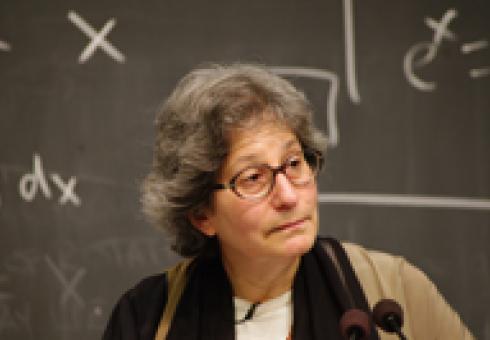
Atmospheric science pioneer Susan Solomon speaks on past environmental accomplishments, technology’s role and how history should be our guide to meeting today’s global challenges.
By: Vicki Ekstrom Few can speak with as much authority on the topic of environmental success as Susan Solomon.
An MIT professor of atmospheric chemistry and climate science, Solomon was the first to identify the chemical process that causes the ozone hole, and she made some of the first measurements in Antarctica demonstrating that chlorine-containing chemicals that used to be in refrigerators and spray cans are the cause of ozone depletion.
In a Sept. 13 talk, Solomon used the phasing out of these chemicals, known as chlorofluorocarbons (CFCs), as well as the phasing out of lead in indoor paint and gasoline, as successful examples from which the world could learn how to meet today's most critical global challenge: climate change.
VIDEO: Watch the event
CFCs and lead were phased out mainly because of the clear evidence of their danger and strong public understanding of personal health impacts, explained Solomon, who came to MIT last year from the U.S. National Oceanic and Atmospheric Administration and the University of Colorado.
In the case of CFCs, the real reason they were able to be phased out "was because of us," Solomon said.
"Most of these CFCs came from spray cans everyone was using for hairspray and deodorant, so one of the primary sources was literally in your medicine cabinet at home."
When two chemists found that CFCs might deplete the ozone layer and increase risks of skin cancer, "that was enough to get people concerned … [and] it wasn't that difficult to make the change. All you had to do was 'get on the stick,'" Solomon said, parodying a well-known advertisement from that era.
"The key thing that this did was take something that had been very good business and turn it into bad business," Solomon said. To meet the shifting consumer demand, "technological successes were achieved in sector after sector where chlorofluorocarbons were used." Public understanding and action spurred the technological advancements that paved the way to success. But gaining that broad public support isn't always easy.
In the case of lead, the trail of scientific evidence warning of health impacts went back as far as the Roman Empire, and perhaps even further. Yet it took many centuries before real action was taken.
"One of the reasons we were slow in doing something about lead was because of scientists who were skeptics," Solomon said, displaying a clear parallel to the climate change issue.
In the end, it was civil rights that spurred public engagement, as poor African American children living in deteriorating housing and near highways were found to have higher levels of lead in their blood, Solomon said.
Solomon also pointed out that the developed world had the infrastructure and institutions to make these changes possible.
"It's easy to knock the EPA these days, but the EPA, FDA, Consumer Product Safety Commission, those are all organizations that we have to thank."
Today's environmental challenge: climate change
Many of the underlying health and human rights concerns from the past are alive today, as the world confronts climate change.
The ethical dimension is especially disturbing, and it's making the problem even more complex and difficult to address. Solomon explained that the average person in the developed world emits a 1,000 times more emissions than the average person in Chad, 200 times more than those in Ethiopia, 80 times more than those in Kenya, and 20 times more than those in India.
"Six billion live in the developing world and they emit about five times less CO2 per person than the one billion of us in the developed world," Solomon said.
At the same time, those countries want to grow and develop. If they choose to grow using fossil fuels like the developed world, global emissions will go up significantly.
"So the key question, the key sustainability issue is, what about those peoples' future?" she said. "Should China pay more to develop than we did? Should Africa?
Such questions aren't sparking the same level of public engagement the world saw before phasing out lead and CFCs, but Solomon thinks they should. "We're in the developed world, we have air conditioning, we have comfortable lives, we have to think beyond us."
While Solomon notes that she personally takes the bus and does what she can to reduce the amount she emits, she's not fooling herself into believing that such actions from everyone will be enough.
"This issue will not be solved by giving up your spray deodorant, this issue won't be solved by taking the bus," Solomon says. "The problem is much bigger."
With no one silver bullet on the horizon, Solomon says research on many different approaches is critical. That could include research on reducing deforestation, increasing wind and solar power, using more efficient cars and building techniques, expanding nuclear, gas and biofuel energy, or employing carbon capture and storage techniques.
To gain this fundamental research and development will require a "bottoms-up technology policy where we start as consumers saying we need a space race for energy technology," Solomon says. "That's what I think we need because engineering and technology has to pave the way. That's why I'm at MIT."

MIT researchers have built a model that will be further developed as part of an NSF-funded project to track how chemicals get to remote Arctic environments.
By: Vicki Ekstrom
Listen to researcher Noelle Selin on Alaska's KNOM radio here (segment begins at 3m 42s) It's been more than a decade since global leaders met in Stockholm, Sweden, to sign a treaty with the goal of eliminating persistent organic pollutants making their way into our food chain — such as harmful pesticides like DDT that nearly wiped out the American Bald Eagle. While leaders have come a long way in restricting these types of pollutants, contamination of the Arctic remains a problem. Researchers at MIT are working to help inform policies that more effectively address contamination problems with their latest research and the help of a new grant from the National Science Foundation.
"Persistent organic pollutants are chemicals of substantial international concern," Noelle Selin, the project's lead researcher and assistant professor in MIT's Engineering Systems Division and Department of Earth, Atmospheric and Planetary Sciences, says. "For emerging contaminants in the Arctic, we need to know more about their sources, environmental behavior, and transport pathways in order to regulate them more effectively."
Selin and Carey Friedman, a postdoctoral associate at the MIT Joint Program on the Science and Policy of Global Change, had their latest results published last week in the journal Environmental Science & Technology. The study, Long-Range Atmospheric Transport of Polycyclic Aromatic Hydrocarbons: A Global 3-D Model Analysis Including Evaluation of Arctic Sources, describes the researchers' development of a detailed 3-D atmospheric model used to track the day-to-day transport of chemicals. Specifically, they tracked PAHs — toxic byproducts of burning wood, coal, oil and other forms of energy that remain in the atmosphere for less time than other persistent organic pollutants regulated by global standards.
"Even though our model estimates lifetimes less than a day, that's still long enough for these PAHs to travel long distances and have potentially damaging effects," says Friedman, the study's lead author, noting that some of these chemicals are known carcinogens that could cause cancer. "So PAHs may be a good case study of how we regulate long-range transport."
Friedman's work will be an important foundation for ongoing work in Selin's research group at MIT, in collaboration with the University of Rhode Island and the Harvard School of Public Health. Together the researchers will be exploring the global transport of other contaminants in the Arctic, such as chemicals used in stain-resistant carpets and non-stick pans. In research going forward, Selin and her team will extend the model created in their recent analysis that allows them to track chemicals with much greater precision.
"These more complex models are showing what simple models aren't, such as daily fluctuations of pollutants in specific locations," Friedman says. "So while the simple models are important for some aspects of the policy process, they may not provide enough information to base these types of important decisions off of."
The presence of these pollutants in the Arctic is important for several reasons. First, the researchers say there's a very real health concern. Organic pollutants typically condense and rain down into Arctic regions. Once they mix with other chemicals, it's unknown what danger they could pose to animals and humans, especially in concert with climate change stressors in the Arctic. Already, these chemicals are known to build up in the fat of whales, seals and other animals — a main source of food for people living in these high latitude regions.
At the same time, the practices that create some of these chemicals such as gas and oil exploration and shipping are expected to increase in the Arctic. As they do, it's important to understand how pollutants traveling from distant sources exacerbate the problem, and how climate changes can affect future contamination.
"Climate change and contaminants are both substantial present and future threats to the Arctic, and our research can ultimately help leaders make better policies to protect this unique environment," Selin says.
MIT researchers show a carbon tax could help raise the money needed to slash the deficit, improve the economy and secure America’s clean energy future.
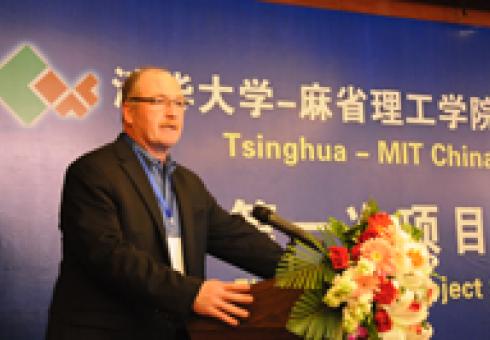
The inescapable importance of China to global energy and climate efforts has compelled the Joint Program—in collaboration with Tsinghua University—to launch a special research effort called the China Energy and Climate Project.
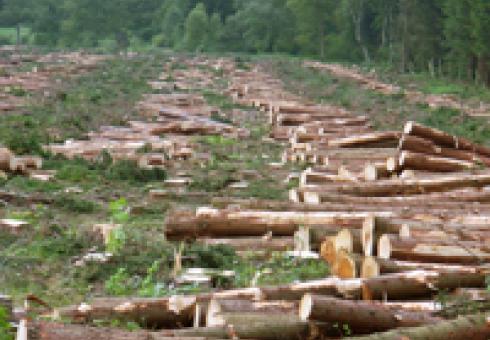
A growing population and rapid development will put a strain on land used to grow food over this century. But if reforestation is used to avoid climate change it will create further strain, says a new MIT study.
It’s no surprise that the United States and China are the world’s top  greenhouse-gas emitters. What may be surprising is the country that ranks third in the lineup: Indonesia. Indonesia is a major culprit not because of its traffic or power plants, but because of its massive deforestation.
Deforestation accounts for almost 20 percent of global emissions—more than the world’s entire transportation sector. But saving the trees—as beneficial as it would be to the changing climate — comes at a significant cost as a growing, wealthier population competes for food, says a new MIT study.
“With a larger and wealthier population, both energy and food demand will grow,” says John Reilly, the lead author of the study and the co-director of the MIT Joint Program on the Science and Policy of Global Change. “Absent controls on greenhouse gases, we will see more emissions from fossil-fuel use and from land-use change. The resulting environmental change can reduce crop yields, and require even more land for crops. So this could become a vicious circle.”
The Reilly et al. study, recently published in Environmental Science & Technology, compares the effects of slashing emissions from energy sources alone to a strategy that also incorporates emissions associated with land use.
The report finds that, with a growing global population, fast-developing nations, and increasing agricultural productivity and energy use, the world is on the path to seeing average temperatures rise by as much as 6 degrees Celsius by the end of the century. Even with an aggressive global tax on energy emissions, the planet will not be able to limit this warming to 2 degrees Celsius—the target world leaders have agreed is needed to avoid dangerous climate change. But when the tax is applied to land-use emissions, the world community could come much closer, with temperatures by the year 2100 rising 2.4 degrees Celsius above pre-industrial levels.
To go one step further in reducing emissions the study incorporates biofuels production, which could increase carbon storage on land and be a cleaner source of energy, lessening the use of fossil fuels. The researchers find that increased biofuels production could cut fossil-fuel use in half by the end of the century—from 80 percent of energy without a tax to 40 percent with a tax—and further limit warming to bring the world just shy of the target.
The world could get even closer to the target, the study shows, by creating economic incentives for storing carbon on land—such as through reforestation. In combination with the global carbon tax, this could “bring the world closer to keeping warming below the 2 degree Celsius temperature,” Reilly says.
But there are always drawbacks.
“The environmental change avoided by reducing greenhouse-gas emissions is substantial and actually means less land used for crops,” Reilly says. “The big tradeoff is that diverting this amount of land to carbon storage, and using land to produce biofuels, leads to substantial rises in food and forestry prices.”
Food prices could rise more than 80 percent, the study shows. Along with this, nations could become wealthier, with global GDP increasing fivefold. On average, the share of a household’s budget for food, even with higher prices, might fall from 15 percent to 7 percent. But for poorer regions of the world, the food budget share could increase, meaning these food price impacts could have disproportionate effects on poorer regions.
Food shortages and higher food prices are becoming a major challenge, according to Jonathan Foley, director of the University of Minnesota’s Institute on the Environment, who spoke at a recent MIT event.
“In the last 20 years we’ve produced 28 percent more crops. But in the next 38 years, we need to double that growth,” Foley said. “We’re not going to grow our way out of the problem … we must look at other possibilities.”
An advocate of ending deforestation, Foley said we need to grow food more efficiently.
Reilly agrees, and says his study puts an emphasis on more effective use of land to produce food. Part of this means more efficient (intensive) use of pasture and grazing land. But, he says, the carbon tax scenarios he tests make the problem that much more difficult—with biofuels and carbon sequestration using up more land.
“And with all three of these demands for land—food, biofuels and carbon storage—the competition is intense, and as a result, food prices rise. So this is an important tradeoff the world needs to consider.”
NREL-MIT study shows an 80 percent renewable energy standard cuts water use in half.
In his first State of the Union address, President Barack Obama set a goal for 80 percent of America's electricity to come from clean energy. Last week, the release of the Renewable Electricity Future study by the U.S. National Renewable Energy Laboratory (NREL) confirms that reaching this goal by 2050 is very possible. But what impact would clean energy have on another key ingredient to daily life: clean water? Researchers at MIT helped answer that question in NREL's report.
The MIT research—Modeling Water Withdrawal and Consumption for Electricity Generation in the United States—is a compilation of the water segment of the Renewable Electricity Future study. In it, the researchers find that as solar panels, wind turbines and other sources of non-thermal renewable energy replace coal, gas and similar thermal powerplants, the use of water to cool those powerplants will decrease by about half.
"The most important use of water for electricity production is for cooling," says Adam Schlosser, an author of the study and the assistant director for science research at MIT's Joint Program on the Science and Policy of Global Change. "The benefit of renewables like wind or solar is that you don't need to boil water for steam to spin the turbines, and then you don't need water to cool the steam. That cooling process is removed, saving a lot of water."
This is good news for water-stressed regions, including much of the western United States, as production of electrical power results in one of the largest uses of water in the nation. A 2005 report by the U.S. Geological Survey found that about 201,000 million gallons of water each day were used to produce electricity, with much of this water going toward keeping powerplants cool.
While most Americans will use less water when powering their homes with renewable energy, the MIT researchers did find that areas that switch to thermal renewable technologies might end up using more water. Biomass energy, being produced mostly in the northwestern United States, is one strong example, the study finds.
"Biomass is obviously contributing to the carbon aspect of the overall problem," Schlosser says, "But it's actually exacerbating an already water-stressed situation because you not only need water to grow it, you also need water to cool the thermal electricity generation process."
Schlosser compares this to concentrated solar technology being used in the southwest, which typically relies on a dry cooling system where fans are used instead of water.
"Solar technology really benefits the southwest because it uses a resource that's so plentiful in that region—the sun—and doesn't use a resource that there is very little of—water," Schlosser says.
But Schlosser explains that the dry cooling technology—while an obvious choice for the drought-stricken southwestern United States because it uses 90 percent less water—is less efficient and more expensive because the electric plant would need to use electricity to run large fans that force air through the heat-exchange process. This explains why areas where water scarcity is more subtle would choose to stick to water cooling technologies in thermal electricity generation.
Along with using less water, the Renewable Electricity Future study finds that greenhouse gas emissions would be reduced by about 80 percent, potentially offering significant public health benefits. The National Research Council estimated that in 2005, air pollution emissions from coal powerplants cost $32 per megawatt of energy in public health damages, the report notes, suggesting that the health cost benefits could counterbalance the costs to build clean energy infrastructure.
RELATED - Union of Concerned Scientists Webinar
Three Questions with Research Scientist Sebastian Rausch