
News Releases

MIT researchers find vehicle efficiency standards are at least six times more costly than a tax on fuel.
IN CASE YOU MISSED IT: Valerie Karplus makes her case in an op-ed in the NY Times here.
Vehicle efficiency standards have long been considered vital to cutting the United States’ oil imports. Strengthened last year with the added hope of reducing greenhouse gas emissions, the standards have been advanced as a way to cut vehicle emissions in half and save consumers more than $1.7 trillion at the pump. But researchers at MIT find that, compared to a gasoline tax, vehicle efficiency standards come with a steep price tag.
“Tighter vehicle efficiency standards through 2025 were seen as an important political victory. However, the standards are a clear example of how economic considerations are at odds with political considerations,” says Valerie Karplus, the lead author of the study and a researcher with the MIT Joint Program on the Science and Policy of Global Change. “If policymakers had made their decision based on the broader costs to the economy, they would have gone with the option that was least expensive – and that’s the gasoline tax.”
The study, published this week in the March edition of the journal Energy Economics, compares vehicle efficiency standards to a tax on fuel as a tool for reducing gasoline use in vehicles. The researchers found that regardless of how quickly vehicle efficiency standards are introduced, and whether or not biofuels are available, the efficiency standards are at least six times more expensive than a gasoline tax as a way to achieve a cumulative reduction in gasoline use of 20 percent through 2050. That’s because a gasoline tax provides immediate, direct incentives for reducing gasoline use, both by driving less and investing in more efficient vehicles. Perhaps a central reason why politics has trumped economic reasoning, Karplus says, is the visibility of the costs.
“A tax on gasoline has proven to be a nonstarter for many decades in the U.S., and I think one of the reasons is that it would be very visible to consumers every time they go to fill up their cars,” Karplus says. “With a vehicle efficiency standard, your costs won't increase unless you buy a new car, and even better than that, policymakers will tell you you’re actually saving money. As my colleague likes to say, you may see more money in your front pocket, but you’re actually financing the policy out of your back pocket through your tax dollars and at the point of your vehicle purchase.”
Along with being more costly, Karplus and her colleagues find that it takes longer to reduce emissions under the vehicle efficiency standards. That’s because, with more efficient vehicles, it costs less to drive, so Americans tend to drive more. Meanwhile, the standards have no direct impact on fuel used in the 230 million vehicles currently on the road. Karplus also points out that how quickly the standards are phased in can make a big difference. The sooner efficient vehicles are introduced into the fleet, the sooner fuel use decreases and the larger the cumulative decrease would be over the period considered, but the timing of the standards will also affect their cost.
The researchers also find that the effectiveness of the efficiency standards depends in part on the availability of other clean-energy technologies, such as biofuels, that offer an alternative to gasoline.
“We see the steepest jump in economic cost between efficiency standards and the gasoline tax if we assume low-cost biofuels are available,” Karplus says. “In this case, if biofuels are available, a lower gasoline tax is needed to displace the same level of fuel use over the 2010 to 2050 time frame, as biofuels provide a cost-effective way to displace gasoline above a certain price point. As a result, a lower gas tax is needed to achieve the 20 percent cumulative reduction.”
To project the impact of vehicle efficiency standards, Karplus and her colleagues improved the MIT Emissions Predictions and Policy Analysis Model that is used to help understand how different scenarios to constrain energy affect our environment and economy. For example, they represent in the model alternatives to the internal combustion engine based on the expected availability and cost of alternative fuels and technologies, as well as the dynamics of sales and scrappage that affect the composition of the vehicle fleet. Their improvements to the model were recently published in the January 2013 issue of the journal Economic Modelling.

Dr. Noelle Selin of the MIT Joint Program on the Science and Policy of Global Change has been selected as one of 20 Leopold Leadership Fellows for 2013. She is the first fellow to be selected from the Massachusetts Institute of Technology.
Based at the Stanford Woods Institute for the Environment, the Leopold Leadership Program provides outstanding academic environmental researchers with skills and approaches for communicating and working with partners in NGOs, business, government and communities to integrate science in to decision making.
Selin is among the 20 mid-career academic environmental researchers named as fellows this year. The group was selected through a highly competitive process on the basis of their exceptional scientific qualifications, demonstrated leadership ability, and strong interest in sharing their knowledge beyond traditional academic audiences. The fellows will take part in intensive leadership and communications training designed to hone their skills in engaging with decision-makers, media, and the public. They also become part of a network of past fellows and program advisors who are working with leaders, both within and outside academia, to solve society’s most pressing environmental and sustainability challenges.
The 2013 fellows are doing innovative research in a wide range of disciplines, including ecology, marine science, economics, behavioral science, entomology, engineering and planning. They join a network of 175 past fellows who areengaged in broad-based efforts to solve society’s most pressing sustainability challenges.

Karplus, Paltsev recieve award for study on the impacts of vehicle efficieny stanards
Valerie Karplus, Research Scientist, and Sergey Paltsev, Assistant Director for Economic Research with MIT’s Joint Program on the Science and Policy of Global Change, were awarded the 2012 Pyke Johnson Award at a ceremony last night during the annual meeting for the National Research Council's Transportation Research Board. The Pyke Johnson Award recognizes the best paper in the area of planning and the environment.
Published in November in the journal Transportation Research Record, the study looks into the new vehicle efficiency standards. The standards are considered one of the landmark environmental achievements of President Obama’s first term, and have been touted as a way to save consumers more than $1.7 trillion at the pump and cut vehicle emissions in half. Karplus and Paltsev look behind the numbers to understand the full energy and economic impacts. 
“Common thinking in Washington holds that any policy that seems to advance technology without creating new taxes must be a no brainer for the country. That misses the broader economic impact,” says Karplus. “As my colleague says, you may see more money in your front pocket at the pump, but you’re financing the policy out of your back pocket through your tax dollars and at the point of your vehicle purchase.”
Of the research, University of Maine environmental economist Jonathan Rubin, chair of the Transportation Energy Committee of the Transportation Research Board, says, “The research of Dr. Karplus on the energy and climate impacts of the nation’s fuel economy standards for our cars and trucks makes an important contribution to policy-making based on science.”
The new fuel standards require automakers to install pollution-control technology to improve the fuel efficiency of cars by 5 percent and light trucks by 3.5 percent with each new model year starting in 2017. Karplus and her colleague simulated the proposed standards, and found that while drivers of these more efficient vehicles will no doubt save at the pump, they could spend several thousands of dollars more when buying their new car. Even more troubling, diverting efforts toward improved vehicle efficiency distracts attention away from policies that would target the broader economy and reduce fuel use or emissions more cost effectively, such as a carbon tax.
Estimates of how costly the policy would be – in terms of both direct costs to consumers and the larger rippling costs to the economy – hinge on the relative cost of the technology available to improve efficiency. The shorter the time frame automakers are given to develop the technology and produce more efficient vehicles, the less time there will be for technological progress and other factors to drive down costs and the more consumers will need to pay upfront. Emissions and oil imports will drop – both due to increased fuel efficiency and as the higher vehicle costs weighs on consumer budgets – but will be offset as consumers face lower costs per mile traveled, incentivizing more driving.
Karplus hopes her results will help policymakers make more informed decisions going forward. She credits that to the innovative method she used, which weaves engineering and technology constraints into a broad economic framework and allows researchers to test the cost and other impacts of a policy at different levels of stringency. This method inherently takes account of life-cycle emissions, as well as impacts that transmit across fuel markets by affecting prices. For example, a policy might only consider gasoline use by plug-in electric hybrids, but that “tailpipe measure” doesn’t take into account the emissions created from building, transporting and recharging those batteries. Her approach does.
“There are a lot of hidden costs to a policy like this,” Karplus says. “This model doesn’t allow you to ignore other important aspects of the economy and energy systems. It requires you to be explicit about your technology and cost assumptions. It provides a framework that allows lawmakers to look at all the available information on costs and the state of the technology and decide how to best create or update policies.”
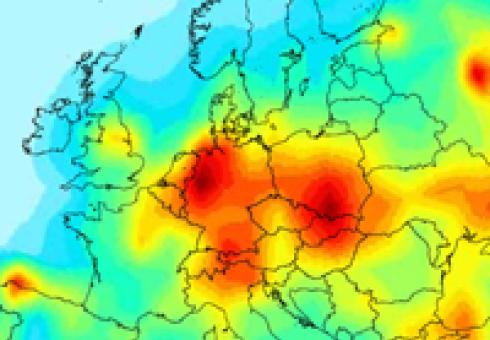
Harvard, MIT researchers map future trends of mercury and ways to reduce it on eve of international negotiations. 
International negotiators will come together next week in Geneva, Switzerland for the fifth and final meeting to address global controls on mercury. Ahead of the negotiations, researchers from MIT and Harvard University are calling for aggressive emissions reductions and clear public health advice to reduce the risks of mercury.
The researchers’ commentary, published this week in the journal Environmental Health, is in response to a study on the costs associated with mercury pollution in Europe. That study showed that as many as two million children in European Union nations are born each year with long-term IQ deficits due to unsafe levels of mercury exposure. These lower IQs can have spiraling effects on the earning potential of those impacted down the road, resulting in as much as 9,000 million euros in lost revenue a year.
But the authors of the commentary, Elsie Sunderland of Harvard and Noelle Selin of MIT, say mercury’s impact — and that of its toxic form methylmercury — extends far beyond the EU.
“Mitigating the harm caused by methylmercury requires global-scale cooperation on policies and source reductions,” Sunderland says.
Fish and other species, such as polar bears, can be harmed by mercury exposure. Once entered into the food chain, this exposure harms humans. In the near term, the public health community can advise changes in seafood consumption to control the risks, the researchers say. The critical action, however, comes in making significant progress in reducing mercury emissions to prevent an even greater increase in cycling “legacy” emissions.
“Most analyses forecasting mercury levels underestimate the severity of the situation because they don’t take the entire picture into account when looking at future mercury levels,” says Selin, an assistant professor of engineering systems and atmospheric chemistry.
Selin and Sunderland explain in their commentary that most mercury exposure comes from eating fish. Coal-fired power plants and other sources such as industrial activities emit mercury to the atmosphere. This mercury eventually rains down to the land and sea. In the ocean, mercury can convert to toxic methylmercury, and accumulate in the marine food chain. Mercury pollution settles deep within the ocean and circulates for decades and even centuries, continuously posing dangers to humans and the environment.
When considering future emissions, these “legacy” emissions are often not taken into account, but should be, the researchers say, because they make up a substantial amount of future emissions and could make already-dangerous levels of mercury even more threatening.
For example, mercury in the North Pacific Ocean — a large player in the global seafood market — is expected to double by 2050, from 1995 levels, due to new emissions. With the substantial “legacy” emissions that will circle back into the atmosphere, that amount is much greater. This increase in mercury could have dire impacts on fish from the Pacific Ocean.
“Not only will we see these ‘legacy’ emissions circle back up,” Selin says. “But with energy demands growing worldwide, we’ll see more new mercury entering the atmosphere, unless we act now to control this mercury at its source — and that’s largely coal-fired power plants.”
Sunderland and Selin say the United Nations Environment Program’s negotiations represent a sure step in the right direction. The question is: Will the talks produce real results?
In an interview with MIT News just prior to the first negotiating session in 2010, Selin said U.S. domestic politics would likely be a challenge to international cooperation on mercury. But last year, the U.S. Environmental Protection Agency finalized Mercury and Air Toxics Standards that require coal-fired power plants to install scrubbing technology that will cut 90 percent of their mercury emissions by 2015. With these standards — now the most stringent mercury standards of their kind in the world — Selin says the country has proven its leadership and provided some hope.
“These standards show that the U.S. is taking leadership at home to address a widespread and substantial global problem,” Selin says.
Selin, along with ten MIT graduate students, will present recent scientific results to negotiators in Geneva next week.

By: Vicki Ekstrom
MIT researchers enhance model to assess the risks of water stress. A conflict over water management has intensified along the Mississippi and Missouri rivers. Downstream states argue water should be released from the Missouri’s upstream reservoirs into the Mississippi to allow shipping to continue in the record low-level waters. Upstream states are fighting to keep the water to irrigate their crops and prevent the drought from getting even worse next year. To add to the tension, still others want to move a portion of the Missouri River Basin’s water to the Colorado Basin—which will see demand outstrip supply in the coming decades, according to a federal study released last week.
These are the stakes in the conflict over water, and the impacts could be profound and widespread. Agriculture, river navigation, energy and other industries all stand to lose as populations increase and the possible side effects of climate change emerge. To measure future changes on water resources, researchers at the Massachusetts Institute of Technology have enhanced their global model to include a new tool that assesses the risks of water stress.
“As fresh water sources throughout the world experience considerable stress because of an increasing population, economic growth, and droughts, floods and other climate effects, this tool will provide valuable insights to industries and communities competing for water,” says Ken Strzepek, a researcher at the MIT Joint Program on the Science and Policy of Global Change, who helped design the tool.
Strzepek and his colleagues Adam Schlosser and Élodie Blanc take population, GDP and other socio-economic factors and combine them with hydro-climatic information such as precipitation and runoff from their earth system model. They then combine this information to estimate changes in demand across sectors such as public and private water use, agricultural use and thermoelectric cooling used in energy production. The result is an expanded model that can forecast if and where there could be stresses within water basins, along with the risks surrounding those changes.
“Globally, the tool is helping us see where the hot spots for water stress are and where might that stress increase in the future due to human growth and climate change—two factors that are coming together and exacerbating the problem of water management,” says Schlosser, the assistant director of science research at the Joint Program on Global Change.
While the new model paints the picture globally, it can also be applied at a regional and even local scale to help communities make important decisions about their future energy investments, infrastructure plans and adaptation strategies. Uniquely, by incorporating risk and uncertainty, the model helps policymakers evaluate the question: What investments do we need to make to be better prepared?
“When looking at different climate models, not only do they show different results, they show different directions—one shows a positive change where another might show a negative change,” Schlosser says. “However, our technique allows us to quantify this uncertainty as risk to help decision makers formulate more robust investment plans.”
The researchers have already begun to apply their model to the U.S. While their findings are still being written, the researchers agree that critical water management issues will arise—and in some areas are already emerging. They are finding that the areas that will see the greatest stress going forward are the same places where very rigid water management laws already exist, such as around the Missouri, Mississippi and Colorado rivers.
“Our model framework is able to account for water management and allocation policies,” Schlosser says. “This allows us to take a situation like transferring water from the Missouri to the Colorado Basin and assess the impacts to both basins going forward.”
Drawing from this measure of risk, the researchers warn that decision makers in developing countries should make their adaptation plans both flexible and efficient.
“If we don’t know how much water will come down the river, we should design dams to be constructed in stages. For example, we should make provisions to add hydropower generation capacity easily and accordingly. ” Strzepek says. “We need to have flexible designs, and also efficient designs, so we’re building in a way that the structure will perform well under a variety of climates.”
Read more about the new tool here.

MIT researchers show merits of a carbon tax.New standards to strengthen vehicle fuel efficiency are considered one of the landmark environmental achievements of President Obama’s first term. Passed with the backing of automakers and autoworkers, the measure has been touted as a way to save consumers more than $1.7 trillion at the pump and cut carbon emissions from passenger vehicles in half. While the standards have many good merits, a more effective approach might be an economy-wide carbon tax, say researchers at MIT’s Joint Program on the Science and Policy of Global Change.
The researchers look at the full energy and economic impacts of the efficiency standards, which in their finalized form now require automakers to install pollution-control technology to improve the fuel efficiency of cars by 5 percent and light trucks by 3.5 percent with each new model year starting in 2017. Published this month in the journal Transportation Research Record, the study won this year’s Pyke Johnson Award for the best paper in the area of planning and the environment.
“Common thinking in Washington holds that any policy that seems to advance technology without creating new taxes must be a no brainer for the country. That misses the broader economic impact,” says Joint Program Research Scientist Valerie Karplus, the lead author of the study. “As my colleague says, you may see more money in your front pocket at the pump, but you’re financing the policy out of your back pocket through your tax dollars and at the point of your vehicle purchase.”
Instead, Karplus says a gasoline or carbon tax makes more sense economically by providing consumers a direct incentive to either reduce their driving or buy more efficient vehicles.
“From an economic perspective that’s very clear, but from a political feasibility perspective it’s very different,” she says. Unlike fuel standards that hide the true costs, “a tax on gasoline has proven to be a nonstarter for many decades in the U.S., and I think one of the reasons is that it would be very visible to consumers every time they go to fill up their cars.”
The one hope, Karplus and some of her colleagues at the Joint Program say, is that in the midst of deficit talks a tax on carbon emissions might be considered to help raise the money needed to slash the deficit and avoid some tax hikes and spending cuts. The program published a study in August that looked at the effectiveness of this approach. That study showed that with a carbon tax the economy could overall improve, other taxes could be lowered and pollution emissions would be reduced.
“Congress will face many difficult tradeoffs in stimulating the economy and job growth while reducing the deficit,” says John Reilly, the co-director of the Joint Program and an author of the carbon tax study. “But with the carbon tax there are virtually no serious tradeoffs.”
Conversely, when Karplus and her colleagues simulated the proposed fuel economy standards, they found that while drivers of these more efficient vehicles will likely save at the pump, they could on average spend several thousands of dollars more when buying their new car, consistent with EPA estimates. Even more troubling, diverting efforts toward improved vehicle efficiency distorts overall economic activity, adding to the indirect cost of the policy.
Estimates of how costly the policy would be — in terms of both direct costs to consumers and the larger rippling costs to the economy — hinge on the relative cost of the technology and other strategies available to improve efficiency. The shorter the time frame automakers have to develop the technology and produce more efficient vehicles, the less time there will be for technological progress and other factors to drive down costs — such as the cost of batteries — and the more consumers will need to pay upfront. Emissions and oil imports will initially drop, both due to increased fuel efficiency and as the higher vehicle costs weigh on consumer budgets. But as consumers face lower costs per mile traveled, they may drive more, offsetting reductions in emissions and oil imports.
Karplus hopes her results will help policymakers make more informed decisions going forward. She credits that to the innovative — and award-winning — method she used, which weaves engineering and technology constraints into a broad economic framework and allows researchers to test the cost and other impacts of a policy at different levels of stringency. This method inherently takes account of life-cycle emissions as well as impacts that transmit across fuel markets by affecting prices.
For example, a policy might only consider gasoline use by plug-in electric hybrids. But that “tailpipe measure” doesn’t take into account the emissions created from building, transporting and recharging those batteries. Her approach does.
“There are a lot of hidden costs to a policy like this,” Karplus says. “This model doesn’t allow you to ignore other important aspects of the economy and energy systems. It requires you to be explicit about your technology and cost assumptions. It provides a framework that allows lawmakers to look at all the available information on costs and the state of the technology and decide how to best create or update policies.”
Of this approach, University of Maine environmental economist Jonathan Rubin, says “The research of Dr. Karplus on the energy and climate impacts of the nation’s fuel economy standards for our cars and trucks makes an important contribution to policymaking based on science.”
Rubin is the chair of the Transportation Energy Committee of the Transportation Research Board, which will honor Karplus with the Pyke Johnson award at a ceremony in January.