Researcher Profiles


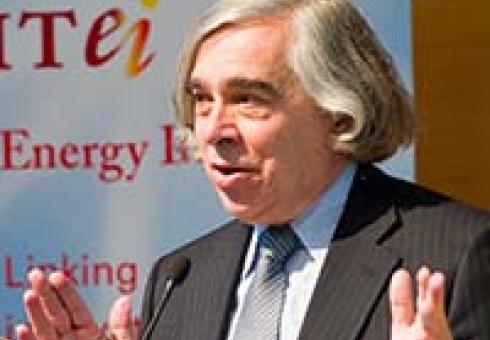
Moniz is the Cecil and Ida Green Professor of Physics and Engineering Systems, as well as the director of the MIT Energy Initiative (MITEI) and the Laboratory for Energy and the Environment.
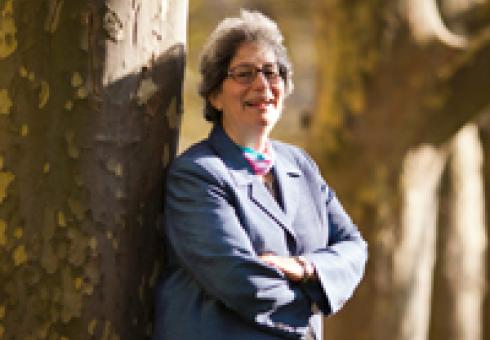
Susan Solomon has won both the Vetlesen Prize and a 2012 BBVA Foundation Frontiers of Knowledge Award.
The Vetlesen Prize is given “for scientific achievement resulting in a clearer understanding of the Earth, its history, or its relations to the universe” and is designed to recognize sweeping achievements on par with the Nobel. The Prize was established in 1959 and is given every several years by a selection committee appointed by the president of Columbia University. The most recent award was in 2008 to geologist Walter Alvarez. Previous winners include climate scientists Sir Nicholas Shackleton and Wallace Broecker, marine geologist Walter Pitman, seismologist Lynn Sykes, and founding director of Lamont Maurice “Doc” Ewing.
Soloman is being recognized for her work in identifying the cause of the Antarctic ozone hole. This research helped bring about a global ban on manmade ozone-depleting chemicals. She shares the award with French climate scientist Jean Jouzel who is being recognized for his work extracting the longest-yet climate record from polar ice cores. The pair will receive the award and accompanying medal at Columbia's Low Library on Thursday, February 21st.
The BBVA Foundation Frontiers of Knowledge Awards recognize, among other things, outstanding contributions that advance understanding or deliver material progress with regard to climate change, one of the key challenges of the global society of the 21st century.
The award citation states that Solomon "has contributed, through her research and leadership, to the safeguarding of our planet." Solomon's work over 30 years has succeeded in establishing and drawing together links between three key climate change variables: human activity, a profound and comprehensive understanding of the behavior of atmospheric gases, and the alteration of climate patterns globally.

Research aimed at predicting future climate activity has primarily focused on large and complex numerical models. While this approach has provided some quantitative estimates of climate change, those predictions can vary greatly from one model to the next and produce doubts in the projected outcome.
In this Faculty Forum Online broadcast Professor Kerry Emanuel '76, PhD '78 discussed a new approach to climate science that emphasizes basic understanding over black box simulation. On Tuesday, Feb. 5, 2013, Emanuel presented an overview of his climate research and took questions from the worldwide MIT community via video chat. Watch the video and visit the Slice of MIT blog to continue the conversation in the comments.
About Kerry Emanuel
A Cecil and Ida Green Professor in the Department of Earth, Atmospheric and Planetary Sciences, Emanuel is a cofounder of the Lorenz Center, an MIT think tank devoted to understanding climate activity. He is the author of What We Know about Climate Change, which The New York Times called "the single best thing written about climate change for a general audience."
In 2006, Emanuel was named by Time magazine as one of the 100 most influential people in the world. He received his bachelor's degree in earth, atmospheric, and planetary sciences from MIT in 1976 and his doctorate in meteorology from MIT in 1978.
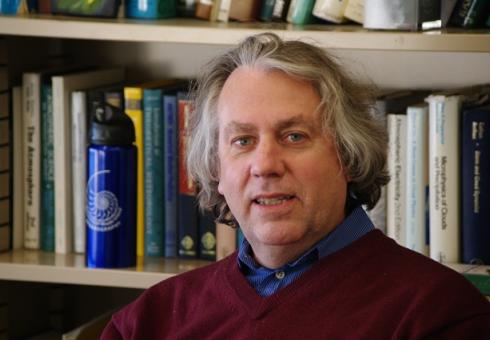
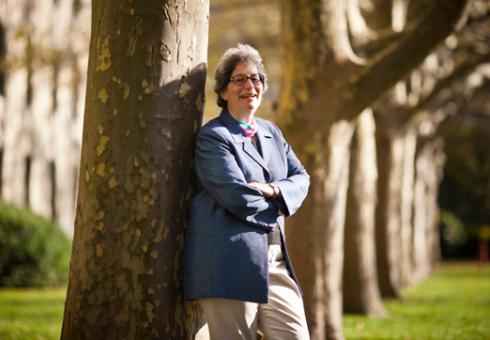
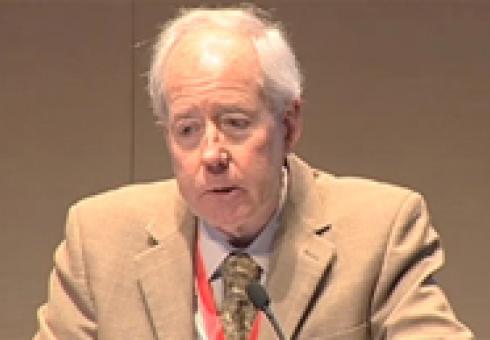

MIT Joint Program on the Science and Policy of Global Change co-director and TEPCO professor of atmospheric science Ron Prinn was recently interviewed on his latest publication released today in the Proceedings of the National Academy of Sciences. The report, “Development and Application of Earth System Models,” focuses on the importance of Earth System Models in studying climate change. It is based on a lecture Prinn gave at the National Academy of Sciences Sackler Colloquium last year (watch the speech here).
Below is a transcript of the interview:
Q: Why do we need Earth System Models?
A: In laboratory science, we have the luxury of running “control” experiments in which selected conditions that would otherwise influence the “main” experiment are omitted. In the case of our environment, the influencing conditions come from humans. Because we do not have another earth without human influence to serve as a “control,” we often cannot directly measure the impacts of human development on the environment. So we form computer models of the combined natural and human systems, compare the models with observations, and then apply the models as “numerical control” experiments. Our specific earth system model – MIT’s Integrated Global System Model (IGSM) – is so unique because it combines the human system with the natural system to see how the two systems impact each other for the purpose of improving our understanding of both systems and informing policy decisions. The IGSM is in fact a “framework” of linked sub-models of varying complexity with the choice of the sub-models being governed by the issues being addressed; uncertainty studies dictate use of the most computationally efficient models, whereas studies of specific scenarios allow use of the more complex but computationally demanding sub-models.
Q: What is the value of integrated Earth System Models like the IGSM, as opposed to other approaches, for those making decisions about climate mitigation and adaptation?
A: Applied, for example, to the climate issue, the IGSM framework allows us to determine, in a self-consistent way, the probabilities of various amounts of climate change, the relationship between greenhouse gas reduction targets and temperature changes, and the uncertainty in the costs of various proposed policies. The IGSM framework also enables integrated assessments of the economic and environmental implications of proposed new low emission energy technologies. In making these analyses, we are able to help decision-makers compare the value of various mitigation policies, energy technologies, and adaptation strategies in lowering the risks to society. We can also assess the costs for stabilization of greenhouse gases at various levels, and how these costs can be justified by the expected benefits from the avoided damages.
Q: What can the MIT IGSM tell us about our climate and energy future?
A: In this paper, I outline just some of the ways we’ve used the full IGSM framework, or the relevant parts of it, in the past. These uses include the examination of the effect of different greenhouse gas stabilization targets on forecasts of the odds of various amounts of temperature, precipitation, sea-level, and sea-ice change, and of the costs of these stabilization policies. Also, the relationship between stabilization targets and the future loss of the ability of the oceans to slow warming by absorbing heat and carbon dioxide has been examined. The Kyoto Protocol uses a CO2-only strategy to reduce emissions, and our work with the IGSM shows that a multi-gas control strategy greatly reduces the costs of fulfilling the Kyoto Protocol with little difference between the two strategies in mitigating climate and ecosystem impacts. Assessments of the substantial impact of air pollution on human health costs and carbon uptake by land vegetation have been investigated. Another example stems from our work in examining the consequences of renewable energy at large scales – like wind power and bio-fuels. Our studies of wind power show that offshore wind turbines can cause a surface cooling over the installed regions due to an increase in turbulent mixing caused by the turbines. Additionally, while wind power is an important renewable resource for our future, it suffers from significant intermittency caused by large seasonal wind variations over most major offshore sites. We’re expanding on this research to measure wind power intermittency over land in the U.S. Stay tuned for that study. Learn more about our offshore study here.
To read "Development and Application of Earth System Models," please click here.
Learn more about Dr. Ron Prinn here.