
Researcher Profiles

Caleb Waugh, co-president of MIT’s Energy Club and a doctoral student in nuclear science and engineering, says that energy is the defining challenge of this generation.

Like a lot of economists, Christopher Knittel entered college with career plans in mind. Unlike a lot of economists, Knittel had plans that involved baseball. At California State University at Stanislaus, Knittel was good enough to make the team as a second baseman. But during his freshman season, reality sank in.
“I quickly learned the pros weren’t in my future,” says Knittel, a lifelong Oakland A’s fan who played baseball recreationally until his mid-30s.

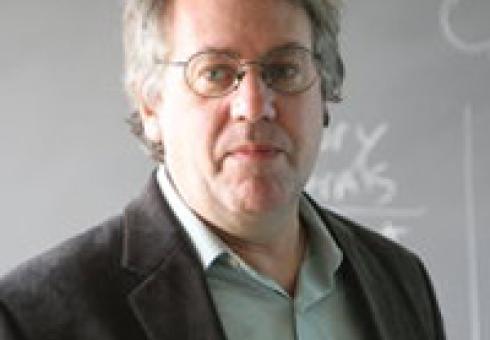
Christopher Knittel
Photo: M. Scott Brauer
For a while in college, Knittel also considered becoming an attorney. But then, he says, “I took my first economics course and fell in love with it. Economics teaches you how to think and you constantly see real-world examples of the concepts you’re learning.”
Today, Knittel is the William Barton Rogers Professor of Energy Economics at the MIT Sloan School of Management, having joined MIT earlier this year. He is known for inventive, heavily empirical work largely focusing on energy and transportation, although he has studied electricity markets and corporate strategies as well.
Knittel’s research addresses a clutch of practical and linked questions: How much progress have automakers made on fuel efficiency? (More than you might think.) How do car owners respond when fuel prices rise? (They really do ditch their gas-guzzlers.) How large are the collateral health benefits of removing dirty vehicles from the nation’s fleet? (Very large.)
All told, Knittel has produced concrete findings that he hopes will have an impact in the halls of Washington. “A lot of energy policies that we have are not the most efficient policies,” he says. “I want to inform policymakers what the true costs and benefits of certain policies are.”
Detroit: Actually more fuel-efficient
Knittel mostly grew up in Northern California, where his father was an engineer for Peterbilt, the truck manufacturer. In addition to baseball, he developed a liking for cars and learned to replace the engine in his Ford Mustang while in high school.
After getting his undergraduate degree, Knittel (pronounced with a hard “k”) received his M.A. in economics from the University of California at Davis, then got his PhD in economics from the University of California at Berkeley in 1999, after his graduate adviser, Severin Bornstein, moved from Davis to Berkeley. Knittel taught for three years at Boston University before returning to U.C. Davis, where he remained until joining MIT.
“A lot of my work draws on the hard sciences,” says Knittel, 39. “Davis was great, but there’s no place like MIT, in terms of the opportunities to do quality interdisciplinary work.”
In a sense, Knittel is still looking under the hoods of cars. One of his papers, “Automobiles on Steroids,” recently published in the American Economic Review, examines technological progress in the auto industry. From 1980 through 2006, the fuel efficiency of America’s vehicles has increased by just 15 percent — at first glance, a lethargic rate of improvement. But as Knittel points out, cars’ average horsepower has roughly doubled since then, and average curb weight of those vehicles rose 26 percent during that time. Adjusting for these changes, fuel economy has actually increased by 60 percent since 1980, but as Knittel observes, “most of that technological progress has gone into [compensating for] weight and horsepower.”
On the stagnation of overall fuel efficiency since 1980, Knittel adds, “It’s no fault of the manufacturers and consumers. Firms are going to give consumers what they want, and if gas prices are low, consumers are going to want big, fast cars. If you’re going to blame anyone, it’s the policymakers for not creating the incentive structure for putting that technological progress into fuel economy.”
Pain at the pump
Cars and light trucks produce about 15 percent of U.S. greenhouse gases. The best policy for reducing energy consumption from those sources, Knittel believes, would be higher fuel prices. “That would incentivize all the things we want,” Knittel says. “When gas prices go up, people shift to more fuel-efficient cars, they drive fewer miles, and insofar as there are lower-carbon-intensive fuels out there, people shift to them. They get rid of their clunkers faster.”
That’s not just an assumption; Knittel has studied the responses of auto owners nationwide to rising gas prices from 1999 to 2008 in another research paper, “Pain at the Pump,” co-authored with Meghan Busse and Florian Zettelmeyer of Northwestern University. The researchers found that with each $1 rise in the price of gas, purchases of highly fuel-efficient autos increase 21 percent, while purchases of gas-guzzling vehicles drop 27 percent.
A shift to newer, more fuel-efficient vehicles would actually help people in another way, besides releasing fewer greenhouse gases: It would reduce the amount of harmful local pollution in the air, as Knittel detailed in a paper written with Ryan Sandler of U.C. Davis, based on a study of California from 1998 to 2008. “When gas prices go up, you’re getting bigger mileage reductions from cars that are worse in terms of these pollutants,” Knittel observes.
That produces significant health benefits beyond the problems associated with climate change. “We’re talking about asthma attacks and respiratory problems,” he adds. “This isn’t just a matter of helping the world two generations from now. You can point to this and say, ‘Here is a more immediate, salient reason for a gas tax.’” According to Knittel and Sandler, 70 percent of the costs of a gas tax of $1 per gallon could be recouped by immediate health benefits from reduced pollution. Other possible benefits from the tax — reductions in climate change, traffic congestion and accidents — could make it a net winner for people in economic terms alone.
But will politicians ever impose higher gas prices on a financially stretched public? A variety of powerful lobbying interests in Washington oppose such a move — and Knittel knows hardball when he sees it. Indeed, Knittel is examining the financial rewards industries reap from their lobbying efforts in some of his current research. Still, he does retain a sense of optimism. “The idealistic academic in me says that the more you broadcast the truth, the more likely it will be to win out,” Knittel says. “But we’ll see.”

Christopher Knittel had big dreams heading into college. Those dreams involved baseball.

SOURCE: EPA
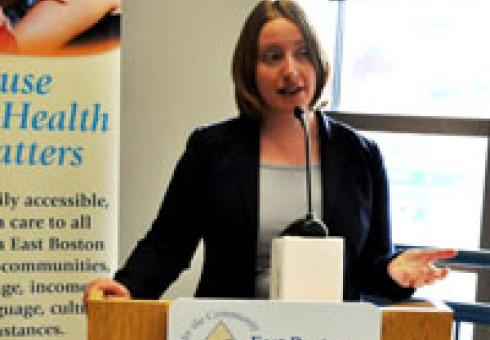
Dr. Noelle Eckley Selin, an Assistant Professor at the Massachusetts Institute of Technology (MIT) and a researcher in MIT’s Joint Program on Global Change, participated in a public availability session to discuss the Environmental Protection Agency’s recent Mercury and Air Toxics Standards. Noelle was joined by EPA’s Regional Administrator Curt Spalding, New England’s American Lung Association President Jeffrey Seyler, Commissioner of the Massachusetts Department of Environmental Protection Kenneth Kimmell and other public health experts. The event was held at the East Boston Neighborhood Health Center.
The Mercury and Air Toxics Standards – issued December 21, 2011 – are the nation’s first standards to protect American families from power plant emissions of mercury and toxic air pollution like arsenic. To learn more about the standards, click here.
The following are Dr. Selin’s remarks from the event:
Thank you for having me here today. I’m pleased to be here to talk about these historic standards.
I’m at MIT and I do research in atmospheric science. I look at the pathways by which mercury actually reaches the environment and what it does once it gets there. So I’ve spent much of my career studying the ways in which mercury reaches the environment where it then affects human health. I’ve tracked the path that mercury travels from power plants – which are our nation’s number one source of mercury – through the air, into our waterways and then eventually the fish we eat. And I’ve also analyzed the steps we could take to prevent further contamination. These standards do represent a strong step towards that goal.
These mercury standards help prevent the developmental delays and neurological damages that could come from eating contaminated fish. This is in addition to the tens of thousands of cases of asthma and acute bronchitis that are avoided by controlling other air toxics other than mercury. Specifically on the mercury standards, these will especially protect newborns who are at a greater risk during their development. It’s estimated more than 300,000 newborns in the US are exposed in utero to dangerous levels of mercury. This can cause lower IQ and neurological damages.
Importantly, this standard will have a large impact right here in the Northeast, especially for people who eat fish caught in local waterways. And that’s because mercury released from U.S. power plants contaminates what’s nearby. This standard will especially benefit residents here in Massachusetts and the Northeast because we’re down wind of the emitting power plants in coal mining and producing states. You can see this from our map (below), which shows the fraction of mercury entering the environment that comes from domestic sources. Here in the Northeast, most of the mercury that enters our waterways comes from the sources in the US that will be controlled by these standards.
Here in Massachusetts, efforts to cut mercury from local power plants have led to significant mercury declines in fish in recent years. This experience has shown that tough standards can have a substantial effect on the environment. But these reductions are not enough, and mercury levels in fish here are still too high. Much of the mercury in our local fish comes from sources outside the region, which is why federal regulations are needed.
In addition, countries around the world are currently negotiating a global treaty to limit mercury pollution because mercury is a problem worldwide. These standards show that the US is taking leadership at home to address a widespread and substantial global problem.

Percentage contribution from North American primary anthropogenic sources to total (wet plus dry) annual mercury deposition simulated by the GEOS-Chem global mercury model for 2004–2005. Reproduced from the Selin, Global Biogeochemical Cycling of Mercury: A Review, Annual Review of Environment and Resources, 34: 43-63, 2009, MIT Joint Program on the Science and Policy of Global Change Reprint Series.