
CS3 In the Media

Additional Coverage: CNN (6:40 - 9:34), Politifact, Washington Post, Scientific American
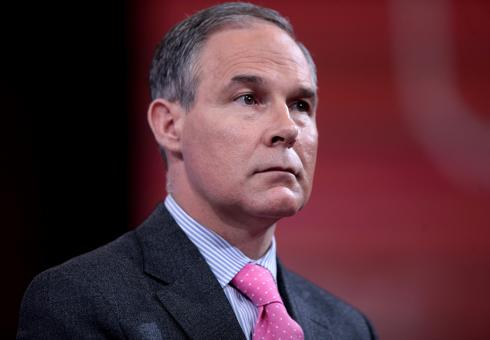
MIT Joint Program-affiliated Professor Susan Solomon (EAPS) co-authors study in Nature Scientific Reports
Researchers published a scientific paper that explicitly refutes an assertion by EPA Administrator Scott Pruitt on climate change. Related Links: Popular Science EnviroNews

Valerie Karplus, asst. prof. of global economics and management at the MIT Sloan School of Management and an MIT Joint Program researcher, comments in The Hill.
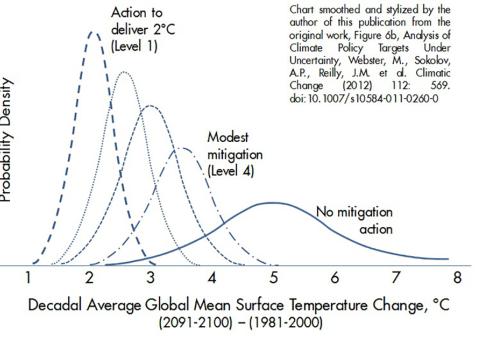
MIT Joint Program research has "demonstrated that even a modest attempt to mitigate emissions could profoundly affect the risk profile for equilibrium surface temperature"
A forthcoming book by MIT Joint Program sponsor representative David Hone, Putting the Genie Back: Solving the Climate and Energy Dilemma, draws on MIT Joint Program research on climate probability and uncertainty.

Intensification of extreme rainfall varies from region to region, study shows
Study co-authored by Joint Program affiliate Paul O'Gorman shows that the most extreme rain events in most regions of the world will increase in intensity by 3-15%, depending on region, for every degree Celsius that the planet warms. Additional Coverage: Eco-Business

ClimateWire: MIT Joint Program Research Scientist Kenneth Strzepek comments on the need for flexibility in water-sharing agreements in the Nile basin
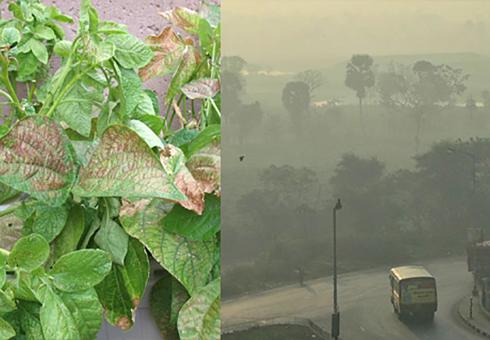
MIT Joint Program-affiliated researcher Collette Heald is leading an effort to better understand the relationship between air pollution and agriculture

Campus energy “dashboard” will provide detailed information to Institute’s faculty, staff, and students
The rollout of this central data “dashboard,” called Energize_MIT, is the latest in a series of steps implementing the goals and commitments set out in MIT’s 2015 Plan for Action on Climate Change, which draws on MIT Joint Program expertise.
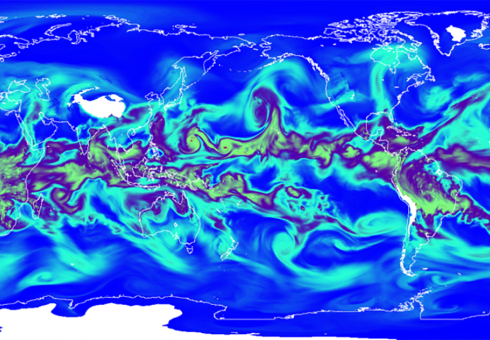
Associate Professor Paul O'Gorman, an MIT Joint Program-affiliated researcher, describes three questions climate scientists recently suggested should frame the future of climate research

Joint Program researcher Valerie Karplus awarded grant for project focusing on the response of industrial firms to energy-efficiency policies
Using detailed data from firms in China, Germany, and the United Kingdom, Karplus will investigate what characteristics of firms determine how policy affects production costs and firm competitiveness. Earlier seed grant led to U.S. EPA funding for Noelle Selin and Susan Solomon's project identifying new ways to evaluate the success of emissions-control measures tailored to reduce particulate pollution.

OurEnergyPolicy.org features online discussion based on MIT Joint Program Research Scientist Jennifer Morris's Energy Journal paper "Hedging Strategies: Electricity Investment Decisions under Policy Uncertainty."
1. Is it appropriate for investors to hedge against market exposure by placing capital into technologies that result in cleaner burning fossil generation?
2. Will private and public investors accept the risk and continue on a path of cheap fossil fuels, or increase holdings toward the 20-30 percent non-carbon source allocation?
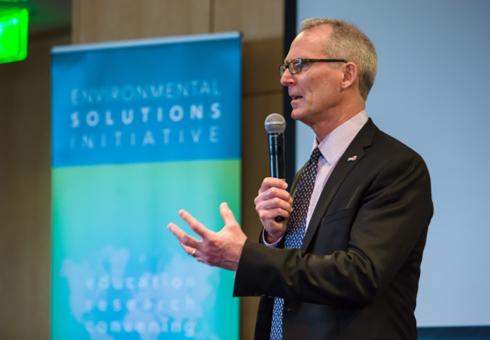
At MIT, former Congressman Bob Inglis speaks about climate and free enterprise
Inglis made the case for a “tax swap”: implementing a tax on carbon while offsetting its revenues with a reduction in income or payroll taxes. This way, Inglis said, the U.S. can unleash a wave of clean energy innovation, driving down planet-warming greenhouse gas emissions without harming economic growth. And by making the tax border-adjustable — meaning that imports to the U.S. from countries without their own carbon tax would face an import tax — Inglis said his plan would catalyze the rest of the world to tax carbon as well.