
CS3 In the Media

MIT Joint Program Co-Director John Reilly discusses the complex nature of climate modeling, and the challenges faced by the climate science community in the current political climate

Study finds large amounts of carbon dioxide, equivalent to yearly U.K. emissions, remain in surface waters
MIT climate scientists, including EAPS Associate Professor and Joint Program collaborator MIck Follows, have found that the ocean’s export efficiency, or the fraction of total plankton growth that is sinking to its depths, is decreasing, due mainly to rising global temperatures.

Even if we cannot predict the climate and its impacts with precision, that does not mean that the best strategy is to do nothing, writes MIT Joint Program Deputy Director Sergey Paltsev in IIASA Options Magazine

Climate Home: China is planning the world’s biggest carbon market, but with little detail given for its design, praise for the scheme is premature. Joint Program research assistant Emil Dimantchev comments.
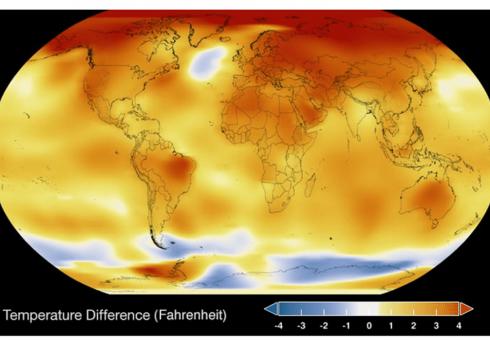
Washington Post: MIT Joint Program-affiliated EAPS Prof. Kerry Emanuel co-authors op-ed critiquing the EPA administrator's call for opposing teams to debate climate change science

NPR Marketplace: MIT Joint Program Co-Director John Reilly comments on the economic and societal impacts of heat waves, which are becoming more frequent under climate change
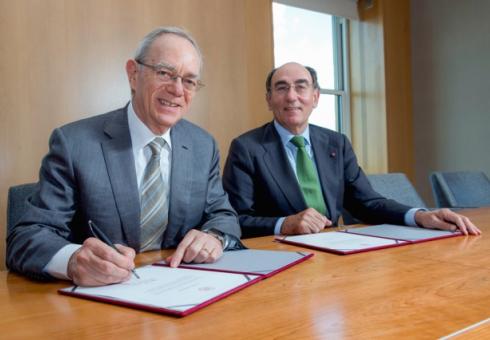
Funding will establish MIT professorship and support low-carbon energy and climate initiatives

Energy Futures: John Reilly and colleagues in the MIT Joint Program used a comprehensive set of linked models to demonstrate how dramatically the world’s energy system needs to change—within the next few decades—to prevent excessive global warming by 2100

FactCheck.org: The 0.2 C figure “reflects only the incremental effect of Paris when built upon all the previous commitments made through the UNFCCC,” and “assumed no further strengthening of national commitments in years after 2030,” says MIT Joint Program Co-Director John Reilly.

New York Times: MIT Joint Program-affiliated CEEPR Executive Director John Parsons comments

His administration cherry-picked my group's findings to help make their case.
Joint Program co-directors to Wall St. Journal: Your editorial references our research to draw what we consider to be the exact wrong conclusion about the importance of the Paris Agreement to addressing climate change.
In a letter to The Wall Street Journal, Prof. Ron Prinn and John Reilly, co-directors of the Joint Program on the Science and Policy of Global Change, explain why their research shows the importance of the Paris climate agreement. “Paris provides an unprecedented framework for global cooperation on this serious threat. In our view, U.S. withdrawal from it is a grave mistake.”