News Release
MIT CS3 presentations and sessions explore multiple sustainability challenges and solutions

MIT CS3 presentations and sessions explore multiple sustainability challenges and solutions
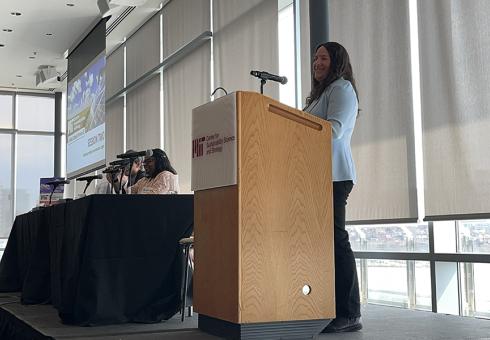
At New York Climate Week panel, MIT J-WAFS and CS3-affiliated Research Scientist Ken Strzepek introduced the Jameel Index for Food Trade and Vulnerability (MIT J-WAFS)
A paper co-authored by MIT Professor/CS3 faculty affiliate Christopher Knittel argued that the administration's calculations contained major inconsistencies, such as in its assumptions about how consumers value the benefits of saving fuel. "If you do the analysis right, we found that revoking these standards does not save consumers money," said Knittel. (New York Times)
Brazil will chair a new body in an ambitious effort to align the world’s fragmented carbon markets – a development that MIT Prof./CS3 faculty affiliate Catherine Wolfram calls a 'huge step' (Eco-Business)
MIT Professor/CS3 faculty affiliate Christopher Knittel highlights how climate change is being drowned out of the national cost-of-living debate, even as U.S. households already pay an estimated $400 to $900 a year in climate-related costs (Politico)
MIT Professor/CS3 faculty affiliate Haruko Wainwright believes the risks posed by radioactive wastes cannot be properly assessed without also considering the hazards of chemical wastes (MIT Department of Nuclear Science and Engineering)
MIT Professor/CS3 faculty affiliate John Sterman discusses AI’s potential and risks, and the role of public policy in steering the technology toward societal benefits, including climate solutions (Boston Globe)
In this new report co-authored by MIT Professor/CS3 faculty affiliate Catherine Wolfram, the Global Climate Policy Project proposes a way to compare and connect different carbon-pricing systems without forcing them into a single model (Global Climate Policy Project)
Steel, cement, aluminum, and fertilizer sit behind a fifth of global emissions, and a carbon price floor could raise $200 billion a year, finds Science study led by MIT Professor/CS3 faculty affiliate Catherine Wolfram (Earth.com)
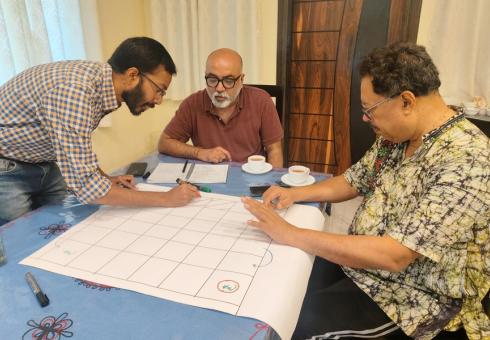
Climate scientist/CS3 affiliate Sai Ravela is using games to help coastal communities find creative adaptations to climate change. (Abdul Latif Jameel Water and Food Systems Lab)
Commentary co-authored by MIT Professor/CS3 faculty affiliate Christopher Knittel argues for a mileage-based approach (WBUR)
MIT CS3 and MITEI Principal Research Scientist describes her career path and its potential impact