News + Media
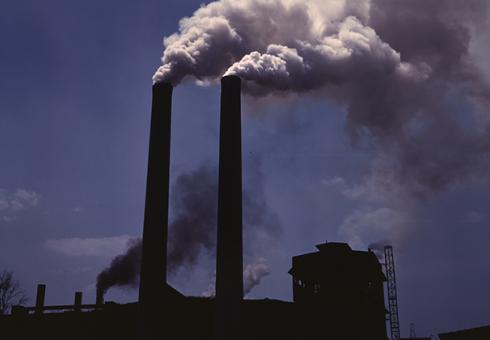
A new study links heavy air pollution from coal burning to shorter lives in northern China.
(Also covered by WSJ, WaPo, NYT, Reuters, Bloomberg, LA Times, Nat Geo, Nature, Discover, CNN, BBC, Guardian, Sky News, International Business Times, Financial Times, The Telegraph, Daily Mail, China.org)
By Lousie Watt
BEIJING (AP) — A new study links heavy air pollution from coal burning to shorter lives in northern China. Researchers estimate that the half-billion people alive there in the 1990s will live an average of 5½ years less than their southern counterparts because they breathed dirtier air.
China itself made the comparison possible: for decades, a now-discontinued government policy provided free coal for heating, but only in the colder north. Researchers found significant differences in both particle pollution of the air and life expectancy in the two regions, and said the results could be used to extrapolate the effects of such pollution on lifespans elsewhere in the world.
The study by researchers from China, Israel and the United States was published Tuesday in the Proceedings of the National Academy of Sciences.
While previous studies have found that pollution affects human health, "the deeper and ultimately more important question is the impact on life expectancy," said one of the authors, Michael Greenstone, a professor of environmental economics at Massachusetts Institute of Technology.
"This study provides a unique setting to answer the life expectancy question because the (heating) policy dramatically alters pollution concentrations for people who appear to be of otherwise identical health," Greenstone said in an email. "Further, due to the low rates of migration in China in this period, we can know people's exposure over long time periods," he said.
The policy gave free coal for fuel boilers to heat homes and offices to cities north of the Huai River, which divides China into north and south. It was in effect for much of the 1950-1980 period of central planning, and, though discontinued after 1980, it has left a legacy in the north of heavy coal burning, which releases particulate pollutants into the air that can harm human health. Researchers found no other government policies that treated China's north differently from the south.
The researchers collected data for 90 cities, from 1981 to 2000, on the annual daily average concentration of total suspended particulates. In China, those are considered to be particles that are 100 micrometers or less in diameter, emitted from sources including power stations, construction sites and vehicles.
The researchers estimated the impact on life expectancies using mortality data from 1991-2000. They found that in the north, the concentration of particulates was 184 micrograms per cubic meter — or 55 percent — higher than in the south, and life expectancies were 5.5 years lower on average across all age ranges.
The researchers said the difference in life expectancies was almost entirely due to an increased incidence of deaths classified as cardiorespiratory — those from causes that have previously been linked to air quality, including heart disease, stroke, lung cancer and respiratory illnesses.
Total suspended particulates include fine particulate matter called PM2.5 — particles with diameters of no more than 2.5 micrometers. PM2.5 is of especially great health concern because it can penetrate deep into the lungs, but the researchers lacked the data to analyze those tiny particles separately.
The authors said their research can be used to estimate the effect of total suspended particulates on other countries and time periods. Their analysis suggests that every additional 100 micrograms of particulate matter per cubic meter in the atmosphere lowers life expectancy at birth by about three years.
The study also noted that there was a large difference in particulate matter between the north and south, but not in other forms of air pollution such as sulfur dioxide and nitrous oxide.
Francesca Dominici, a professor of biostatistics at Harvard School of Public Health who has researched the health effects of fine particulate matter in the U.S., said the study was "fascinating."
China's different treatment of north and south allowed researchers to get pollution data that would be impossible in a scientific setting.
Dominici said the quasi-experimental approach was a good approximation of a randomized experiment, "especially in this situation where a randomized experiment is not possible."
She said she wasn't surprised by the findings, given China's high levels of pollution.
"In the U.S. I think it's pretty much been accepted that even small changes in PM2.5, much, much, much smaller than what they are observing in China, are affecting life expectancy," said Dominici, who was not involved in the study.
(Also covered by WSJ, WaPo, NYT, AP, Reuters, Bloomberg, LA Times, Nat Geo, Nature, Discover, CNN, CBS, CNBC, PRI, BBC, Guardian, Sky News, International Business Times, Financial Times, The Telegraph, Daily Mail, China.org)
New quasi-experimental research finds major impact of coal emissions on health.
By: Peter Dizikes
A high level of air pollution, in the form of particulates produced by burning coal, significantly shortens the lives of people exposed to it, according to a unique new study of China co-authored by an MIT economist.
The research is based on long-term data compiled for the first time, and projects that the 500 million Chinese who live north of the Huai River are set to lose an aggregate 2.5 billion years of life expectancy due to the extensive use of coal to power boilers for heating throughout the region. Using a quasi-experimental method, the researchers found very different life-expectancy figures for an otherwise similar population south of the Huai River, where government policies were less supportive of coal-powered heating.
“We can now say with more confidence that long-run exposure to pollution, especially particulates, has dramatic consequences for life expectancy,” says Michael Greenstone, the 3M Professor of Environmental Economics at MIT, who conducted the research with colleagues in China and Israel.
The paper, published today in the Proceedings of the National Academy of Sciences, also contains a generalized metric that can apply to any country’s environment: Every additional 100 micrograms of particulate matter per cubic meter in the atmosphere lowers life expectancy at birth by three years.
In China, particulate-matter levels were more than 400 micrograms per cubic meter between 1981 and 2001, according to Chinese government agencies; state media have reported even higher levels recently, with cities including Beijing recording levels of more than 700 micrograms per cubic meter in January. (By comparison, total suspended particulates in the United States were about 45 micrograms per cubic meter in the 1990s.)
Air pollution has become an increasingly charged political issue in China, spurring public protests; last month, China’s government announced its intent to adopt a series of measures to limit air pollution.
“Everyone understands it’s unpleasant to be in a polluted place,” Greenstone says. “But to be able to say with some precision what the health costs are, and what the loss of life expectancy is, puts a finer point on the importance of finding policies that balance growth with environmental quality.”
A river runs through it
The research stems from a policy China implemented during its era of central planning, prior to 1980. The Chinese government provided free coal for fuel boilers for all people living north of the Huai River, which has long been used as a rough dividing line between north and south in China.
The free-coal policy means people in the north stay warm in winter — but at the cost of notably worse environmental conditions. Using data covering an unusually long timespan — from 1981 through 2000 — the researchers found that air pollution, as measured by total suspended particulates, was about 55 percent higher north of the river than south of it, for a difference of around 184 micrograms of particulate matter per cubic meter.
Linking the Chinese pollution data to mortality statistics from 1991 to 2000, the researchers found a sharp difference in mortality rates on either side of the border formed by the Huai River. They also found the variation to be attributable to cardiorespiratory illness, and not to other causes of death.
“It’s not that the Chinese government set out to cause this,” Greenstone says. “This was the unintended consequence of a policy that must have appeared quite sensible.” He notes that China has not generally required installation of equipment to abate air pollution from coal use in homes.
Nonetheless, he observes, by seizing on the policy’s arbitrary use of the Huai River as a boundary, the researchers could approximate a scientific experiment.
“We will never, thank goodness, have a randomized controlled trial where we expose some people to more pollution and other people to less pollution over the course of their lifetimes,” Greenstone says. For that reason, conducting a “quasi-experiment” using existing data is the most precise way to assess such issues.
In their paper, the researchers address some other potential caveats. For instance, extensive mobility in a population might make it hard to draw cause-and-effect conclusions about the health effects of regional pollution. But significantly, in China, Greenstone says, “In this period, migration was quite limited. If someone is in one place, the odds are high they [had always] lived there, and they would have been exposed to the pollution there.”
Moreover, Greenstone adds, “There are no other policies that are different north or south of the river, so far as we could tell.” For that matter, other kinds of air pollution, such as sulfur dioxide and nitrous oxides, are spread similarly north and south of the river. Therefore, it appears that exposure to particulates is the specific cause of reduced life expectancy north of the Huai River.
In addition to Greenstone, the paper has three other co-first authors: Yuyu Chen, of the Guanghua School of Management at Peking University; Avraham Ebenstein, of Hebrew University of Jerusalem; and Hongbin Li, of the School of Economics and Management at Tsinghua University. The research project received funding from the Robert Wood Johnson Foundation and the National Natural Science Foundation of China.
Another reason to limit emissions
Scholars say the paper is an important contribution to its field. Arden Pope, an economist at Brigham Young University and a leading researcher in environmental economics and air pollution, calls it “one of the most dramatic and interesting quasi-experimental studies on the health effects of air pollution that has been conducted.” At the same time, Pope observes, the results are “reasonably consistent” with other air-pollution research using different study designs.
Pope notes that while many air-pollution studies have occurred in the United States and Europe, “It is important to conduct studies in China and elsewhere where the pollution levels are relatively high.” Going forward, he suggests, it would also be desirable for researchers to look for ways to specifically study the health effects of fine particles, those less than 2.5 micrometers in diameter.
Greenstone notes that the researchers were not sure what result they would find when conducting their study. Still, he says of the finding, “I was surprised by the magnitude, both in terms of [the quantity of] particulates, and in terms of human health.”
Greenstone says he hopes the finding will have a policy impact not only in China, but also in other rapidly growing countries that are increasing their consumption of coal. Moreover, he adds, given the need to limit carbon emissions globally in order to slow climate change, he hopes the data will provide additional impetus for countries to think twice about fossil-fuel consumption.
“What this paper helps reveal is that there may be immediate, local reasons for China and other developing countries to rely less on fossil fuels,” Greenstone says. “The planet’s not going to solve the greenhouse-gas problem without the active participation of China. This might give them a reason to act today.”
Listen to the Summary Story
Listen to the Full Story
Climate change seems like this complicated problem with a million pieces. But Henry Jacoby, an economist at MIT's business school, says there's really just one thing you need to do to solve the problem: Tax carbon emissions.
"If you let the economists write the legislation," Jacoby says, "it could be quite simple." He says he could fit the whole bill on one page.
Basically, Jacoby would tax fossil fuels in proportion to the amount of carbon they release. That would make coal, oil and natural gas more expensive. That's it; that's the whole plan.
Jacoby's colleague John Reilly told me the price of gasoline might rise by 25 cents a gallon in the first year. Over time, that would increase. By 2050, Reilly figures the carbon tax would add about $1 to the price of every gallon. Across the economy, prices of energy-intensive goods and services would rise. This would encourage people and businesses to be more efficient.
This is why economists love a carbon tax: One change to the tax code and the entire economy shifts to reduce carbon emissions. No complicated regulations. No rules for what kind of gas mileage cars have to get or what specific fraction of electricity has to come from wind or solar or renewables. That's by and large the way we do it now.
Reilly says the current web of rules is a more complicated and more expensive way of getting the same outcome as a carbon tax. The current system "pretty much is one of the worst ways we could do it," he says.
As with any fix for climate change, a carbon tax would hit some people harder than others. People with long commutes would pay more. People who work in coal mines could lose their jobs.
But here is where Reilly brings up what is perhaps the most surprising thing about a carbon tax: If you do it right, he says, carbon tax can be nearly painless for the economy as a whole.
Besides reducing carbon emissions, a carbon tax brings in a bunch of money – it's a tax after all. So, Reilly says, you can reduce, say, income tax to balance out the new taxes people are paying for carbon emissions. People pay more for gas, but they get to keep more of their income.
I called around and talked to a bunch of economists about this, and they said the basic idea was sound: If you give the carbon-tax money back by cutting income taxes, you can probably offset a lot of the pain.
President Obama has indicated he would support a market-based solution to climate change. But a carbon tax would of course require an act of Congress. And right now, that seems unlikely.
Chinese policymakers, senior academics, and more than 100 researchers, scientists and industry leaders gathered last week for the Second Annual Stakeholders Meeting of the Tsinghua-MIT China Energy and Climate Project (CECP). At the yearly gathering, participants reflected on the state of climate policy in China and the progress of the multi-disciplinary partnership, which launched last year to develop new tools to solve China’s most challenging climate and energy policy questions.
“In light of the recent agreement between Presidents Obama and Xi to limit hydrofluorocarbons—a potent greenhouse gas—we hope that close work between the two countries continues,” said Henry Jacoby, co-director emeritus of the MIT Joint Program on the Science and Policy of Global Change, during his keynote address. “In this context, the work of the CECP becomes ever more important.”
Jointly hosted by CECP’s parent research groups—the Tsinghua University Institute for Energy, Environment, and Economy and the MIT Joint Program on the Science and Policy of Global Change—the meeting creates a platform for a diverse group of policymakers to interact with researchers and explore future paths for China’s energy and climate policy. The number of external attendees more than quadrupled from last year’s conference, indicating the high level of interest in the Tsinghua-MIT collaboration and China's energy and climate policy more broadly. Senior officials from China's National Development and Reform Commission, National Energy Administration, Ministry of Industry and Information Technology, and Ministry of Science and Technology, as well as leading Chinese academics, formed a panel of experts that responded to the findings of the joint research team. Over 150 stakeholders representing industries, governments, and academic institutions in China and abroad attended the meeting, reflecting CECP's goal of sharing project insights with a broad range of global leaders on energy and climate topics.
The meeting’s main dialogue between CECP researchers and policymakers focused on future drivers of energy use and the design of a carbon emissions trading schemes (ETS) in China, a subset of the CECP’s ongoing work. CECP researchers compared China’s current climate policy—provincial carbon intensity targets—to national emissions trading system designs that varied in terms of sector and regional coverage. CECP researchers underscored the need for broad sector and geographic coverage to enhance ETS cost effectiveness, as well as the potential to achieve equity goals through the initial allocation of emissions permits.
In the afternoon, a panel of policy advisors representing planned pilot emissions trading systems in Beijing, Guangdong, Shanghai, Tianjin, and Hubei described the design and progress toward implementation, which is expected to be complete by the end of 2013. Panel participants emphasized that pilot schemes build familiarity with emissions trading and help policymakers evaluate the feasibility of a national ETS.
The CECP’s leaders, Dr. Valerie Karplus of MIT and Professor ZHANG Xiliang of Tsinghua, explained these findings based on two models they developed over the last year: the China-Global Energy Model (C-GEM) and the China-Regional Energy Model (C-REM). While the C-REM model allowed the researchers to uncover their ETS findings, the C-GEM model provided analysis on China’s "economic transformation"— the effort to move from an energy and emissions intensive economy focused on manufacturing for export to one that is more services and technology oriented.
Prof. ZHANG highlighted the importance of the MIT-Tsinghua relationship in bringing about these results. “The regular exchange of Tsinghua students working at MIT, and MIT students and researchers visiting Tsinghua, makes for a very productive working relationship,” Prof. ZHANG said, acknowledging the support of sponsors on both the MIT and Tsinghua sides. MIT founding sponsors include French Development Agency, Eni, ICF International (a consultancy), and Shell, while the collaboration receives support at Tsinghua from the Ministry of Science and Technology, National Development and Reform Commission, and the National Energy Administration.
Alongside government representatives, a number of senior academics from China's top universities in a variety of disciplines offered their input on the CECP's ongoing research efforts. The experts identified key ramifications from the results and called attention to future topics of interest.
“An important goal of this meeting is to bring the key stakeholders together in the same room,” said Karplus, “This helps to foster a shared awareness of the wide range of views on policy options that reflect the diverse circumstances facing China’s localities and industries.”
By: Joel Kirkland and Peter Behr
June 26, 2013
President Obama's plan to use a mixture of mandates and flexible regulation to cut greenhouse gas emissions is being viewed by energy industry experts through an age-old axiom: The devil is in the details.
The plan appears to be a shot in the arm for natural gas, as Obama's proposed regulation of carbon dioxide emissions from existing coal-fired power plants would provide a boost to cleaner-burning gas generators.
The White House's second-term climate agenda faces daunting head winds. Opposition from Republicans and resistance from coal-state Democrats, and the nuts and bolts of crafting a policy that would mark a significant shift for the nation's electric power industry, are immediate hurdles. Court challenges could create a protracted process for regulating carbon, as it has for U.S. EPA regulations of toxic air pollutants pushed through by the Obama administration.
But the daily stir of coal, natural gas and electricity markets in the United States also matters. With details of the new carbon policy still to come, unpredictable market prices will continue to be an underlying driver of decisions by electricity producers about where to invest and what energy sources to dispatch. Abundant coal will battle it out with growing shale gas production, several experts interviewed by EnergyWire predicted.
"There is no disagreement that the environmental regulations, many of which were proposed during the Bush administration, are going to bind and cause several -- tens of gigawatts -- of coal plants to be uneconomic," said Jay Apt, director of the Electricity Industry Center at Carnegie Mellon University. "If gas prices stay reasonable, then people will be buying gas plants.
Obama rolled out his climate plan in the blistering summer heat. Yesterday's speech on a Georgetown University quad rested on the premise that rising concentrations of heat-trapping gases in the atmosphere are the result of industrial emissions and that unregulated U.S. power sector emissions are contributing too much to rising temperatures.
The White House directive for EPA to begin drawing up a proposal to regulate existing coal-fired power plants had already been set in motion. In 2007, the Supreme Court ruled that EPA could not sidestep its authority to regulate emissions tied to climate change. The agency later issued an "endangerment finding" that created a legal foundation for regulating carbon.
"We limit the amount of toxic chemicals like mercury and sulfur and arsenic in our air and water, but power plants can still dump unlimited amounts of carbon pollution into the air for free," Obama said in the speech. "That's not right, that's not safe, and it needs to stop."
Carbon economics
How you get there might be left up to the most unpredictable factor of them all: the economy.
"If you want to stabilize the concentration of carbon dioxide in the atmosphere, you need a substantial reduction of emissions," Apt said.
"Meeting greenhouse gas targets in a flat-growth economy, where the industrial use of electric power is the same now as it was in the early 1990s, is very different than a scenario in which you blithely say growth is going to be 3 percent a year," he said.
A range of factors affect the immediate future of electric power generation, said Metin Celebi, a principal with the Brattle Group. "The most important one is the gas price relative to the coal price," Celebi said.
The future direction of that price is anyone's guess, given how many questions remain about the pace of shale gas production.
Of the nation's approximately 300 GW of coal-burning power generation capacity, nearly 40 GW was targeted for retirement by 2016, according to a Brattle analysis.
More "lenient" regulatory controls, along the lines expected from the Obama administration, could cause that total to rise to nearly 60 GW, the Brattle report says. A very strict policy could raise that to 77 GW of coal plant capacity retirements.
Lower gas prices plus strict regulations could cause almost half of the U.S. coal fleet to retire, a scenario that Celebi and his colleagues concluded in an October 2012 report would likely be untenable for electricity producers.
This shift is occurring for both short-term price and longer-range policy reasons that are not easy to separate. Most energy companies expect that at some point, an explicit or implicit price will be placed on power plant carbon emissions, and that particularly burdens coal plants, whose carbon footprint is twice that of efficient gas generators, said Katherine Spector, executive director of commodities strategy for CIBC World Markets Corp.
That expectation affects companies' decision on retiring or retaining older, inefficient coal plants. "It's actually a combination of the two" -- price and policy -- "and the policy environment could significantly accelerate the trend," Spector said.
The drop in natural gas prices over the past two years has tilted production in gas's favor, particularly in competitive power markets where the two kinds of power plants seek low-bid opportunities to run hour by hour.
Until shale gas production flattened gas prices, coal held a solid lead. In April 2011, coal-fired plants accounted for 41 percent of electric power output, compared to 23 percent for natural gas. A year later, the two fuels' shares were almost identical. Then gas prices moved up again from less than $2 per thousand cubic feet to $4 recently, and coal made a comeback. Its share of electricity production was 38 percent this April compared to 26 percent for gas.
But an expectation of relatively cheap gas also affects decisions on the future of coal plants. "It is a different world in gas prices than we had three or four years ago," Celebi said. "Gas price projections have come down substantially, and that's something you can put more weight on."
The Energy Information Administration, the statistical arm of the Energy Department, noted in its 2013 annual energy outlook that "the interaction of fuel prices and environmental rules is a key factor in coal plant retirements."
For all the price and production scenarios EIA considered, less than 15 GW of new coal-fired capacity would be added between 2012 and 2040. "For new builds, natural gas and renewables generally are more competitive than coal, and concerns surrounding potential future GHG [greenhouse gas] legislation also dampen interest in new coal-fired capacity," EIA said.
Shutting one-third of coal
A 2012 paper by a team led by Massachusetts Institute of Technology researcher Henry Jacoby said the increased gas supply boosts the power industry's flexibility to meet baseload electricity demand if expectations about nuclear power don't pan out or coal retirements speed up.
Under an aggressive policy to slash carbon that requires a 50 percent emissions reduction below 2005 levels by 2050, there would have to be "substantial changes in energy technology."
If the development of shale gas became too expensive, gas use would "grow slightly for a few decades." Toward the end of that period, however, "it would be priced out of this use because of the combination of rising producer prices and the emissions penalty."
Renewable energy would grow to 29 percent of power demand, and coal would keep a substantial position in the power pie.
Fact sheets issued by the administration yesterday left crucial questions about the policy plans unanswered, noted ClearView Energy Partners, "especially the threshold levels of emissions that will govern new and existing [generation] units."
On a back-of-the-envelope assessment, ClearView said that if the administration adopts a formula proposed by the Natural Resources Defense Council calling for a limit of 1,500 pounds of CO2 equivalent per megawatt-hour of electricity production, it could add another 70 GW of coal plant retirements by 2020. That's on top of the 40 GW of expected retirements tied to current EPA rules on mercury emissions and air toxins, the ClearView analysis said.
"In the aggregate, this adds up to a shutdown of roughly one-third of U.S. coal-fired generating capacity within the space of a decade," ClearView said. "Program design matters, too. The inclusion of offsetting emissions reduction mechanisms could keep more coal online."
Republicans in Congress have accused the Obama administration of threatening grid reliability through its pressures on coal-fired generation.
Celebi said that remains a big question. "It depends on where and when those plants retire," he said. "If it's a long period of time, the markets will have a chance to respond by cutting consumption or adding other resources.
"If it's too much, too quick, that will not be feasible," he said.
State foot-dragging
Politics soured the policy debate starting in 2009, electricity demand declined as the economy slumped, and natural gas prices fell to record lows in 2012.
Meanwhile, the technology-driven onshore drilling boom has turned up a "bridge fuel" to cleaner forms of electricity. And the White House has been openly supporting gas's role in combating climate change and spurring economic growth, despite concerns about methane emissions -- a potent greenhouse gas -- tied to upstream gas production.
"Sometimes there are disputes about natural gas," Obama said yesterday. "But let me say this: We should strengthen our position as the top natural gas producer because, in the medium term at least, it not only can provide safe, cheap power, but it can also help reduce our carbon emissions."
For electric utilities, the latest White House climate plan comes nearly four years after a bruising period of political wrangling over carbon cap-and-trade legislation. In 2009, the Edison Electric Institute was mired in the details of a bill that would distribute emissions credits for power generators to buy and sell under a carbon pollution cap. EEI's Tom Kuhn, president of the trade group of investor-owned utilities, had put together a fragile coalition of companies that could support the approach to ratcheting down emissions.
The premise behind the coalition-building had been that it's better to have a "market-based" program shaped by Congress than to leave it to top-down EPA regulations under the existing Clean Air Act.
The House passed the cap-and-trade bill by a slim margin in the summer of 2009, a signature achievement for House Democrats, but one that rested on compromises too politically hot for the Senate. The divisive debate revved up an opposition campaign targeting the science and politics of climate change. Republican leaders used the defeated legislation as a cudgel in the 2010 elections.
Since then, EPA has continued to tighten rules around conventional pollutants. New plants will have to comply with Mercury and Air Toxics Standards (MATS) rules. Other regulations addressing water intake and cooling water discharge are also shaping utility industry plans. Conventional coal gradually is being forced out of power portfolios.
Also on the table is an EPA draft rule that would cap carbon emissions at 1,000 pounds per megawatt-hour of generation for newly built power plants. The standard, which encourages fuel-switching to gas, would put the kibosh on new coal-fired power plants.
In a prepared statement after the president's speech yesterday, EEI's Kuhn urged EPA to put in place measures that "contain achievable compliance limits and deadlines" and "are consistent with the industry's ongoing investments to transition to a cleaner generating fleet and enhanced electric grid."
"It is also critical that fuel diversity and support for clean energy technologies be maintained, not hindered," Kuhn added.
The slowdown in electricity demand in the United States has helped enable efficiency technology and power plant retrofits to control pollution. But analysts and executives from powerful utilities like Georgia-based Southern Co. and Ohio-based American Electric Power Co. Inc. have said carbon limits pose the biggest risk to their coal fleet.
State utility commissions responsible for regulating power plants could slow the shift to low-carbon standards, analysts said.
"There will be litigation and foot-dragging on the part of some states in developing implementation plans," said Adele Morris, an energy economist at the Brookings Institution. "I think EPA is in the early stages of what they would even propose."
By: Elizabeth Rowe
June 25, 2013
We all know that air conditioning eats up an enormous amount of energy. We also know that installing ceiling fans would allow us to use the air conditioner a lot less. And we all know the savings over time would pay for the ceiling fan. So why aren’t there more people buying ceiling fans?
That question, and many more like it, are at the center of a research project launched by the Haas School of Business at the University of California at Berkeley and MIT’s Center for Energy & Environmental Policy Research (CEEPR). The initiative, known as the E2e Project, will work to understand cost-effective ways to reduce energy use and the obstacles that sometimes get in the way.
Drawing on the skills of both engineers and economists from MIT and Berkeley, the project derives its name from its mission: finding a smart way to go from using a larger amount of energy, or “E,” to a smaller amount of energy, or “e.”
Much of the impetus for this project comes from the McKinsey Curve, a cost curve that asserts that there are “negative cost” energy efficiency investments that essentially pay for themselves. “There’s a fair bit of evidence out there that suggests there’s a lot of low-hanging fruit in terms of energy savings, but much of that evidence is based on engineering models,” says E2e co-director Christopher Knittel, a professor at MIT’s Sloan School of Management and CEEPR co-director. “Much of the engineering research ignores behavioral changes that might come in response to those investments, and those behavioral changes can manifest themselves in many ways.”
For example, Knittel says, households might turn their thermostat down in the summer or up in the winter if heating and cooling homes become more energy-efficient. Such behaviors, which reduce the benefits of energy efficiency, aren’t accounted for in engineering models, he says.
One study undertaken by E2e will determine how much energy the federal Weatherization Assistance Program saves. The project examines low-income households in Michigan that received free efficiency upgrades, such as insulation and weatherproofing, and audits their energy use over time to find out why actual efficiency gains are less than expected. Final results are expected later this year.
According to Knittel, E2e has three main objectives. One is to determine whether these “negative-cost” investments truly exist. The second is to understand which of these investments has the greatest return on investment. And third, E2e will try to understand why consumers and companies aren’t making these investments if they truly have a negative cost.
E2e’s co-director, Professor Catherine Wolfram, an associate professor at Haas and co-director of the Energy Institute, says E2e has a broader goal, too: “At the heart, I think we’re interested in finding the lowest-cost way to mitigate climate change.” She adds, “In the short term we hope to deliver to policymakers some really good information about where human behavior might influence energy efficiency technology and policy.”
John Reilly, co-director of the Joint Program on Global Change, served on the committee responsible for a new National Research Council (NRC) report on the “Effects of U.S. Tax Policy on Greenhouse Gas Emissions.”
The report found that while tax policies can make a substantial contribution to meeting the nation's climate change objectives, the current approaches do not. In fact, current federal tax provisions have a minimal net effect on greenhouse gas emissions. While the report does not make any recommendations about specific changes to the tax code, it says that policies that target emissions directly, such a carbon tax or cap-and-trade system, would be the most effective and efficient ways of reducing greenhouse gases.
Reilly, with colleague Sebastian Rausch, authored a report last summer that demonstrated the benefits of a tax on carbon emissions, that could be part of a broader tax reform package.
“Congress will face many difficult tradeoffs in stimulating the economy and job growth while reducing the deficit,” said Reilly at the time the report was released. “But with the carbon tax there are virtually no serious tradeoffs. Our analysis shows the overall economy improves, taxes are lower and pollution emissions are reduced.”
The study — “Carbon Tax Revenue and the Budget Deficit: A Win-Win-Win Solution?”— calculated the impact a carbon tax starting at $20 per ton would have using a national economic model that details energy, taxes and household incomes. Reilly and his co-author Sebastian Rausch, now at ETH Zurich University, found that the tax would raise $1.5 trillion in revenue. That money could then be used to reduce personal or corporate income taxes, extend the payroll tax cut that expires this year, maintain spending on social programs—or some combination of these options—while reducing the deficit.
The NRC study came after Congress requested that a committee evaluate the most important tax provisions that affect carbon dioxide and other greenhouse gas emissions and estimate the magnitude of the effects. The report considers both energy-related provisions — such as transportation fuel taxes, oil and gas depletion allowances, subsidies for ethanol, and tax credits for renewable energy — as well as broad-based provisions that may have indirect effects on emissions.
Reilly notes that his “win-win-win” study on carbon taxes showed that by “shifting the market through a tax on emissions rather than through tax credits for renewable sources, the nation would be raising revenue rather than spending it.”
Parts of the NRC’s media release were adapted for use in this news story.
To read more about the NRC’s report, click here.
To read more about the “Carbon Tax Revenue and the Budget Deficit: A Win-Win-Win Solution?” click here.
Creating a more food-secure world through adaptation and resilience
MIT Global Change Forum - Boston, Massachusetts
Greg Page, Cargill Chairman and Chief Executive Officer
June 4, 2013
(As prepared remarks)
I am very happy to be here this evening and glad that John Reilly extended the invitation. The theme for this year’s forum is “Water, Food and Energy in a Changing World.” In the past, I know these forums have focused on constrained resources like water and energy, so tonight we will talk more about food – which is the great natural combination of water and energy.
My remarks this evening hopefully will be a good kickoff for two interesting days talking about the intersection of water, food and energy, which are more closely linked than ever before.
There could be 9 billion people on this earth in 40 years….and we will feed them. How can we do it given the myriad factors – including climate – that are part of the food security puzzle? It's a challenge that will take our collective wisdom to solve. And it will require adaptive behaviors and resilience.
About Cargill
To give context for my remarks tonight, let me share just a few comments about Cargill.
Cargill is a company that began in the Midwest almost 150 years ago and has grown over time to where two-thirds of our employees are outside the U.S. In short, Cargill has globalized along with the world’s GDP.
Cargill operates in four key segments. The first is the business of taking food and crops from times and places of surplus, to times and places of deficit. That traditional role of Cargill in grains and primary oilseeds represents about 25 percent of the company.
The next segment is providing farmers with a variety of services and access to markets.
Third is our food and meat businesses. Our businesses here include cocoa and chocolate, malt, corn milling, flour, salad dressings, vegetable oil, and a fairly significant meat business.
Finally, Cargill has a risk management business. We trade ocean freight, coal, electricity, natural gas, petroleum, iron ore and basic metals. Clearly the prices of these commodities, particularly freight, petroleum and energy, have a dramatic impact on agriculture.
![]() |
|
MIT’s Global Change program is one of several university programs Cargill funds that help to better understand climate science, impact on crop yields, sustainability and implications for food security. |
Cargill and MIT
Cargill has been a sponsor of the MIT Joint Program on the Science and Policy of Global Change since 2008. I know this forum has gained an international reputation for serious and frank discussions of global issues.
MIT’s program is one of several University programs Cargill funds that are helping us better understand climate science, impact on crop yields, sustainability and implications for food security. (Others include Stanford’s Center for Food Security and the Environment, and the University of Minnesota’s Global Landscapes Initiative). Cargill also has engaged with various think tanks to build our understanding of climate change issues, including Resources for the Future. We also appreciate the work of IFPRI – the International Food Policy Research Institute – who is on the agenda tomorrow…and others in the nonprofit / IGO / academia space who are devoting their time and talent to the challenge of feeding the world.
Some of Cargill's most important philanthropic partnerships are with nonprofits like CARE, Feeding America, The Nature Conservancy, TechnoServe and others who are trying to make the world more food secure by either raising incomes, expanding access to food or ensuring that food production is done in an environmentally responsible way.
The complexity of food security
Of all the challenges facing our world today, none is more immediate than the need to provide sufficient nutrition for all. Food security involves interdependent parts, and having all those parts working together is what is complicated.
The globe’s population is not only increasing, it is becoming more urban and more affluent. Our ability to meet that challenge is affected by these factors:
- Diets are changing as income levels rise.
- Biofuels have become a significant consumer of traditional crops.
- Public investment in agricultural research has been declining.
- Government policies that inhibit trade or limit productivity are affecting food availability and price.
- And localized supply shocks and production shortfalls continue to occur – although in 2012 we had adequate production – even with the U.S. drought –we just didn’t share well.
Some people question whether we can grow enough food, especially in a world that needs to adapt to changes in climate.
![]() |
| Our optimism is rooted in the ingenuity of the world’s farmers. They are natural innovators - adapting to changes in the environment and technology. |
Cargill is optimistic
At Cargill, we are optimistic. We believe that the world can feed itself and that we can harness the power of photosynthesis to produce all the nutrition needed for an increasingly prosperous world.
Our optimism is rooted in the ingenuity of the world’s farmers. They are natural innovators - adapting to changes in the environment and technology – proven by the doubling of the amount of grains, rice and oilseeds that they have produced since 1975—without a significant increase in acreage, much of that coming from double cropping.
I will try to show how the stakeholders in world food production are exhibiting the adaptive behaviors that underpin resilience and provide us a more food-secure world.
Can the food systems we rely on adapt?
If we are in a period of accelerated climate change, the question is whether the food systems upon which we rely can adapt.
Sometimes when we hear the word resilience applied to agriculture, we think of a hard-working and stoic farmer valiantly saving his crop from pests, drought and frost. What I’m trying to convey is a much broader notion of “systemic resilience,” where all major stakeholders in the global food system are poised, able and willing to build solutions to broad challenges in an effective and most important, a complementary way. A global system that is sufficiently flexible to produce enough food despite localized disruptions.
The resilience of farmers
Let’s start where it all begins. On the farm.
While many people are working on climate change mitigation strategies….the farmer will be busy doing that and doing what he or she has always been doing: adapting! Clearly we need both adaptation and mitigation….it is not an either/or choice.
Farmers are the consummate optimizers. Every year, they look in their field, and look at what has been dealt to them. And -- in the best-run countries -- at the last minute, they make a decision about how to optimize their profitability – to grow what the market is signaling to the best of their ability. They look at input costs, forecasts, relative output prices, soil moisture. And then they plant.
There aren’t many of us that can come to work and turn on a dime as skillfully and naturally as farmers. And while many of my examples today relate to modern Western agriculture, we also see resiliency in smallholder farmers.
The power of price
To farmers, rising commodity prices are a potent fertilizer, motivating them to produce more when the market calls for it. In late March, the USDA predicted U.S. farmers would plant the most corn since 1936 – about 97 million acres. And 77 million acres will be planted with soybeans. That acreage is predicted to deliver huge harvests. The predictions come with a caveat of course; they are predicated on a return to reasonable weather during the growing season.
If we take good prices to farmers, incredible progress can be made on food security. In developing countries it is an issue of the economic capacity of non-farmers to put enough price into their agricultural systems to create sustainable agriculture.
Growth in non-farm income is a precondition for agricultural development in emerging economies. Climate, water, seed, technology and agronomy are all important. But the fundamental ingredient of sustainable agriculture is an adequate price to reward the farmer for her efforts. Without the signaling power of price, there will be no change in farmer behavior.
Better technology at an accelerated rate
Because of recent high prices, farmers have had a run of prosperity and are gobbling up technology like never before. Better technology is coming into agriculture at an accelerated rate. And farmers are willing to invest. Cargill has a role in this, facilitating the transmission of price signals and bringing farmers technology and risk management options so they can make decisions that maximize their profitability.
Here is an example. Some of you may know that at least in the middle of the country, we had a very late-arriving spring, and planting was delayed. But in another example of resilience, in just one week, 52% of Minnesota’s corn crop was planted. That is the fastest one-week corn planting on record.
![]() |
| A farmer plants his crops at night. View from the tractor seat. You can see the monitor, the light bar on the hood and almost no visibility in the dark, yet it is still operating – because the GPS is steering. |
Adaptation at work
Here you can see a photo from one of our farmer customers who is planting at night. From the tractor seat you can see the monitor, the light bar on the hood and almost no visibility in the dark, yet still operating – because the GPS is steering. About 75% of our customers can now plant 100% of their corn and soybeans in seven days or less.
And one of our customers in Ohio planted 6,000 acres of corn and soybeans in four and a half days. That is what adaptation, profitability and reinvestment has done on the farm.
Key driver of production: yield increase
Over a long period of history, the main contributor to increased food production has been yield gain through genetic improvement and fertilizer use. Acreage has been relatively stable from 1975 to the early 2000s. Only recently have we seen harvested acreage increase.
Farmers have met the challenge of increasing demand for food. But the environmental price of our practices in some cases was too high, and the debt to Mother Earth is now being repaid through a host of remediation efforts such as ag setbacks, and buffer strips to prevent run off; better tillage and reduced tillage practices; restoration of wetlands; and bio-digesters that recover energy from dairy waste – to name just a few.
![]() |
| A satellite image for precision agriculture. Cargill's Next-Field system uses satellite images and soil sampling to determine yield potential and crop inputs. |
Precision agriculture
One of the ways farmers are meeting the challenge is through optimization of inputs. Precision Agriculture is the integration of all sorts of optimization tools.
Basic precision agriculture uses satellite images and soil sampling to come up with an average yield potential for a field, and crop inputs like fertilizer are applied based on average yield goals. Cargill’s Next-Field system goes several steps further and develops 2.5-acre yield zones within a field to more precisely apply inputs where they make the most difference, based on that area’s individual yield environment – and in the process reduces waste and environmental impact. We should be impressed that the free market, without any intervention, has incented the conservation of valuable resources and improved sustainability.
Another example of resilient behavior in farmers was featured in a May 20 New York Times story about the Ogallala Aquifer. The aquifer is under depletion stress in High Plains states as a result of intensive farming and drought. The story was loaded with examples of how farmers are adapting to this changing environment: switching to raising dairy heifers, or switching to less water-thirsty crops such as sorghum. Or deciding to rely on rain alone and the lower resulting corn yields.
Farmers also take steps to protect moisture and soil conditions in their fields through conservation tillage and tractors with wide tracks that have a light foot print. They “tip toe” across fields so they don’t cause soil compaction. Our industrial innovators captured this market opportunity, proving their resilience.
In addition to farmers, livestock producers are optimizers, too. For example, there has been a huge surge in the addition of enzymes to animal feed, born largely out of rising ingredient prices partially connected to the ethanol boom, which signaled a need to improve feed conversion into meat and milk.
The resilience of governments and policymakers
Let’s move off the farm and into the halls of government. How are governments and policymakers showing resilience?
Fortunately, when it comes to behaviors that distort markets and disincentivize farmers, today governments for the most part are showing more restraint. Unlike the embargoes we saw in the 2008-2009 time period, there have been fewer market- and price-distorting behaviors of late, such as artificially suppressing prices, hoarding supplies or banning imports or exports.
But there are exceptions. We have seen this clearly in the Indonesian beef market, where steps were taken to block live cattle and boxed beef imports in an effort to spur local production. This has resulted in dramatically higher prices for Indonesian consumers and lower supplies on grocery store shelves.
For those of us who believe the economist David Ricardo, we know that self-sufficiency is not the answer. The world will always raise the most food the most economically and in the most environmentally responsible way when farmers plant the right crops for their local climate and soils using the right technology, then trade with others. If every government set a goal of food self-sufficiency, the world would have much less food.
Resilience in the world’s largest agricultural economy
Another example of resilience is what has been happening in China. Policymakers in the world’s largest agricultural economy have shown their ability to adapt and change behaviors.
China has helped the world in aggregate produce more food through its decision to honor comparative advantage and import soybeans. When it focuses on those areas where it has an advantage – using its scarce land to produce corn, wheat, rice, which yields relatively better in China, then imports soybeans and vegetable oils, which yield relatively more poorly in China – the world in total raises more food.
The challenge for China now is that it built its model for agriculture on the assumption of inexpensive and widely available labor, and a multi-cropping environment. As wages rise, urbanization continues, and agricultural land reform evolves, China again will be tested in terms of its resiliency.
Africa’s critical role in feeding the world
Africa is another example where government action and policymaking is so critical to our ability to feed the world.
In short, Africa has the soil and the rainfall -- but not the policy, infrastructure and rule of law -- that are necessary, along with higher non-farm income, for increasing food production. But we see positive changes in the works.
Some of the lowest productivity gains over the last 40 years have existed in much of Africa. But there are countries on the continent that have shown resilience and their commitment to change the face of agriculture.
As just one example, Nigeria is working hard to transform its agricultural sector, by their own words, “treating agriculture as a business and not a development program.” And treating farmers as business people and not aid recipients. They are interested in attracting private sector investment, and creating the right conditions for both smallholder and large-scale farmers to succeed and collaborate.
Ensuring production through science and innovation
How are policymakers helping ensure the availability of food through their support of science and innovation? I believe the acceptance of science is the foundation to being resilient.
Clearly the world has benefited from the application of food technology and particularly, the appropriate and well-regulated use of genetic engineering to create foodstuffs that are cheaper to produce and require less water, chemicals and tillage.
But the use of that technology is under debate in the United States. In American agriculture, resistance to genetically modified (GM) products was pretty much seen as a European issue, but now it is an American issue. While a ballot initiative in California that called for front-of-package labeling of any GM product was proposed and then defeated, it became clear that there was not sufficient understanding of GM by the public. We need to reach out to both governments and consumers to better explain the benefits of this technology. We need to gain society’s permission to use sound, proven and well-regulated science in the production of food.
The resilience of consumers
While producers and policymakers are changing their behaviors, so are consumers.
I would argue we have seen the resilience of the world’s population as they faced higher food prices in the past six years. As food prices spiked, the conventional wisdom was that it would be a big challenge for developing countries…and that they would have no defense against the rising cost of food.
But rather, GDP rates in developing economies have continued to climb over that period. Part of the reason is that as much as 70% to 80% of the population is involved in farming….and higher prices have created an income opportunity for farmers. In fact they have been thriving….because they are producing and selling into this better price environment.
Let me share an astonishing fact with you... Based on our tracking of global incomes, we have seen real, inflation-adjusted GDP of the least affluent 70% of the world's population more than double in the last 10 years. To me that's incredible resilience during a period so widely lamented.
You may be surprised to hear that we collectively return less than 2% of global GDP to farmers for the calories they bring us in basic foodstuffs. We can afford to be thoughtful in how we compensate them.
Food is emotional
We also need to acknowledge that food is personal.
In developed countries, people increasingly want to know the "story" behind their food. Just look at the bookstore shelves to see how much we as consumers contemplate our diets. Food is emotional, but we need to address it with hard science in a resource-constrained world. We shouldn’t return to medieval agriculture. We need a science-driven agenda, not an emotion driven one.
Global production and consumption
So what kind of results does this resiliency produce?
This chart shows that the world’s variability from year-to-year in its annual total crop production versus trend line is no greater than it was 35 years ago. So despite the headlines that the world has become a far more desperate place and a far more volatile place, actual data on deviations to trend line in global agricultural production is not different from the 1970s. We don’t deny the possibility, or even the likelihood, of looming challenges ahead related to agriculture, but we haven’t seen the impact of climate change in our data so far. Climate change is a risk we cannot throw off frivolously. We need the scientific community -- and many of you in this room -- to better define the risk -- based on science.
The changing Canadian Prairie provinces
In North America, we are seeing changes not just in how food is produced, but where it is produced.
I grew up in North Dakota, where the big question up for debate in the spring was: would you plant your wheat on May 20 or May 28? Now the question is much more complicated. Your options are not just wheat, but now corn, soy, canola, sunflower and lentils enter the equation. Clearly, the variety of crops being grown in Bottineau County North Dakota is quite different from when I graduated from high school. So what does this example show?
Is the planting of corn a response to an increased number of frost-free days in the Northern latitudes? The answer is yes. At least in this microclimate it seems like something structural is happening. But I would argue that genetics, price and crop insurance are at least as contributory factors as frost-free days. Farmers’ decisions are based on a host of elements.
It is also true that these same factors are driving investments in Canada’s Prairie Provinces of Manitoba, Saskatchewan and Alberta….by Cargill and others, and that Canada’s grain mix is being transformed.
While changes in temperature and moisture may play out differently on different continents, I was encouraged to see the preliminary research that MIT presented at the last Forum on the world’s breadbaskets. I recognize that this work is preliminary but I congratulate MIT for tackling such a highly charged issue. In the absence of climate mitigation policies, the ability to adapt is critical. That is why this research is so important.
The importance of working together
Agricultural production has always been affected by variability in weather...and farmers have adapted strategies appropriate to their local situation.
Who knows when and how much we will tip the scales from weather volatility to climate change? We all need to look carefully for this future. We are looking for scientists to help us with these questions, to help define the borders and the scenarios so we can help create a more sustainable food system.
I believe that we have the power to adapt, and that the resilience we have shown in the face of change will continue.
So if there is one point to leave you with, it is the importance of working together on this issue of feeding the world. That is why we are so pleased to see MIT involved in this work.
Cargill is optimistic that we can, in fact, feed our world – even in a changing environment.
NOTE: These are the speaker’s “as-prepared” remarks.
June 17, 2013 
Vicki Ekstrom
MIT Energy Initiative
Energy efficiency promises to cut emissions, reduce dependence on foreign fuel, and mitigate climate change. As such, governments around the world are spending tens of billions of dollars to support energy-efficiency regulations, technologies and policies.
But are these programs realizing their potential? Researchers from the MIT Energy Initiative (MITEI) and University of California at Berkeley’s Haas School of Business have collaborated to find out.
The researchers’ energy-efficiency research project, dubbed “E2e,” is a new interdisciplinary effort that aims to evaluate and improve energy-efficiency policies and technologies. Its goal is to support and conduct rigorous and objective research, communicate the results and give decision-makers the real-world analysis they need to make smart choices.
The E2e Project is a joint initiative of the Energy Institute at Haas and MIT’s Center for Energy and Environmental Policy Research (CEEPR), an affiliate of MITEI — two recognized leaders in energy research.
The project’s name, E2e, captures its mission, the researchers say: to find the best way to go from using a large amount of energy (“E”) to a small amount of energy (“e”), by bringing together a range of experts — from engineers to economists — from MIT and UC Berkeley. This collaboration, the researchers say, uniquely positions the E2e Project to leverage cutting-edge scientific and economic insights on energy efficiency.
“Cutting energy has lots of potential to help us save money and fight climate change,” says Michael Greenstone, MIT’s 3M Professor of Environmental Economics and a member of MITEI’s Energy Council. “It’s critical to find the local, national and global policies with the biggest bang for the buck to use governments’, industry’s and consumers’ money wisely while slowing climate change.”
Greenstone is leading the project with Christopher Knittel, co-director of CEEPR, and Catherine Wolfram, associate professor and co-director of the Energy Institute at Haas.
“When deciding on the best energy measures to implement, decision-makers should compare model predictions to actual consumer behaviors. That’s where this project comes in,” Wolfram says. “The E2e Project is focused on singling out the best products and approaches by using real experiments centered on real buying habits. It will provide valuable guidance to government and industry leaders, as well as consumers.”
The group’s motivations for studying energy efficiency are derived, in part, from the McKinsey Curve — a cost curve that shows that abating emissions actually pays for itself.
“Our goal is to better understand what the costs and benefits of energy-efficient investments are — where the low-hanging fruit is, as well as how high that fruit is up the tree,” says Knittel, MIT's William Barton Rogers Professor of Energy Economics at the MIT Sloan School of Management. “The McKinsey curve would suggest the fruit’s already on the ground. If this is true, we want to figure out why no one is picking it up.”
Former U.S. Secretary of State George P. Shultz, a member of the E2e advisory board, says, “I like the saying ‘A penny saved is a penny earned,’ which rings true from the standpoint of energy. Energy that is used efficiently not only reduces costs, but is also the cleanest energy around. The E2e Project will allow us to better understand which energy-efficiency programs save the most pennies.”
Shultz is a distinguished fellow at Stanford University’s Hoover Institution, where he leads the Energy Policy Task Force. The board also includes MIT Institute Professor John Deutch, former undersecretary of the Department of Energy; Cass Sunstein, a professor at Harvard Law School and President Obama’s former director of regulatory affairs; Susan Tierney, managing principal at Analysis Group and a former Department of Energy official; and Dan Yates, CEO and founder of Opower.
The E2e Project seeks to answer questions such as: Are consumers and businesses bypassing profitable opportunities to reduce their energy consumption? What are the most effective ways to encourage individuals and businesses to invest in energy efficiency? Are current energy-efficiency programs providing the most savings?
The project’s first experiments are already underway. For example, the team is tracking consumers’ vehicle purchasing decisions to discover if better information about a car’s fuel economy will influence consumers to buy more fuel-efficient vehicles. If so, emphasizing the calculated fuel savings in the vehicle information presented to consumers may be productive.
Other initial projects include evaluating the Federal Weatherization Assistance Program, and determining why households invest in energy efficiency and the returns to those investments.
More information: e2e.haas.berkeley.edu or e2e.mit.edu
The E2e Project was funded with a grant from the Alfred P. Sloan Foundation.
It’s something we hear from policymakers again and again: The world squanders too much energy. And wringing out that waste should be one of the easiest ways for the United States and other countries to save money and curb pollution.
But as it turns out, much of what we know about the topic of energy-efficiency is still fairly hazy. Sure, it’s technically doable to make cars more fuel-efficient or insulate homes to prevent heat from leaking out. But which of these efforts are really the most cost-effective? And if it’s such a no-brainer, why aren’t people already taking these steps?
The fact that we still don’t have great answers to those questions is what inspired a group of economists at MIT and the University of California, Berkeley to launch a big new project, called E2e, that will try to apply more scientific rigor to the whole topic of energy efficiency.
“Almost all of the previous work on energy efficiency comes from engineering studies, which look at what’s possible under ideal conditions,” says Michael Greenstone, an economist at MIT and co-director of the E2e project. “We wanted to ask a slightly different question — what are the actual returns you could expect in the real world?”
Here’s what he means. In 2009, McKinsey & Co. released an eye-popping study demonstrating that the United States could hugely improve the efficiency of its homes, offices and factories, through strategies like sealing leaky building ducts and upgrading old appliances. By doing so, McKinsey estimated, the country could save $680 billion dollars over 10 years and do the climate equivalent of taking all the nation’s cars off the road.
Yet as economists scrutinized those numbers, they realized the picture is more complex. ”Those engineering studies can’t account for the behavioral changes you might see in response to efficiency improvements,” says MIT’s Christopher Knittel, who also co-directs the E2e project. “People could, for instance, start adjusting their thermostat if it becomes cheaper to cool the house.” (This is known as the “rebound effect.”)
Ideally, says Knittel, researchers would start conducting rigorous, randomized controlled trials to find out precisely how effective various efficiency policies are. The E2e Web site lists some of the detailed work that has been done on this front — though there aren’t many such studies.
One recent study of Mexico, for instance, found that a government program to help people to upgrade their refrigerators with energy-saving models really did curtail electricity use. However, a similar program for air conditioners had the opposite effect — when people got sleeker A/C units, they used them more often, and energy use went up.
“The point is that policymakers aren’t going to spend an infinite amount of money trying to save energy or reduce greenhouse gases,” Greenstone says. “So the motivation is to find the places where the return is the greatest. If you could reduce a ton of carbon-dioxide for $100 or two tons for $50, you’d choose the latter.”
The researchers are also asking why, if it’s so compelling, people and businesses don’t already take steps to become more energy efficient. Is it because people aren’t aware that they can? Are there actual market barriers that could be addressed by policy? (For instance, landlords may have little incentive to invest in energy-saving appliances for their tenants.) Or is it just that the purported savings aren’t worth it in the first place?
“It’s easy to come up with conjectures for why people aren’t choosing more efficient options,” says Catherine Wolfram, an economist at the Energy Institute of Haas in Berkeley. “Maybe people don’t have the right information, maybe people are procrastinating. But right now, these are just stories. It’s an area where we need more evidence.”
Some work is being done on this front. Knittel, for instance, is conducting an experiment to see whether people will buy more fuel-efficient cars if they simply receive more detailed information about gasoline costs and mileage. Greenstone and Wolfram are carrying out a randomized controlled trial to scrutinize a U.S. government program to help weather-proof the homes of low-income people.
“Part of the reason we started this project is that efficiency is one of the few areas where there’s broad agreement across the political spectrum that these are policies we should be pursuing,” Greenstone says. “And we want to be able to show what actually works and what doesn’t.”
June 14, 2013
Alli Gold
MIT Joint Program on the Science and Policy of Global Change
After the 2011 Fukushima nuclear disaster, energy experts and policymakers around the world began to reassess the future of nuclear power. Countries, including Japan and Germany, have since scaled back or plan to shut down their nuclear power — sparking a global debate on how nations will replace nuclear.
Taiwan is just one country where this intense debate is unfolding. Yen-Heng Henry Chen, a Taiwan native and research scientist at MIT’s Joint Program on the Science and Policy of Global Change, decided to look at how the nation’s economy and emissions reduction strategies might be affected by future changes to Taiwanese nuclear energy policies.
“There has been little research on the interactions between non-nuclear and low-carbon policies,” Chen says. “Taiwan has a small economy and limited natural resources, making it an interesting case study for other countries looking for ways to cut carbon emissions with or without nuclear power.”
The Taiwanese government aims to cut its CO2 emissions in half (from 2000 levels) by 2050. One way they had planned to do this was through nuclear power. Taiwan currently has three nuclear power plants, with plans to bring a fourth plant, the Longmen Nuclear Power Station, online in 2015. This tightly populated country has more than nine million residents within 50 miles of its three existing nuclear reactors. Because Taiwan is similar in topography and fault lines to Japan, the prospect of the new plant — and perhaps others to come — has raised public concerns about the safety of nuclear power.
“After the Fukushima accident, more than 60 percent of the Taiwanese population was against the construction of a new nuclear power plant according to a recent poll,” Chen says. “I wanted to know what it would mean for the Taiwanese economy and the government’s emissions reduction targets if they were to eliminate or reduce nuclear power.”
Taiwan currently imports 99 percent of its energy, which includes oil, natural gas, coal and nuclear. Because the opportunities for alternative low-carbon energies such as solar, wind and hydro are limited, Chen conducted an economy-wide analysis that explored other ways to reduce carbon emissions: nuclear power, a carbon tax, and carbon capture and storage (CCS) technology.
When implementing a low-carbon and non-nuclear policy, without the availability of CCS (which is not yet cost-effective at a large scale), Chen finds that by 2050 GDP would drop by about 20 percent. If CCS were to become more cost-effective and could be added to the low-carbon strategy, GDP would drop by less than 10 percent. But the least expensive way to pursue a low-carbon policy, Chen finds, would be to expand nuclear capacity in addition to adopting CCS. If nuclear capacity was tripled (compared to current levels) and CCS option was feasible, by 2050 GDP loss would be reduced to around five percent.
Absent nuclear power and CCS, “Taiwan needs to convert its industrial structure into a much less energy intensive one if the country is serious about achieving a low-carbon environment,” Chen says. Taiwan’s industrial sector accounts for almost half of the country’s energy demands.
Costs could be lowered for industry and consumers if Taiwan were able to join an international emissions trading system — which Chen looks forward to exploring further in future research.
Until such an international trading system exists, “This case study can help policymakers better understand the costs of cutting CO2 emissions without nuclear energy,” Chen says, “as nuclear power becomes a less viable energy solution in Taiwan and around the world.”
June 13, 2013
Alli Gold
MIT Joint Program on the Science and Policy of Global Change
If you know how much something costs, you can budget and plan ahead. With this in mind, a team of researchers from MIT, the World Bank and the International Food Policy Research Institute recently developed a country-level method of estimating the impacts of climate change and the costs of adaptation. This new method models sector-wide and economy-wide estimates to help policymakers prepare and plan for the future.
"Previous country-level research assessing climate change impacts and adaptation either focused on economy-wide estimates or sector-by-sector analysis, without looking at the bigger picture," says Kenneth Strzepek, one of the lead authors of the study and a research scientist at MIT's Joint Program on the Science and Policy of Global Change. "By looking at the interplay between different sectors and within the economy, we are able to evaluate the indirect effects and interactions that can occur that are often not captured."
As a case study, the researchers apply their technique to Ethiopia — the second most populated country in Sub-Saharan Africa. They look at three key sectors: agriculture, road infrastructure and hydropower.
"These sectors were selected because of their strategic role in the country's current economic structure and its future development plans," Strzepek says.
Agriculture accounts for about 46 percent of the GDP in Ethiopia and is almost entirely rain-fed. Variability in temperature and rainfall will have major impacts on this crucial industry. The researchers found that with a temperature increase of two degrees Celsius, more intense drought and floods will cause a drop in crop production — triggering reductions in income, employment and investments.
Frequent and intense flooding will also damage Ethiopia's road infrastructure — the backbone of the country's transportation system and a needed link in the agricultural supply chain. The researchers found that flooding brought on by climate change will increase maintenance costs by as much as $14 million per year for the existing road network, which is expected to grow dramatically in the next 40 years.
The intense variability of precipitation will also greatly impact the country's hydropower and associated reservoir storage, which could provide energy, irrigation and flood mitigation. Because there is currently little installed hydro capacity in Ethiopia, the model showed few climate change impacts. But in the coming years, the government plans to invest heavily in this sector, meaning there could potentially be significant impacts to this sector as well.
Additionally, the researchers found that there would be an increased demand for water across sectors and create challenges for policymakers to effectively distribute this important resource. For example, Ethiopia plans to expand irrigated agriculture by 30 percent by 2050. The researchers found that some of the irrigation demands will be unmet, placing demands on other sectors requiring water resources.
"This research makes clear the impact droughts, floods, and other effects brought on by climate change can have on major financial sectors and infrastructure," Strzepek says. "For Ethiopia, we find that one of the best defenses against climate change is investment in infrastructure for transportation, energy and agriculture. By building up these sectors, the government will be able to enhance the country's resiliency."
He continued, "In predicting the outcomes of future water, infrastructure and agriculture projects, we were able to test the effectiveness of policies. This gives decision-makers in these countries, as well as international organizations, the information they need to continue to grow, develop and plan for the future with climate change in mind."
Planning for climate change is essential, Raffaello Cervigni, a co-author of the study and lead environmental economist at the World Bank, writes in a recent blog post.
"Addressing climate change is first and foremost a development priority for Africa … If no action is taken to adapt to climate change, it threatens to dissipate the gains made by many African countries in terms of economic growth and poverty reduction over the past ten years," he writes.
But, he continues, "a harsher climate need not be an impediment for Africa's development," if we can come together to address these challenges.
The integrated approach used by the authors is now being applied to studies on the costs of adapting to climate change in Ghana and Mozambique, as well as Vietnam. Others have replicated the approach to help other countries calculate the costs of adaptation.
Reprint 2013-7