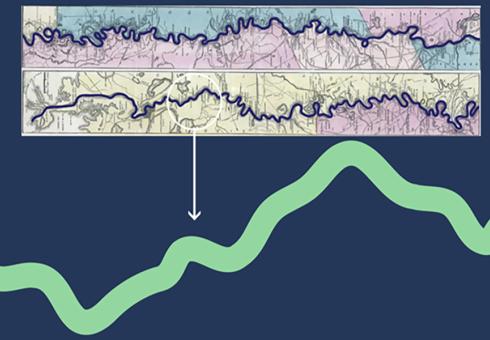
How climate modeling works, what the challenges are, what climate models can help us understand about our future, and how to best communicate this information to a world that needs to know what's coming next in order to adapt and prepare. Featuring Yi Ming, Professor of Earth & Environmental Sciences at Boston College, and Jennifer Morris, Principal Research Scientist at MIT CS3. Each episode of Climate Reveal takes a deep dive into a specific aspect of the climate crisis and ongoing work toward solutions. (Boston College Creative Communication Lab)
News & Media: Modeling and Data
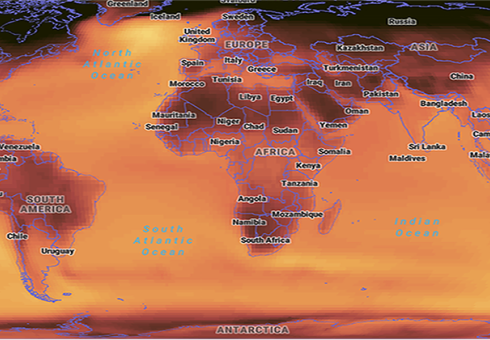
A new, interactive, Temperature-Change-by-Location map co-developed by Climate Interactive and MIT's Bringing Computation to the Climate Challenge (BC3) displays projected temperature changes in local areas across the century under different scenarios. The MIT BC3 team includes several MIT CS3-affiliated researchers. (Climate Interactive)
MIT EAPS postdoctoral associate Paolo Giani is a collaborator for Extreme-Aware Meteorological Years: Open Weather Data for Climate-Resilient Building Simulations, one of seven projects recognized by the prize, which aims to promote transparency and reproducibility of research through open data policies (MIT EAPS)
MIT CS3 presentations highlight multiple sustainability challenges and solutions
A special issue of the MIT CS3 e-newsletter
A perspective by MIT CS3 Senior Research Scientist Stephanie Dutkiewicz
New study co-authored by MIT CS3 researchers shows the natural variability in climate data can cause AI models to struggle at predicting local temperature and rainfall (MIT News) (Coverage: ScienceBlog, Sustainable Brands)
In this Global Trade Analysis Project (GTAP) webinar, MIT Center for Sustainability Science and Strategy Principal Research Scientist Jennifer Morr
In GTAP webinar, MIT CS3 Principal Research Scientist Jennifer Morris presents findings from Nature Climate Change study aimed at better understanding/modeling the climate/economy nexus
Data from neighborhood-level air-quality sensors are needed to enable affected populations to limit air pollution exposure, says MIT CS3 Director Noelle Selin (Fast Company)
MIT CS3 researchers co-author chapter on emissions and concentration scenarios (Springer Cham, Chapter 16, pp. 163-176)
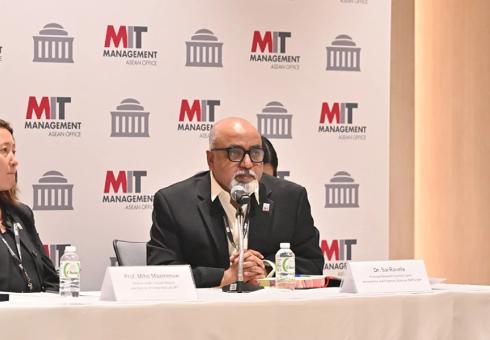
In keynote address, MIT EAPS Principal Research Scientist and CS3 affiliate Sai Ravela shares his expertise on mitigating risks from natural and climate disasters, including AI-driven exposure and vulnerability mapping (U.S. Embassy & Consulate in Thailand) (Coverage: The Nation (Thailand), THAI.NEWS)