News Release
Royal Society of Chemistry
An MIT Professor and CS3 faculty affiliate, Solomon was recognized for her groundbreaking work in atmospheric chemistry and climate science (Royal Society of Chemistry)

An MIT Professor and CS3 faculty affiliate, Solomon was recognized for her groundbreaking work in atmospheric chemistry and climate science (Royal Society of Chemistry)
MIT EAPS and CS3 research scientist recognized for computational innovations that are helping to accelerate the pace of scientific discovery (MIT School of Science)
With projected global warming, the frequency of extreme storms will ramp up by the end of the century, finds new study co-authored by CS3-affiliated principal research scientist Sai Ravela (MIT News) (Coverage: Independent)
Key points from the 47th MIT Global Change Forum
One of 471 scientists, engineers and innovators to be recognized for their scientifically and socially distinguished achievements (MIT Department of Earth, Atmospheric and Planetary Sciences)
In seafloor sediments, stalagmites, ice sheets and other natural records preserved from the ancient past, “paleoclimatologists” like MIT CS3 faculty affiliate David McGee search for clues to past temperatures, atmospheres and weather patterns. (MIT Climate Portal)
Study shows how ‘optimized’ diets could reduce malnutrition and environmental degradation
First workshop explores concept and potential research directions
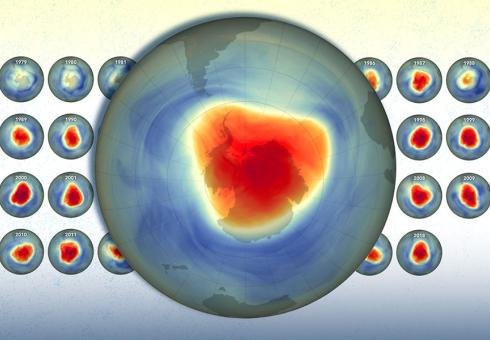
Study co-authored by MIT Professor/CS3 faculty affiliate Susan Solomon shows with high statistical confidence that ozone recovery is going strong (MIT News) (Coverage: The Weather Channel, Earth.com, Yahoo)

Amid growing concern about environmental and socioeconomic “tipping point” events, the MIT Center for Sustainability Science and Strategy (CS3) has launched a new, interactive workshop series aimed at advancing research discussions and collaborations to better understand, predict and inform proactive responses to their potential emergence. The kickoff Tipping Points workshop, held on February 27 on Zoom and facilitated by CS3 Deputy Director C. Adam Schlosser and Principal Research Scientist Jennifer Morris, included an overview of the concept, three flash talks on tipping points science and its potential application, and breakout sessions to identify key research challenges and opportunities.

Amid growing concern about environmental and socioeconomic “tipping point” events, the MIT Center for Sustainability Science and Strategy (CS3) has launched a new, interactive workshop series aimed at advancing research discussions and collaborations to better understand, predict and inform proactive responses to their potential emergence. The kickoff Tipping Points workshop, held on February 27 on Zoom and facilitated by CS3 Deputy Director C. Adam Schlosser and Principal Research Scientist Jennifer Morris, included an overview of the concept, three flash talks on tipping points science and its potential application, and breakout sessions to identify key research challenges and opportunities.
MIT CS3 Deputy Director C. Adam Schlosser assesses worst-case climate impacts on human populations (Geographical)