
News + Media
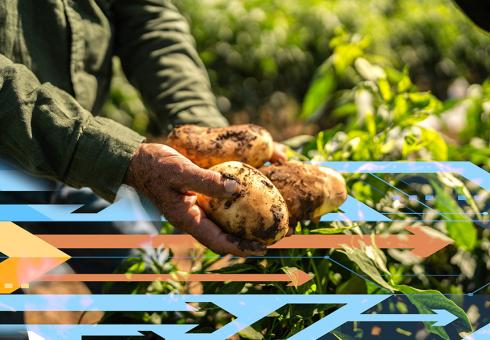
In some regions of the world, the poorest people may spend about 50 percent of their income on food, while the richest spend about 5 percent, finds paper co-authored by MIT CS3 Principal Research Scientist Jennifer Morris (MIT News)

MIT Prof./CS3 faculty affiliate Susan Solomon joins Cleo Abram’s “HUGE* If True” to discuss her 1985 research uncovering how chlorofluorocarbons were depleting the ozone layer, which led to the Montreal Protocol that banned the use of those chemicals. (“HUGE* If True)
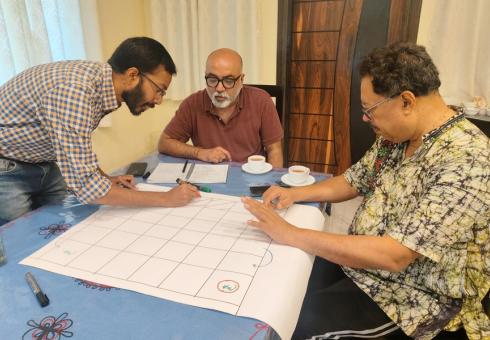
Climate scientist/CS3 affiliate Sai Ravela is using games to help coastal communities find creative adaptations to climate change. (Abdul Latif Jameel Water and Food Systems Lab)

Commentary co-authored by MIT Professor/CS3 faculty affiliate Christopher Knittel argues for a mileage-based approach (WBUR)

MIT Professor/CS3 faculty affiliate John Sterman and co-author of a forthcoming book chapter find that AI’s biggest climate threat isn’t the power draw of data centers — it’s the economic growth AI unleashes (MIT Sloan School of Management) (MIT Sloan Commentary: Can AI’s climate benefits outweigh its costs?)
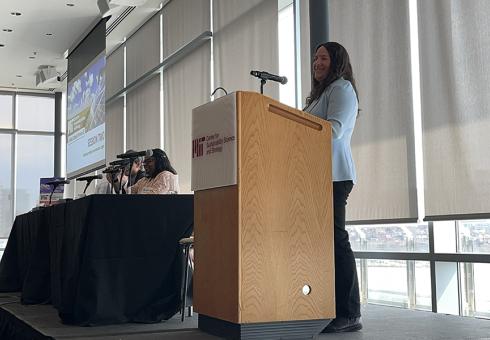
MIT CS3 and MITEI Principal Research Scientist describes her career path and its potential impact

MIT CS3 Principal Research Scientists Jennifer Morris and Angelo Gurgel to lead project that aims to enable decision-makers to assess potential economy-wide impacts of multiple decarbonization pathways (Schmidt Sciences)
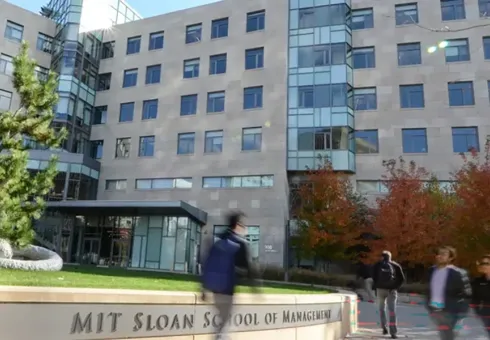
A new MIT Sloan School of Management initiative co-led by Professor/CS3 faculty affiliate Christopher Knittel, aims to design the financial architecture needed to bring breakthrough climate innovations from technical promise to commercial scale (MIT Sloan School of Management)

Initial research projects to advance national priorities across natural resources, manufacturing, nuclear physics, and more. CS3 faculty affiliate Haruko Wainwright is the MIT lead on projects that leverage AI to improve energy-water security and radioactive waste storage. (MIT News)

MIT Professor/CS3 faculty affiliate Michael Howland and MIT co-authors of new Nature Energy study find that where new wind and solar energy projects are built could be key to avoiding blackouts in a future with hotter weather and other challenges (MIT News) (Coverage: OIlprice.com, Times of India)
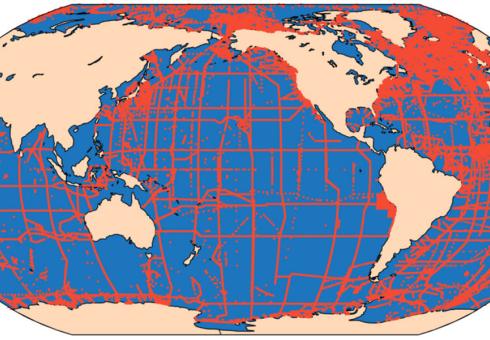
The most comprehensive and rigorously quality-controlled ocean interior data product for marine biogeochemistry studies, GLODAPv3 enables quantitative assessment of biogeochemical changes and feedbacks between climate change and the ocean. MIT CS3 Principal Research Scientist Ryan Woosley contributed to this upgrade. (OceanICU)
Award supports distinguished faculty advancing global environmental research and education