User account menu

  • Log in
MIT Joint Program On The Science and Policy of Global Change

Main navigation

  • About Us
    • Our Purpose
    • Our History
    • Leadership
    • Personnel
    • Jobs
    • Support the Center
    • Contact Us
  • Research
    • Interconnected Systems
    • Modeling and Data
    • Actionable Research
    • Research Projects
  • Publications
    • All Publications
    • Annual Report
    • Global Change Outlook
    • Peer-Reviewed Research
    • Reports
    • Other Publications
    • Publication Search
  • News + Media
    • News Releases
    • In the Media
    • Researcher Profiles
    • Research Insights
  • Events
    • Upcoming Events
    • Past Events
    • Global Change Forum
  • Sponsorship
    • About Sponsorship
    • Our Sponsors
    • Sponsor Login

News and Outreach: Susan Solomon

Solomon Report
In The Media
MIT Earth, Atmospheric and Planetary Sciences
May 6, 2013
Pace of climate zone shifts quickens as climate warms
According to a new study co-authored by Susan Solomon, as the planet warms, not only do Earth's climate zones keep shifting, they actually shift at an accelerating pace, giving species inhabiting each zone less time to adapt.


"The warmer climate gets, the faster the climate zones are shifting. This could make it harder for plants and animals to adjust," said lead author Irina Mahlstein.

The study is the first to look at the accelerating pace of the shifting of climate zones, which are areas of the Earth defined by annual and seasonal cycles of temperature and precipitation, as well as temperature and precipitation thresholds of plant species. Over 30 different climate zones are found on Earth; examples include the equatorial monsoonal zone, the polar tundra zone, and cold arid desert zone.

"A shift in the climate zone is probably a better measure of 'reality' for living systems, more so than changing temperature by a degree or precipitation by a centimeter," said Mahlstein.

The scientists used climate model simulations and a well-known ecosystem classification scheme to look at the shifts between climate zones over a two-century period, 1900 to 2098. The team found that for the initial 2 ° Celsius (3.6 ° Fahrenheit) of warming, about 5 percent of Earth's land area shifts to a new climate zone. The models show that the pace of change quickens for the next 2 ° Celsius of warming, and an additional 10 percent of the land area shifts to a new climate zone. "Pace of shifts in climate regions increases with global temperature" was published online in the journal Nature Climate Change on April 21.

Certain regions of the globe, such as northern middle and high latitudes, will undergo more changes than other regions, such as the tropics, the scientists found. In the tropics, mountainous regions will experience bigger changes than their surrounding low-altitude areas.

In the coming century, the findings suggest that frost climates–the coldest climate zone of the planet–are largely decreasing. Generally, dry regions in different areas of the globe are increasing, and a large fraction of land area is changing from cool summers to hot summers.

The scientists also investigated whether temperature or precipitation made the greater impact on how much of the land area changed zones. "We found that temperature is the main factor, at least through the end of this century," said Mahlstein.

This story is adapted from a news article at esrl.noaa.gov.
susan solomon
Researcher Profile
EAPS
Feb 13, 2013
Susan Solomon wins the Vetlesen Prize and BBVA Foundation Frontiers of Knowledge Award

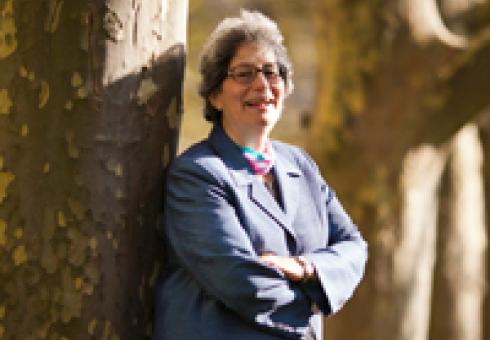
Susan Solomon has won both the Vetlesen Prize and a 2012 BBVA Foundation Frontiers of Knowledge Award.

The Vetlesen Prize is given “for scientific achievement resulting in a clearer understanding of the Earth, its history, or its relations to the universe” and is designed to recognize sweeping achievements on par with the Nobel.  The Prize was established in 1959 and is given every several years by a selection committee appointed by the president of Columbia University. The most recent award was in 2008 to geologist Walter Alvarez. Previous winners include climate scientists Sir Nicholas Shackleton and Wallace Broecker, marine geologist Walter Pitman, seismologist Lynn Sykes, and founding director of Lamont Maurice “Doc” Ewing.

Soloman is being recognized for her work in identifying the cause of the Antarctic ozone hole. This research helped bring about a global ban on manmade ozone-depleting chemicals.  She shares the award with French climate scientist Jean Jouzel who is being recognized for his work extracting the longest-yet climate record from polar ice cores. The pair will receive the award and accompanying medal at Columbia's Low Library on Thursday, February 21st.

The BBVA Foundation Frontiers of Knowledge Awards recognize, among other things, outstanding contributions that advance understanding or deliver material progress with regard to climate change, one of the key challenges of the global society of the 21st century.

The award citation states that Solomon "has contributed, through her research and leadership, to the safeguarding of our planet." Solomon's work over 30 years has succeeded in establishing and drawing together links between three key climate change variables: human activity, a profound and comprehensive understanding of the behavior of atmospheric gases, and the alteration of climate patterns globally.

Researcher Profile
Nov 5, 2012
Atmospheric Chemist Susan Solomon Finds Hope in Past Environmental Challenges
solomon1
News Release
MIT News
Sep 18, 2012
What the Past Teaches: Meeting Today's Global Environmental Challenges

Pagination

  • First page « First
  • Previous page ‹ Previous
  • …
  • Page 4
  • Page 5
  • Page 6

Inspired by our mission?

You can help to sustain our research by donating through Giving to MIT (search for fund 2045100).

Contact Information

MIT Center for Sustainability Science and Strategy
Massachusetts Institute of Technology • Cambridge, MA 02139

Follow Us

Quick Links

  • Contact Us
  • CS3 staff & students
  • Accessibility
  • Logout

Main navigation

  • About Us
    • Our Purpose
    • Our History
    • Leadership
    • Personnel
    • Jobs
    • Support the Center
    • Contact Us
  • Research
    • Interconnected Systems
    • Modeling and Data
    • Actionable Research
    • Research Projects
  • Publications
    • All Publications
    • Annual Report
    • Global Change Outlook
    • Peer-Reviewed Research
    • Reports
    • Other Publications
    • Publication Search
  • News + Media
    • News Releases
    • In the Media
    • Researcher Profiles
    • Research Insights
  • Events
    • Upcoming Events
    • Past Events
    • Global Change Forum
  • Sponsorship
    • About Sponsorship
    • Our Sponsors
    • Sponsor Login

User account menu

  • Log in
Back to top