News + Media

Joint Program Logo
In The News
NY Daily News

By Josh Max

It’s official – we don’t want cars that get 200 or more miles to the gallon, and it’s consumers’ fault, not automakers’.
A new report issued by Massachusetts Institute of Technology economist Christopher Knittel says major innovations in miles-to-the-gallon have been stymied by cars that are larger and more powerful than they were 30 years ago.  


Between 1980 and 2006, the average gas mileage of vehicles sold in the United States increased by slightly more than 15 percent — a relatively modest improvement, says Knittel. “But during that time, the average weight of those vehicles increased 26 percent, while their horsepower rose 107 percent. All factors being equal, fuel economy actually increased by 60 percent between 1980 and 2006.” If cars had stayed the same weight and size since 1980, says Knittel, we’d all be getting an average of 73 MPG instead of our current average of 27.  


“Most of that technological progress has gone into [compensating for] weight and horsepower,” he says, adding that we ought to make drivers cough up for their own pollution.


“When it comes to climate change, leaving the market alone isn’t going to lead to the efficient outcome,” Knittel says. “The right starting point is a gas tax.”


Knittel conducted his study by using data from auto trade journals, manufacturers and data from the National Highway Transportation Safety Administration, which revealed that Americans have chosen to buy larger, less fuel-efficient vehicles over the last 30 years despite far more public awareness of pollution, global warming and other serious environmental issues.  In 1980, for example, light trucks accounted for about 20 percent of passenger vehicles sold in America. By 2004, light trucks, including SUVs, accounted for 51 percent of sales.


And despite current national gas prices being higher than they’ve ever been in the history of the internal combustion vehicle - $3.48 per regular gallon - gas prices dropped by 30 percent when adjusted for inflation between 1980 and 2004, Knittel says. The blame, he says, lies with the consumer, not the seller.

“I find little fault with the auto manufacturers, because there has been no incentive to put technologies into overall fuel economy,” Knittel says. “Firms are going to give consumers what they want, and if gas prices are low, consumers are going to want big, fast cars. I think 98 percent of economists would say that we need higher gas taxes.”

In The News
NPR

By: Richard Harris

Listen to the story.

shale
SOURCE: Keith Srakocic/AP


The boom in cheap natural gas in this country is good news for the environment, because relatively clean gas is replacing dirty coal-fired power plants. But in the long run, cheap natural gas could slow the growth of even cleaner sources of energy, such as wind and solar power.

Natural gas has a bad rap in some parts of the country, because the process of fracking is not popular. But many people looking at cheap natural gas from the global perspective see it as a good thing.

Henry Jacoby, an economist at the Center for Energy and Environmental Policy Research at MIT, says cheap energy will help pump up the economy.

"Overall, this is a great boon to the United States," he says. "It's not a bad thing to have this new and available domestic resource." He says cheap energy can boost the economy, and he notes that natural gas is half as polluting as coal when it's burned for electricity.

"But we have to keep our eye on the ball long-term," Jacoby says. He's concerned about how cheap gas will affect much cleaner sources of energy. Wind and solar power are more expensive than natural gas, and though those prices have been coming down, they're chasing a moving target that has fallen fast: natural gas.

"It makes the prospects for large-scale expansion of those technologies more chancy," Jacoby says.

Natural Gas: 'A Bridge To Nowhere'?

From an environmental perspective, natural gas could help transition our economy from fossil fuels to clean energy. It's often portrayed as a bridge fuel to help us through the transition, because it's so much cleaner than coal and it's abundant. But Jacoby says that bridge could be in trouble if cheap gas kills the incentive to develop renewable industry.

"You'd better be thinking about a landing of the bridge at the other end. If there's no landing at the other end, it's just a bridge to nowhere," he says.

In the short run, at least, the wind industry isn't too worried about this. Denise Bode, who heads the American Wind Energy Association, says low gas prices don't undercut current prices for wind, because those are mostly fixed by 20-year contracts, not market prices.

And even if wind is a bit more expensive than natural gas, she says utilities still want it in their mix. Windmills aren't subject to changing fuel prices, so the cost of production is quite predictable. That's not true for natural gas — there's no guarantee that today's cheap prices will stay as low as some predict.

"It's very difficult to really know how certain that is, so you always want to balance that with something that is certain," Bode says.

Reducing Political Will For Renewables?

What really worries her isn't natural gas — it's politics. Wind could lose a huge tax break at the end of this year. And that would have a much more dramatic effect than low natural gas prices.

"You'll see very low numbers" for new wind installations if the federal production tax credit expires," Bode says. "In fact, I think EIA [the U.S. Energy Information Administration] projects almost zero for 2013."

The solar industry's subsidies run for several more years, so they are not in that bind, at least not yet. But Trevor Houser, an energy analyst at the Rhodium Group, says these tax credits and other incentives like state renewable standards are key if renewables are to grow and mature during the natural-gas glut.

"Long-term renewable deployment in the U.S. is going to depend primarily on policy," Houser says. "Is there enough concern about environmental consequences to put in place incentives for renewable energy?"

That partly depends on how much of a premium people and companies will be willing to pay for cleaner energy. Right now, with natural gas so cheap, that premium is fairly substantial.

"If those prices hang around for another three or four years, then I think you'll definitely see reduced political will for renewable energy deployment, " Houser says. "But we don't expect prices that low to hang around that long, because low prices are in many ways self-correcting."

Gas is so cheap now that companies that produce it are struggling to make a profit. So Houser expects prices to move up. That will help close the price gap between gas and renewable energy.

Even so, there's still a huge way to go before prices and government policies do enough to significantly reduce emissions of the gases that contribute to global warming.


Gina McCarthy
News Release
MIT News

 By: Vicki Ekstrom, Joint Program on the Science and Policy of Global Change


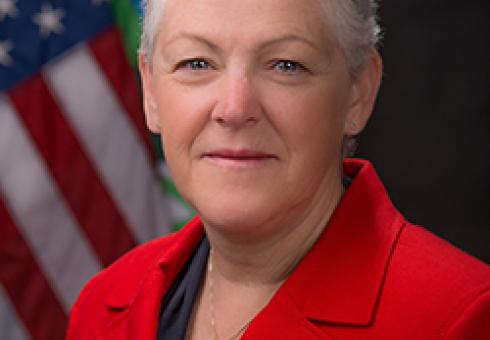
EPA's top air official, Gina McCarthy, leads roundtable discussion.

Looking to tap the knowledge of some of the nation's leading energy and environment experts, and update them on new and proposed standards, the U.S. Environmental Protection Agency's top air official visited MIT's campus last Friday, Jan. 27. Gina McCarthy, EPA's assistant administrator for the Office of Air and Radiation who led a roundtable discussion which was hosted by MIT's Joint Program on the Science and Policy of Global Change and moderated by the program's co-director, John Reilly.

A return home for the Massachusetts native who spent more than 25 years working on environmental issues in the state, McCarthy said she saw the meeting as an opportunity to "learn from the experts who have been so valuable in providing the research and the science" her office needs to be successful.

Robust science, and clear cost-benefits associated with that science, is critical, McCarthy said — a lesson roundtable participant and environmental economics Professor Michael Greenstone helped her realize when he was the chief economist for President Obama's Council of Economic Advisers during the first year of the administration.

"I think the agency has tremendously benefitted from that, specifically the air program because we are under constant scrutiny," McCarthy said. "Everything these people know intersects very directly with the work I've been doing for the president."

The visit came just days after President Obama's State of the Union address, where he laid out his intention to take an "all-of-the-above" approach toward America's energy future.

"In this administration we are looking for everything from commitments to renewables, that would be wind and solar, but also recognizing that coal will have a place in the mix," McCarthy said of the president's vision. "We're asking ourselves from the EPA side what that means for our upcoming rules on greenhouse gases and source performance standards for powerplants. How do you write it in a way that's consistent with the rules and still allows a place for new coal and new technologies?"

Leadership on mercury
 
Reilly
Joint Program on Global Change
Co-Director John Reilly


Noelle Selin, who participated in the discussion, was also excited to hear the president mention mercury.

"I do think that the Mercury and Air Toxics Standards are something we've been waiting for, for a long time, and they are a really forward-looking rule," Selin said.

She noted that Massachusetts has lead the way in controlling mercury, perhaps due to McCarthy's earlier leadership, and that the state will especially gain from the national rule because it is upwind of polluting coal-mining states to its south.

Mentioning the global negotiations on mercury — scheduled to wrap up in January 2013, after the next presidential election — Selin asked what role the new standards might play in the global arena as China's mercury emissions continue to grow and endanger the gains made by the new rule.

"We were hoping that if we put out the powerplant rule [mercury standards] that would bolster our role in the discussion," McCarthy said. "It was one of the issues we considered when we were going through the process of forming the rule. We had to do our part … we had to have a legitimate position in the international discussion." 

Tapping the value of natural gas

Roundtable


McCarthy acknowledged that the mercury standards come while the cost of natural gas is low, which she said is "changing the energy world" and making some coal-fired powerplants "ineffective, inefficient and not competitive."

MIT Energy Initiative Director Ernest Moniz agreed: "I think we all agree that the mercury rules are absolutely critical in terms of displacing some coal, in addition to the economics of coal and gas with natural gas prices below $3 per million Btu."

But Christopher Knittel, an energy economics professor at the MIT Sloan School of Management, pointed out that natural gas deposits can be viewed as a huge opportunity — but also, a huge risk.

One of the challenges with natural gas is that the extraction process — a process called hydraulic fracturing — emits Volatile Organic Compounds (VOCs), such as methane, which cause smog and are associated with some health effects such as cancer. Methane is also a greenhouse gas that contributes to climate change.

Richard Schmalensee, director of the Center for Energy and Environmental Policy Research, addressed another challenge: the role that states play.

"The state's roles are problematic because you've got all this gas in places that have never had experience with anything like it," Schmalensee said.

McCarthy said there is a need for standard best practices within the industry — a topic the president addressed in his speech, as he challenged natural gas companies not to follow in the footsteps of the oil industry in terms of polluting now and worrying about it later.

"The good news about that is when you capture the VOCs you capture the methane. When you capture methane you sell it," McCarthy said. "So the cost-effectiveness of those strategies is quite good."

The EPA is close to finalizing a rule in April 2012 that would reduce VOCs from the oil and natural gas industry.

Meeting the Climate Challenge

The inclusion of climate change was another exciting point for McCarthy in the president's address.

But Susan Solomon, a professor of atmospheric chemistry who recently joined MIT from the National Oceanic and Atmospheric Administration (NOAA), said she thought the president missed an opportunity to expand on that point.

"This issue of climate change isn't one that's going to be solved by everyone pitching in. It's not like recycling where if we can all do our part we'll be better off," Solomon said. "It really does require new technologies and investments. So the most important thing that a citizen can do is to engage in a discussion about that and I think he missed an opportunity to call for engagement, including by Republicans."

McCarthy said one of the challenges of the present situation is that nobody wants to invest in anything that doesn't offer an immediate payback. The innovative new technologies needed to actually make a difference in the climate challenge are years, perhaps decades, away and require significant investments.

"And I think it's the government's job to look way beyond the immediate payback by establishing priorities for research and innovation," McCarthy said.

EPA's new greenhouse gas reporting data is one sign of progress that McCarthy believes has helped advance the climate change conversation.

"I actually think that has spurred tremendous amounts of opportunity for climate change to get back into a reasonable, rational discussion," McCarthy said. "I'm excited that the president is talking about that — as well as clean energy. Not replacing one for the other. Because it is a challenge we need to meet head on."



Selin
News Release
MIT News

By: Vicki Ekstrom, Joint Program on the Science and Policy of Global Change

Selin
SOURCE: EPA


Americans have long known the dangers of mercury in our environment, with doctors repeatedly warning pregnant women to remove fish from their daily diets. But despite this solid knowledge of the health impacts, the United States has never regulated mercury emissions from powerplants — our nation’s number one source of mercury — until now.

Last month, the Environmental Protection Agency (EPA) issued Mercury and Air Toxics Standards. The standards require coal-fired powerplants to install scrubbing technology that will cut 90 percent of their mercury emissions by 2015.

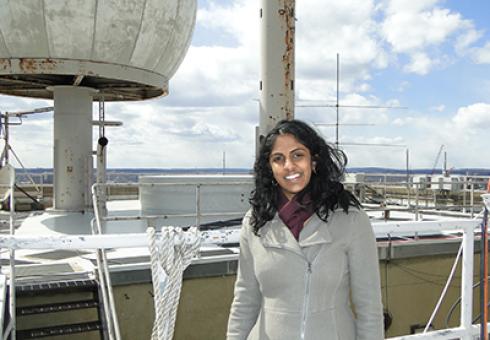
To better inform local residents about the new protections, Noelle Eckley Selin — an assistant professor in MIT's Engineering Systems Division and Department of Earth, Atmospheric and Planetary Sciences and a researcher in MIT’s Joint Program on Global Change — this week joined EPA Regional Administrator Curt Spalding and other public health experts at a public availability session at the East Boston Neighborhood Health Center.

“These mercury standards help prevent the developmental delays and neurological damages that could come from eating contaminated fish,” Selin said at the Thursday event.

At MIT, Selin looks at the pathways by which mercury reaches the environment and the effect it has on human health once it gets there. She also analyzes the steps regulators could take — and in some cases have taken — to prevent further contamination.

“There’ve been proposals for a long time to regulate these emissions from coal-fired powerplants,” Selin said in an interview with the Los Angeles Times when the rules were first released on Dec. 21, 2011. “The earlier incarnation of this was the Clean Air Mercury Rule, which was a cap-and-trade proposal for mercury, and that was challenged in the courts and then thrown out. And now this is another try at regulating, but it’s been a long time in coming.”

Massachusetts began controlling mercury in the 1990s. Since then, the state has reduced mercury emissions by 91 percent, according to Massachusetts Department of Environmental Protection Commissioner Kenneth Kimmell.

“It has been a major source of frustration for us that even though we’ve reduced our mercury rates by so much, many of our water bodies are still off limits to fishing because of pollution from upwind states,” Kimmell said at the Thursday event.


mercury
Selin, 2009 Annual Review

Massachusetts’s experience shows that tough standards can have a substantial effect on the environment, Selin said. But federal regulations such as the Mercury and Air Toxics Standards are necessary because of the pollution that comes from powerplants in coal mining and producing states.

Health benefits

Rachel Murphy of Cambridge has a 6-year-old daughter with severe asthma. Her daughter’s asthma is so bad that at times she coughs hard enough to burst blood vessels in her eyes.

“Rachel can get the best medicine possible, but she can’t control the air her daughter breathes,” New England’s American Lung Association President Jeffrey Seyler said at the event.

The air toxics standards are expected to help tens of thousands of children such as Murphy’s daughter by preventing 30,000 cases of childhood asthma symptoms and about 6,300 fewer cases of acute bronchitis among children each year, according to EPA estimates.

Vulnerable populations such as infants will also be helped specifically because of the mercury standards under the new rule.

“These will especially protect newborns who are at a greater risk during their development,” Selin said. “It’s estimated more than 300,000 newborns in the U.S. are exposed in utero to dangerous levels of mercury. This can cause lower IQ and neurological damages.”

Dr. Alan Woolf, the director of the Pediatric Environmental Health Center at Children's Hospital in Boston, agrees.

“Mercury is associated with long-lasting and potentially irreversible effects on the brain and nervous system,” Woolf said at the event. “These effects can reduce a child’s intelligence, can change their behavior, and can cause seizures, muscle weakness, paralyses and other neurologic injuries limiting their future as productive citizens.”

International implications

The United States’s leadership in regulating mercury comes at an important time, as countries around the world have been negotiating a global, legally binding mercury treaty since June 2010.

The third of five planned United Nations negotiating sessions occurred in November in Nairobi, Kenya, and Selin plans to attend the fourth in June in Uruguay. She will also be bringing six graduate students, as part of a National Science Foundation grant, to the final negotiating session set to take place in early 2013.


Participants
SOURCE: EPA


From Left to Right - Manny Lopes, Deputy CEO East Boston Neighborhood Health Center, Jeffrey E. Seyler, President and Chief Executive Officer, American Lung Association, New England, Dr. Alan Woolf, Director, Pediatric Environmental Health Center, Children's Hospital, Boston, Dr. Noelle Eckley Selin, Assistant Professor, Engineering Systems Division and Dept. of Earth, Atmospheric and Planetary Sciences at MIT, Kenneth Kimmell, Commissioner, Massachusetts Department of Environmental Protection, Curt Spalding, Regional Administrator, EPA New England, Jim Hunt, City of Boston Environmental and Energy Services

In an earlier interview with MIT News, Selin said domestic politics would likely continue to be a challenge for U.S. implementation of environmental regulations and international cooperation on mercury. But with these standards — now the most stringent mercury standards of its kind in the world — she says the country has proven their leadership.

“These standards show that the U.S. is taking leadership at home to address a widespread and substantial global problem.”

lecture
Recent Event
MIT News

By: Leda Zimmerman, MIT Energy Initiative


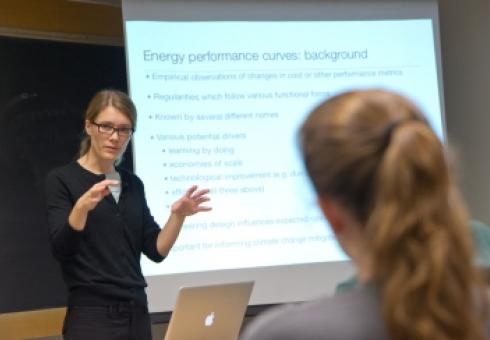
As Assistant Professor of Engineering Systems at MIT, Jessika Trancik focuses her research on the evolution of technologies and on decomposing performance trajectories of energy systems. She is particularly interested in understanding the dynamics and limits of costs and carbon intensities of energy technologies, in order to inform climate change mitigation efforts. Photo: Justin Knight

In the fall of 2010, Leah Stokes walked into Energy Systems and Climate Change Mitigation (ESD.124) on the first day the graduate seminar was offered. “The class seemed perfect for me,” says the PhD student in environmental policy and planning in the Department of Urban Studies and Planning, “so I had to take it. I ended up loving it.” While no novice to the complex questions involved in transforming a carbon-centric world, Stokes, a 2010-2011 Siemens Energy Fellow, credits ESD.124 instructor Jessika Trancik, assistant professor of engineering systems, with “getting me thinking in a different way.”

Stokes and other students describe an ambitious class that encompasses the multidimensional challenges entailed in tackling climate change. “Professor Trancik frames the problem in terms of multiple impacts,” says first-year graduate student Morgan Edwards. “She shows how we can make choices in different areas to reduce emissions … She puts it all together as one picture.”

Trancik acknowledges this “distinctive feature” of ESD.124: “I combine a focus on technologies with a broader quantitative picture,” she says, which means “working across scales and at different levels of abstraction.” By semester’s end, Trancik says, students acquire “a comprehensive, integrated framework for comparing different energy supply technologies to one another, and the capacity to compare these energy technologies to climate change mitigation goals.”

Quantitative and analytical tools are central to ESD.124. Through lectures and problem sets, students learn statistical methods and models as they study such topics as carbon intensity, water scarcity, and the change in performance of technologies over time. Trancik situates these subjects in the context of larger questions: How energy systems now, and in the future, may contribute to climate change; and which technologies might best meet actual greenhouse gas targets. Trancik is also intent on giving students insight into research methodology, so she asks them to pore over journal articles with a critical eye, and present their findings to classroom peers.

“I’m a big proponent not just of reading articles but of understanding how researchers find their results, and questioning those results," Trancik says.

In their final projects, students deploy newly sharpened analytical and quantitative skills in original research. With Trancik’s assistance, students devise “discrete research questions” and select appropriate methods for seeking answers. Edwards focused on the lifetimes of bio-based jet fuel emissions versus those produced by conventional jet fuels, and explored how “the timing and composition of emissions is important in terms of meeting climate goals.” Stokes analyzed the carbon budget for a planet where temperatures are limited to an increase of 2° Celsius. “I had to determine the mix of energy systems to make that target,” Stokes says. With Trancik’s guidance, Stokes showed “step by step what was required to decarbonize the energy system,” and how to “grapple with uncertainty in forecasting” over a timescale of 60-plus years. Trancik says her students don’t “want solutions handed to them,” and sometimes produce work that leads to publishable articles. Other ESD.124 projects deepen into continued research (Edwards now works in Trancik’s lab).

Trancik, with her heterogeneous background in materials science, energy modeling, complex systems, and U.N. sustainable development practice, brings something unique to the classroom, say students. “Her approach ties technological understanding of innovation and systems to policy understanding of the scale of the problem,” Stokes says. “She is ultimately an engineer but quite adept in communicating to a policy audience. She empowers other people to bring what they know to the table, and can draw out their best qualities.” From Edwards’s perspective, Trancik “really motivates students to see where we are now, and what needs to be done to change the climate’s trajectory — that it is an ambitious and difficult thing we’re setting out on, but definitely possible.”

Trancik says that while she teaches “standard tools and concepts,” she also tries to “help students see new connections.” She looks forward to extending this approach to her new spring course, Mapping and Evaluating New Energy Technologies (ESD.125). Teaching at MIT, she says, is both “uplifting and a great privilege,” because of “students who can pose very challenging questions and who have the ability — and want — to solve difficult problems. I’m thankful for that every day.”


Selin
Researcher Profile
2013 Leopold Leadership Program
Selin
SOURCE: EPA

Dr. Noelle Eckley Selin, an Assistant Professor at the Massachusetts Institute of Technology (MIT) and a researcher in MIT’s Joint Program on Global Change, participated in a public availability session to discuss the Environmental Protection Agency’s recent Mercury and Air Toxics Standards. Noelle was joined by EPA’s Regional Administrator Curt Spalding, New England’s American Lung Association President Jeffrey Seyler, Commissioner of the Massachusetts Department of Environmental Protection Kenneth Kimmell and other public health experts. The event was held at the East Boston Neighborhood Health Center.

The Mercury and Air Toxics Standards – issued December 21, 2011 – are the nation’s first standards to protect American families from power plant emissions of mercury and toxic air pollution like arsenic. To learn more about the standards, click here.

The following are Dr. Selin’s remarks from the event:

Thank you for having me here today. I’m pleased to be here to talk about these historic standards.

I’m at MIT and I do research in atmospheric science. I look at the pathways by which mercury actually reaches the environment and what it does once it gets there. So I’ve spent much of my career studying the ways in which mercury reaches the environment where it then affects human health. I’ve tracked the path that mercury travels from power plants – which are our nation’s number one source of mercury – through the air, into our waterways and then eventually the fish we eat.  And I’ve also analyzed the steps we could take to prevent further contamination. These standards do represent a strong step towards that goal.

These mercury standards help prevent the developmental delays and neurological damages that could come from eating contaminated fish. This is in addition to the tens of thousands of cases of asthma and acute bronchitis that are avoided by controlling other air toxics other than mercury. Specifically on the mercury standards, these will especially protect newborns who are at a greater risk during their development. It’s estimated more than 300,000 newborns in the US are exposed in utero to dangerous levels of mercury. This can cause lower IQ and neurological damages.

Importantly, this standard will have a large impact right here in the Northeast, especially for people who eat fish caught in local waterways. And that’s because mercury released from U.S. power plants contaminates what’s nearby. This standard will especially benefit residents here in Massachusetts and the Northeast because we’re down wind of the emitting power plants in coal mining and producing states. You can see this from our map (below), which shows the fraction of mercury entering the environment that comes from domestic sources.  Here in the Northeast, most of the mercury that enters our waterways comes from the sources in the US that will be controlled by these standards.

Here in Massachusetts, efforts to cut mercury from local power plants have led to significant mercury declines in fish in recent years. This experience has shown that tough standards can have a substantial effect on the environment. But these reductions are not enough, and mercury levels in fish here are still too high. Much of the mercury in our local fish comes from sources outside the region, which is why federal regulations are needed.

In addition, countries around the world are currently negotiating a global treaty to limit mercury pollution because mercury is a problem worldwide. These standards show that the US is taking leadership at home to address a widespread and substantial global problem.

mercury
Percentage contribution from North American primary anthropogenic sources to total (wet plus dry) annual mercury deposition simulated by the GEOS-Chem global mercury model for 2004–2005. Reproduced from the Selin, Global Biogeochemical Cycling of Mercury: A Review, Annual Review of Environment and Resources, 34: 43-63, 2009, MIT Joint Program on the Science and Policy of Global Change Reprint Series.


hurricane
In The News
National Geographic

By: Mason Inman, National Geographic News

hurricane
SOURCE: AP

Shale gas has transformed the U.S. energy landscape in the past several years—but it may crowd out renewable energy and other ways of cutting greenhouse gas (GHG) emissions, a new study warns.

A team of researchers at Massachusetts Institute of Technology used economic modeling to show that new abundant natural gas is likely to have a far more complex impact on the energy scene than is generally assumed. If climate policy continues to play out in the United States with a relatively weak set of measures to control emissions, the new gas source will lead to lower gas and electricity prices, and total energy use will be higher in 2050.

Absent the shale supply, the United States could have expected to see GHG emissions 2 percent below 2005 levels by 2050 under this relatively weak policy. But the lower gas prices under the current shale gas outlook will stimulate economic growth, leading GHG emissions to increase by 13 percent over 2005. And the shale gas will retard the growth of renewable energy's share of electricity, and push off the development of carbon capture and storage technology, needed to meet more ambitious policy targets, by as long as two decades.

"Shale gas is a great advantage to the U.S. in the short term, for the next few decades," said MIT economist Henry Jacoby, lead author of the new study. "But it is so attractive that it threatens other energy sources we ultimately will need."

A New Resource

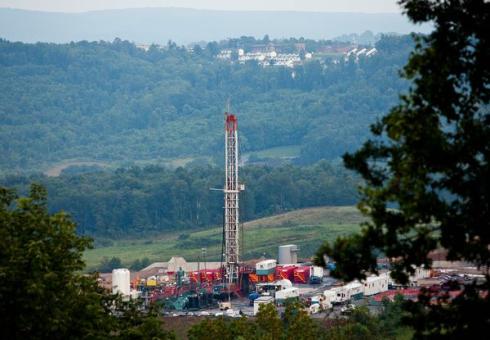
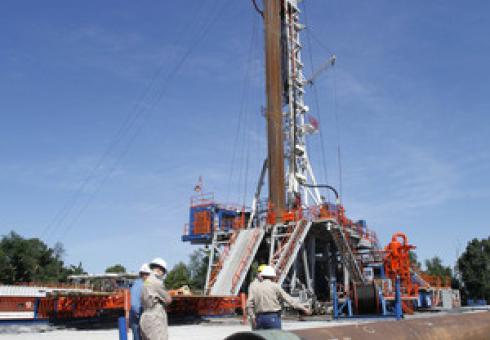
Shale gas relies on hydraulic fracturing, or fracking, to open up cracks in the rock layer deep underground. The high-volume water fracking, combined with horizontal drilling, allows abundant natural gas production from rock layers that had not yielded natural gas in economic volumes before.

In just five years, the supply from shale gas has soared to become a quarter of all U.S. natural gas production. If this production continues to expand, natural gas prices will remain relatively low for decades, and natural gas will take over more of the electricity market, according to the study's forecast, published in the inaugural issue of Economics of Energy and Environmental Policy. (The peer-reviewed semi-annual journal is a new venture of the International Association for Energy Economics.)

The study compared two different kinds of climate policies, and two different situations—with or without shale gas.

In the weak climate policy scenario that the researchers examined, the government would mandate that, by 2030, renewable energy such as wind and solar would grow to become 25 percent of the electricity market, and half of all coal power plants would be shut down.

In the strong climate policy case, greenhouse gas emissions would be required to shrink continually, dwindling to about half today's level by 2050, driven by a price on these emissions, either through a tax or market-based policy to cap emissions.

Either way, the presence of abundant shale gas would make it cheaper to meet the targets, the study found.

"The biggest effect is that it would push out coal," Jacoby said. This is a climate benefit, because natural gas generates electricity with roughly half the emissions of coal.

However, the expansion of shale gas would also put limits on the expansion of other sources of electricity, because natural gas power plants would tend to be cheaper than wind or solar.

In the strong policy scenario, the study forecasts that natural gas would take over about a third of the electricity market by 2050, completely driving out coal. In this case, renewable energy would increase as well, tripling between now and 2050—but this growth of renewables would be much slower than what the U.S. has seen in the past several years.

Low-cost gas would also hamper the development of carbon capture and storage (CCS), a way of keeping carbon dioxide, the primary greenhouse gas, from going up power plants' smokestacks, and instead storing it underground.

According to the study, if there were no shale gas, meeting the stronger policy target would first bring CCS into play around 2030, and then it would expand to become a crucial part of the electricity system. But with shale gas available, CCS is projected to be pushed back by up to two decades.

"In the long run, we need renewables, carbon capture and storage, and nuclear power," Jacoby said. "Shale gas is a good thing overall, but we've got to keep our eye on the long term,"—beyond 2050.

Cost, Technology Uncertainty

One reason that it is important to spur development of alternative energy and carbon capture is that there is a lot of uncertainty about the future of shale gas, said Jacoby, who co-authored a major MIT study last year on the subject.

"We're at the very early stage of this resource," Jacoby said. "It's a huge resource, but the main uncertainty is the cost."

That's in part because "we're just learning about the geology [of shale gas areas] and how wells will perform over time," Jacoby said.

New environmental regulations may also put restrictions on the industry, pushing up the cost of production. And as the prime reserves of shale gas are depleted, the gas from remaining reserves may be more expensive to produce.

On the other hand, there has been rapid technological improvement in fracking, Jacoby said, "so we'll get better and better at it," which could help keep the price down.

A Blessing or a Trap?

Physicist Ray Orbach, director of the Energy Institute at the University of Texas in Austin, agrees that shale gas in the coming years will be cheap and plentiful enough to drive out most other sources of electricity—including coal, nuclear, and renewables.

"It's a little hard to see how any other source can compete for the foreseeable future," Orbach said.

But Orbach, who oversaw federal research efforts as director of the Office of Science at the U.S. Department of Energy in the Bush administration, added, "I think it's a very healthy competition," since it will drive out coal, the dirtiest source of electricity, both in terms of greenhouse gases and smog. Rather than shale gas being a problem, he said, "it's a blessing."

However, James Bradbury, a policy analyst at the World Resources Institute, said energy policymakers face new challenges due to shale gas.

"Given current U.S. policies, abundant and relatively cheap natural gas puts all other energy sources at a competitive disadvantage," he said. "It is particularly important for decision-makers to . . . usher in more renewable energy by creating incentives to help this industry thrive," including policies to increase innovation and encourage investment in electric grids.

The infrastructure people build today—power plants fired by coal or natural gas, or solar panels or wind turbines—will likely last for decades, Bradbury said.

"The longer it takes for the [United States] to pass climate policy," he added, "the more likely it is that we will see . . . gas-related infrastructure become effectively locked in to our energy system for decades."

The MIT study noted that natural gas is often thought of as a "bridge" to a low-carbon future. But the study also emphasizes that there is also a risk of "stunting" other technologies for reducing carbon emissions. "While taking advantage of this gift in the short run, treating gas as a 'bridge' to a low-carbon future," the study said, "it is crucial not to allow the greater ease of the near-term task to erode efforts to prepare a landing at the other end of the bridge."

hurricane
MIT News

By Jennifer Chu, MIT News Office


hurricane
SOURCE: NASA


If you’re planning to build that dream beach house along the East Coast of the United States, or would like to relocate to the Caribbean, a new study by economists and climate scientists suggests you may want to reconsider.

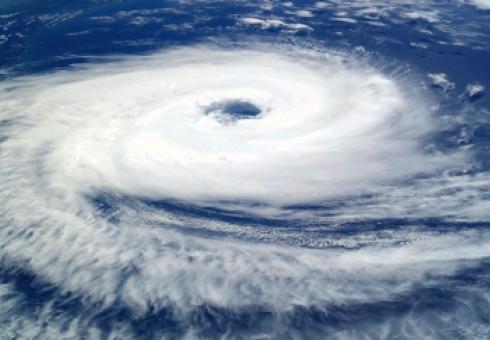
Researchers from MIT and Yale University have found that coastal regions of North America and the Caribbean, as well as East Asia, are most at risk for hurricane damage — a finding that may not surprise residents of such hurricane-prone communities. However, the researchers say by the year 2100, two factors could more than quadruple the economic damages caused by tropical storms in such regions and around the world: growing income and global warming.

In a paper published this week in Nature Climate Change, researchers developed a model to predict hurricanes around the world, looking at how hurricane activity might change in the next 100 years both with and without climate change.

Even in a world without climate change, where rates of greenhouse gas emissions remain stable, the researchers found that annual economic damages from hurricanes could double in the next century: Global population is expected to reach 9 billion by 2100, likely leading to more development along hurricane-prone coastlines. Given such growth, the researchers projected that worldwide annual damage from hurricanes — currently $26 billion — could increase to $56 billion in the next century.

Under a similar economic scenario, but with the added factor of climate change, the team found that annual hurricane damage could quadruple to $109 billion by 2100. According to the researchers’ model, proliferating greenhouse gases would likely increase the incidence of severe tropical cyclones and hurricanes, which would increase storm-related damage.

Furthermore, the researchers found that the distribution of damage is not even across the world. Their model indicates that climate change would cause the most hurricane-related damage in North America, followed by East Asia, Central America and the Caribbean. The rest of the world — particularly the Middle East, Europe and South America — would remain relatively unscathed, experiencing little to no hurricane activity.

Treading new territory

Kerry Emanuel, the Cecil and Ida Green Professor of Atmospheric Science at MIT, says results from the model developed by the team may have wide-ranging implications for regional planning and emergency preparedness.

“It could be used by lots of different people … to understand what resources to put into certain countries to mitigate or adapt to tropical cyclone changes resulting from climate change,” says Emanuel, a co-author of the paper. “For example, urban planners in cities might want to know how high to make the flood barriers if sea levels go up.”

Emanuel worked with researchers at Yale to develop the hurricane prediction model, an effort that combined two disparate disciplines: atmospheric modeling and economics. Emanuel describes the work as “treading new territory,” and the researchers had to “do a lot of back and forth to understand each other’s terminology.”

After sorting out semantics, the group set out to predict tropical cyclone and hurricane activity around the world. The researchers relied on four existing climate models commonly used by the Intergovernmental Panel on Climate Change to assess climate risks. Each of the models track and forecast certain climate variables such as wind, temperature, large-scale ocean currents and ocean temperatures. However, the models only track these variables at a relatively coarse resolution of 100 to 200 kilometers. Since a tropical cyclone that may whip into a massive hurricane under certain weather conditions requires resolutions of a few kilometers, using climate models to simulate storms is highly problematic.

Seeds of a cyclone

Instead, Emanuel and his colleagues embedded a tropical-cyclone model within each climate model. The combination allowed the team to see where storms may develop around the world, based on regional weather systems. The researchers randomly scattered hundreds of thousands of “seeds,” or potential tropical cyclones, throughout each of the four models, then ran the models to see where the seeds developed into significant storms. There was some variation between models, but in general, they revealed that 95 percent of storms simply dissipate, leaving 5 percent that were likely to turn into hurricanes under favorable conditions such as warm ocean water and high winds. They used enough seeds to generate 17,000 surviving storms in each simulation.

The team also looked at each country’s hurricane-related damage after adjusting for its gross domestic product (GDP). The researchers found that wealthier nations like the United States are able to absorb economic losses from a hurricane better than many others, such as island nations in the Caribbean.

“These are all small islands, and most of their GDPs are exposed,” Emanuel says. “In the United States , you take all this damage and divide it by the GDP of the whole country, and you get a smaller relative impact.”

Dan Osgood, a lead scientist in the financial instruments sector team for the Earth Institute at Columbia University, sees the new model as a useful tool, particularly for the insurance industry.

“Insurance companies [are] hungry for climate research such as this,” says Osgood, who was not involved in the research. “Having solid science, they can often offer more reasonable and more accurate prices, providing better deals to consumers, as well as accurate price incentives to help people [avoid] taking unreasonable building risks.”

The researchers stress that there was a fair amount of uncertainty in predictions made among the four climate models. For example, in estimating the effect of climate change on tropical-cyclone damage, the models’ predictions ranged from $14 billion to $80 billion a year.

Emanuel also points out that “looking at natural disasters strictly through an economic lens doesn’t tell you the whole story.” For example, despite a growing economy and population, if severe tropical cyclones become more frequent, people may choose to build elsewhere — a phenomenon Emanuel says an improved model will have to take into account.

Other authors on the paper are Robert Mendelsohn, Shun Chonabayashi and Laura Bakkensen from the Yale School of Forestry and Environmental Studies.


Biodieselcar
News Release
MIT News

By: Vicki Ekstrom, Joint Program on the Science and Policy of Global Change


Biodieselcar

Regional climate policies depend largely on fiscal strategies and can have spiraling effects throughout the globe, a new MIT report further proves in the January edition of the Journal of Transport Economics and Policy. The report — titled “Biofuels, Climate Policy, and the European Vehicle Fleet — uses the European transportation system as a test case and shows the significant impact various fiscal policies can have on emission reductions.

“The effectiveness of climate policies in isolation might depend crucially on the fiscal rules and environment,” says Sebastian Rausch, a co-author of the study and a research scientist at MIT’s Joint Program on the Science and Policy of Global Change. “So if you want to think about effective emissions-reduction policies and climate policies you have to take into consideration their interaction with other mechanisms like taxes and tariffs.”

For decades, Europeans have relied on diesel to power their cars. While better for the environment, these drivers have traditionally chosen diesel because higher taxes on gasoline make diesel the cheaper alternative. But now, Europe is encouraging its drivers to consider greener options. The European Union has imposed a renewable fuel mandate that requires 10 percent of fuel to be based in renewable sources like biodiesel or ethanol by 2020.

But will the higher price tag that often comes with renewables cause the mandate to have a negative effect? The MIT researchers say no. Studying the system with and without the mandate, they find that the number of drivers using diesel and biodiesel continues to increase with time because of rising oil prices and a tax system that balances out the additional expense of using renewables.

“So fueling up with biodiesel would still be 69 cents a gallon cheaper than gas,” Rausch says, “and it has the added benefit of reducing European emissions by about 8 percent by 2030.”

The report further analyzes the impact of tax or tariff changes, in combination with the imposed mandate. As one might expect, when gas and diesel have an equal tax rate almost a quarter fewer drivers choose diesel by 2030. The renewable fuel mandate also does not have a large impact on emissions because more drivers turn to gas. But if biodiesel and ethanol tariffs are removed, Europe can achieve significant emission reductions — about 45 percent — as these renewable fuels become cheaper to import and use. At the same time, diesel vehicles would all but disappear as ethanol blends crowd out the diesel market.

Looking at a global scale, the report shows that while renewable initiatives can cut emissions within that country, they can also cause spikes in emissions in other countries — or what is known as “leakage.”

Rausch explains: “You’re still driving a fair amount of diesel vehicles, but the fuel to drive those vehicles now comes from Brazil and other countries because you’ve removed your tariffs. You don’t have to produce as much diesel in the EU, so your emissions there are little bit lower. But the countries now producing more fuel to import to the EU see higher emissions.”

But there is still a positive side, Rausch says: “Because there’s a switch in imports from diesel to biofuels, emissions do get reduced in other countries as well because biofuel production releases fewer emissions than diesel production.”

These fuel changes in Europe can have a “snowballing effect,” Rausch says. Along with “leakage,” there can be other consequences. If Europe evens out its tax system, for example, increased demand for gasoline in Europe would drive up gasoline prices outside of Europe and lower gas consumption and emissions in general.