In The Media
NPR Marketplace
NPR Marketplace: MIT Joint Program Co-Director John Reilly comments on the economic and societal impacts of heat waves, which are becoming more frequent under climate change

NPR Marketplace: MIT Joint Program Co-Director John Reilly comments on the economic and societal impacts of heat waves, which are becoming more frequent under climate change
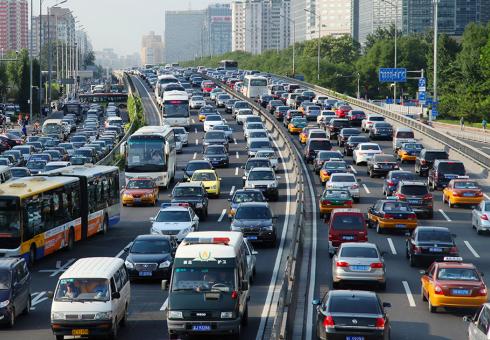
How combining climate policy and vehicle emissions standards could pack a one-two punch
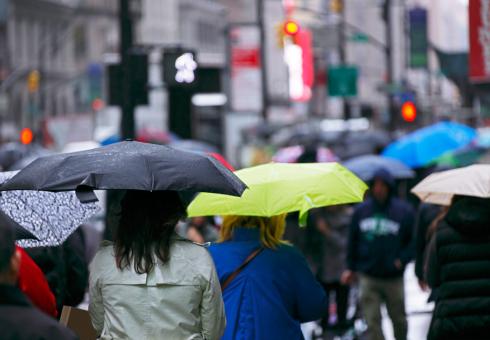
Intensification of extreme rainfall varies from region to region, study shows
Study co-authored by Joint Program affiliate Paul O'Gorman shows that the most extreme rain events in most regions of the world will increase in intensity by 3-15%, depending on region, for every degree Celsius that the planet warms. Additional Coverage: Eco-Business
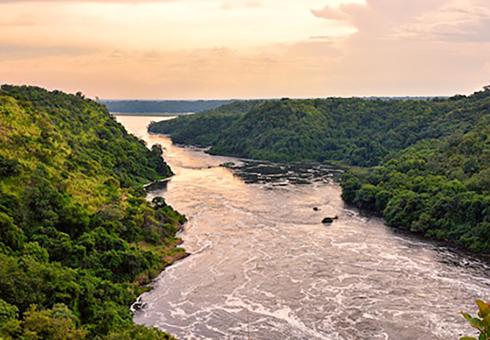
ClimateWire: MIT Joint Program Research Scientist Kenneth Strzepek comments on the need for flexibility in water-sharing agreements in the Nile basin
MIT Joint Program to support study through global economic and policy modeling
Study showed long-lasting health, economic impacts of lead emissions from U.S. general aviation flights
Paper: Philip J. Wolfe, Amanda Giang, Akshay Ashok, Noelle E. Selin, and Steven R. H. Barrett. Costs of IQ Loss from Leaded Aviation Gasoline Emissions. Environ. Sci. Technol., 2016, 50 (17), 9026–9033. dx.doi.org/10.1021/acs.est.6b02910.
IDSS PhD student Paul Kishimoto probes the future of transportation in China
Kerry Emanuel of MIT suggests a new warning system and policies that account for increases in flooding, among other reforms.
“Most damage is done by Category 3 or higher hurricanes, and recent modeling by Emanuel and others strongly suggests that higher-category storms in the North Atlantic and elsewhere will become more frequent as the climate warms further. Factor in sea-level rise generating greater storm surges, and the scenarios do not look good.”
Photo: Hurricane Jeanne, 2004 (Source: kakela)
John Fernández ’85, MIT professor and recently-named director of the Environmental Solutions Initiative (ESI): “I have always been most excited by creating an environment where there are no boundaries between disciplines.
John Fernández ’85 is not interested in overleaping boundaries so much as erasing them. The MIT professor, who was recently named director of the Environmental Solutions Initiative (ESI), started out as a child who loved math and art, and saw no reason to keep them separate.
As Super Typhoon Nepartak hits Taiwan and China, National Geographic asks tropical cyclone expert Kerry Emanuel how these tempests form, and what risk they pose to people.
Joint Program Co-Director John Reilly featured in CLP New Horizons
The following article appeared in CLP New Horizons, a compendium of news and perspectives on how to move the Asia-Pacific region toward a more sustainable energy future:
John Reilly | MIT Joint Program on the Science and Policy of Global Change
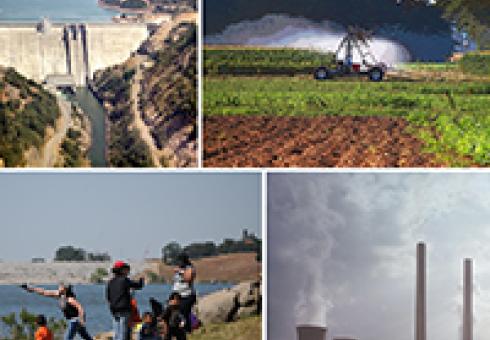
We live in a world where water, energy, land and the environment are inextricably linked. For example, water is used to produce electricity from hydropower as well as for thermal cooling. Water withdrawals for agriculture—the world’s largest consumer of water—deplete rivers and streams, thereby impacting freshwater ecosystems. Such ecosystems are also threatened by the discharge of water from power stations, which increases water temperature, and by the collection of water in large dams.
Dams not only produce hydropower but also store water from spring snowmelt or rainy seasons for use in irrigation during dry spells, and provide recreational opportunities as well. Use of water for hydropower, irrigation and recreation requires a careful balance. The availability of water for irrigation will partly determine land use, and how land is managed can affect runoff and sedimentation in reservoirs and other bodies of water, potentially degrading water quality and ecosystems.
Other energy, industry and domestic uses of water can be substantial in areas where water resources are limited. For example, there’s concern that development of China’s shale gas resources, located in dryer western regions of China, could be constrained by water availability.
Global changes
In Asia, population growth and economic development are increasing demand for water, food and energy, exacerbating conflicts among land, water and energy needs. In addition, climate change is expected to significantly affect agricultural productivity worldwide and alter the supply of water. While global warming will, in general, speed the hydrological cycle and lead to more precipitation, rainfall will be unevenly spread across the globe, and many currently water-stressed areas will become more stressed.
Efforts to reduce greenhouse gas emissions will change the energy mix, and if renewable sources like wind and solar become more widely used, smaller water withdrawals will be needed for thermal cooling. On the other hand, if biomass energy is part of the mitigation solution, that could increase pressure on land and indirectly on water in order to increase food crop yields.
Rising concerns for fresh water ecosystems may lead to restrictions on the amount of water withdrawn from rivers and lakes. Many areas are already considered overused. In addition, areas relying on groundwater resources may become unsustainable.
Building a more sustainable future
Businesses can take a number of steps to build a more sustainable future. First, by reducing greenhouse gas (GHG) emissions—ideally supported by government incentives—they can limit the amount of climate change in the coming decades. Second, they can adopt practices that improve water use efficiency and maintain water quality. Third, they can take climate change into consideration when planning the location of new facilities, while noting the uncertainties in climate models.
Our recent research indicates that water stress will increase in China and India. In China, climate change and growth are expected to exacerbate water stress; in India, climate change is projected to have a neutral effect on water supplies, although growth will likely increase water stress. In mainland Southeast Asia, climate change is expected to increase water supplies, partly offsetting the impact of growth.
In all regions, the range of possibilities are far wider than the historical variability in water resources. This highlights the difficulty involved in facilities planning.
References
Modeling U.S. water resources under climate change Blanc, É., K. Strzepek, A. Schlosser, H. Jacoby, A. Gueneau, C. Fant, S. Rausch and J. Reilly, Earth's Future, 2(4): 197–224 (doi:10.1002/2013EF000214), 2014
Climate change impacts and greenhouse gas mitigation effects on U.S. water quality Boehlert, B., K.M. Strzepek, S.C. Chapra, C. Fant, Y. Gebretsadik, M. Lickley, R. Swanson, A. McCluskey, J.E. Neumann and J. Martinich, Journal of Advances in Modeling Earth Systems, 7(3): 1326–1338, 2015
Impacts on Resources and Climate of Projected Economic and Population Growth Patterns Reilly, J. , The Bridge (National Academy of Engineering), 45(2): 6–15, 2015
The future of global water stress: An integrated assessment Schlosser, C.A., K. Strzepek, X. Gao, C. Fant, É. Blanc, S. Paltsev, H. Jacoby, J. Reilly and A. Gueneau, Earth's Future, 2(8): 341-361 (doi:10.1002/2014EF000238), 2014
A Framework for Analysis of the Uncertainty of Socioeconomic Growth and Climate Change on the Risk of Water Stress: a Case Study in Asia Fant, C., C.A. Schlosser, X. Gao, K. Strzepek and J. Reilly, Joint Program Report Series, 48 p., 2014