Speaker: Steve Isakowitz, CFO of the DOE
MIT Energy Club Lecture Series
With the surge of stimulus funding ending, a difficult fiscal outlook, and a cloudy future for energy legislation, can the US government continue to shape our nation's energy future? Come hear how the Department of Energy is facing these challenges, devising solutions through R&D, demonstrations, and financial incentives, and offering exciting career opportunities.
Students will be given the opportunity to discuss future career paths in the DOE with representatives from the Department immediately following the lecture.
Refreshments will be provided
US Energy Policy: Where do we go from here?
Related Media and Events

"The warmer climate gets, the faster the climate zones are shifting. This could make it harder for plants and animals to adjust," said lead author Irina Mahlstein.
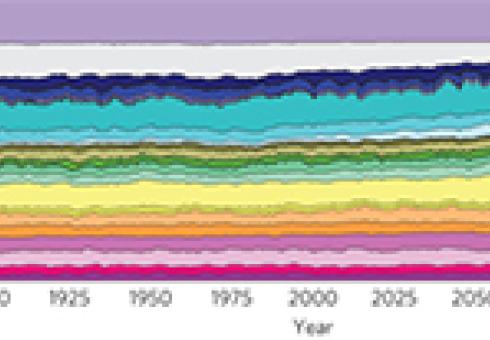
The study is the first to look at the accelerating pace of the shifting of climate zones, which are areas of the Earth defined by annual and seasonal cycles of temperature and precipitation, as well as temperature and precipitation thresholds of plant species. Over 30 different climate zones are found on Earth; examples include the equatorial monsoonal zone, the polar tundra zone, and cold arid desert zone.
"A shift in the climate zone is probably a better measure of 'reality' for living systems, more so than changing temperature by a degree or precipitation by a centimeter," said Mahlstein.
The scientists used climate model simulations and a well-known ecosystem classification scheme to look at the shifts between climate zones over a two-century period, 1900 to 2098. The team found that for the initial 2 ° Celsius (3.6 ° Fahrenheit) of warming, about 5 percent of Earth's land area shifts to a new climate zone. The models show that the pace of change quickens for the next 2 ° Celsius of warming, and an additional 10 percent of the land area shifts to a new climate zone. "Pace of shifts in climate regions increases with global temperature" was published online in the journal Nature Climate Change on April 21.
Certain regions of the globe, such as northern middle and high latitudes, will undergo more changes than other regions, such as the tropics, the scientists found. In the tropics, mountainous regions will experience bigger changes than their surrounding low-altitude areas.
In the coming century, the findings suggest that frost climates–the coldest climate zone of the planet–are largely decreasing. Generally, dry regions in different areas of the globe are increasing, and a large fraction of land area is changing from cool summers to hot summers.
The scientists also investigated whether temperature or precipitation made the greater impact on how much of the land area changed zones. "We found that temperature is the main factor, at least through the end of this century," said Mahlstein.
This story is adapted from a news article at esrl.noaa.gov.
Alli Gold Roberts
MIT Joint Program on the Science and Policy of Global Change
By the late 1990s, scientists had observed more than two decades of rapid global warming, and expected the warming trend to continue. Instead, despite continuing increases in greenhouse gas emissions, the Earth’s surface temperatures have remained nearly flat for the last 15 years. The International Panel on Climate Change verified this recent warming “hiatus” in its latest report.
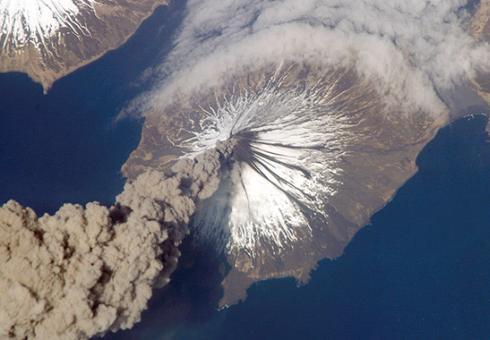
Researchers around the globe have been working to understand this puzzle—looking at heat going into the oceans, changes in wind patterns, and other factors to explain why temperatures have stayed nearly stable, while greenhouse gas concentrations have continued to rise. In a study published today in Nature Geoscience, a team of scientists from MIT and elsewhere around the U.S. report that volcanic eruptions have contributed to this recent cooling, and that most climate models have not accurately accounted for the effects of volcanic activity.
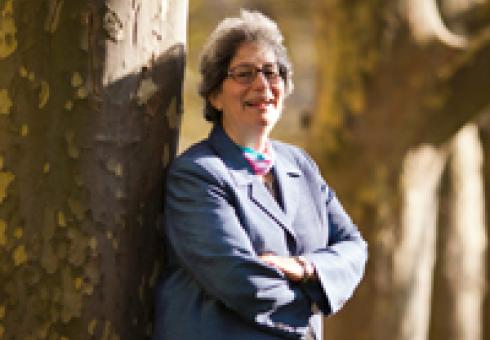
“This is the most comprehensive observational evaluation of the role of volcanic activity on climate in the early part of the 21st century,” says co-author Susan Solomon, the Ellen Swallow Richards Professor of Atmospheric Chemistry and Climate Science at MIT. “We assess the contributions of volcanoes on temperatures in the troposphere—the lowest layer of the atmosphere—and find they’ve certainly played some role in keeping the Earth cooler.” 
There are many components of the Earth’s climate system that can increase or decrease the temperature of the globe. For example, while greenhouse gases cause warming, some types of small particles, known as aerosols, cause cooling. When volcanoes erupt explosively enough, they enhance these aerosols—a phenomenon referred to as “volcanic forcing.”
“The recent slowdown in observed surface and tropospheric warming is a fascinating detective story,” says Ben Santer, the lead author of the study and a climate scientist at Lawrence Livermore National Laboratory. “There is not a single culprit, as some scientists have claimed. Multiple factors are implicated. The real scientific challenge is to obtain hard quantitative estimates of the contributions of each of these factors to the so-called slowdown.”
The researchers verified the cooling phenomenon by performing two different statistical tests to determine whether recent volcanic eruptions have cooling effects that can be distinguished from the intrinsic variability of the climate. The team found evidence for significant correlations between volcanic aerosol observations and satellite-based estimates of both tropospheric temperature and sunlight reflected by the particles off the top of the atmosphere.
“What’s exciting in this work was that we could detect the influence of the volcanic aerosols in new ways. Using satellite observations confirmed the fact that the volcanic particles reflected a significant amount of the sun’s energy out to space, and of course losing energy means cooling—and the tropospheric temperatures show that too,” explains Solomon, who is also a researcher with MIT’s Joint Program on the Science and Policy of Global Change. “There are still uncertainties in exactly how big the effects are, so there is more work to do.”
Alan Robock, a professor of environmental sciences at Rutgers University and a leading expert on the impacts of volcanic eruptions on climate, says these findings are an important part of the larger climate picture. “This paper reminds us that there are multiple causes of climate change, both natural and anthropogenic, and that we need to consider all of them when interpreting past climate and predicting future climate.”
“Since none of the standard scenarios for evaluating future global warming include volcanic eruptions,” Robock adds, “this paper will help us quantify the impacts of future large and small eruptions when they happen, and thus better interpret the role of humans in causing climate change.”
This research was led by a team at Lawrence Livermore National Laboratory and builds upon work Solomon conducted in 2011, finding that aerosols in an upper layer of the atmosphere—the stratosphere—are persistently variable and must be included in climate models to accurately depict climate changes.
The research was supported by the U.S. Department of Energy.
Susan Solomon has won both the Vetlesen Prize and a 2012 BBVA Foundation Frontiers of Knowledge Award.
The Vetlesen Prize is given “for scientific achievement resulting in a clearer understanding of the Earth, its history, or its relations to the universe” and is designed to recognize sweeping achievements on par with the Nobel. The Prize was established in 1959 and is given every several years by a selection committee appointed by the president of Columbia University. The most recent award was in 2008 to geologist Walter Alvarez. Previous winners include climate scientists Sir Nicholas Shackleton and Wallace Broecker, marine geologist Walter Pitman, seismologist Lynn Sykes, and founding director of Lamont Maurice “Doc” Ewing.
Soloman is being recognized for her work in identifying the cause of the Antarctic ozone hole. This research helped bring about a global ban on manmade ozone-depleting chemicals. She shares the award with French climate scientist Jean Jouzel who is being recognized for his work extracting the longest-yet climate record from polar ice cores. The pair will receive the award and accompanying medal at Columbia's Low Library on Thursday, February 21st.
The BBVA Foundation Frontiers of Knowledge Awards recognize, among other things, outstanding contributions that advance understanding or deliver material progress with regard to climate change, one of the key challenges of the global society of the 21st century.
The award citation states that Solomon "has contributed, through her research and leadership, to the safeguarding of our planet." Solomon's work over 30 years has succeeded in establishing and drawing together links between three key climate change variables: human activity, a profound and comprehensive understanding of the behavior of atmospheric gases, and the alteration of climate patterns globally.