Collapses of Antarctic Peninsula Ice Shelves: Modeling Investigation

-
Location
54-915

Speaker: Dr. Olga V. Sergienko, Department of Geology, Portland State University, will present in a special seminar in the Department of Earth, Atmospheric and Planetary Science lecture series.

Related Media and Events

A climate window in the Southern Ocean
MIT News

By: Jennifer Chu

The world’s oceans act as a massive conveyor, circulating heat, water and carbon around the planet. This global system plays a key role in climate change, storing and releasing heat throughout the world. To study how this system affects climate, scientists have largely focused on the North Atlantic, a major basin where water sinks, burying carbon and heat deep in the ocean’s interior.
But what goes down must come back up, and it’s been a mystery where, and how, deep waters circulate back to the surface. Filling in this missing piece of the circulation, and developing theories and models that capture it, may help researchers understand and predict the ocean’s role in climate and climate change.

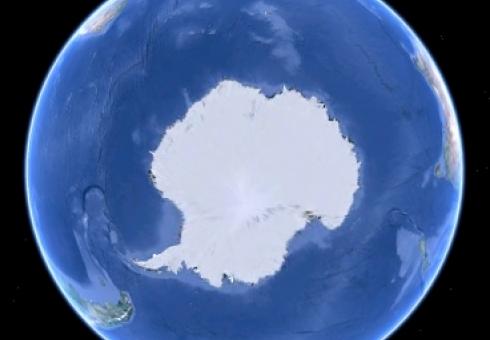
Recently, scientists have found evidence that the missing piece may lie in the Southern Ocean — the vast ribbon of water encircling Antarctica. The Southern Ocean, according to observations and models, is a site where strong winds blowing along the Antarctic Circumpolar Current dredge waters up from the depths.

“There’s a lot of carbon and heat in the interior ocean,” says John Marshall, the Cecil and Ida Green Professor of Oceanography at MIT. “The Southern Ocean is the window by which the interior of the ocean connects to the atmosphere above.”

Marshall and Kevin Speer, a professor of physical oceanography at Florida State University, have published a paper in Nature Geoscience in which they review past work, examine the Southern Ocean’s influence on climate and draw up a new schematic for ocean circulation.

A revised conveyor

For decades, a “conveyor belt” model, developed by paleoclimatologist Wallace Broecker, has served as a simple cartoon of ocean circulation. The diagram depicts warm water moving northward, plunging deep into the North Atlantic; then coursing south as cold water toward Antarctica; then back north again, where waters rise and warm in the North Pacific.

However, evidence has shown that waters rise to the surface not so much in the North Pacific, but in the Southern Ocean — a distinction that Marshall and Speer illustrate in their updated diagram.
 

Richard Braatz
Marshall says winds and eddies along the Southern Ocean drag deep waters — and any buried carbon — to the surface around Antarctica. He and Speer write that the updated diagram “brings the Southern Ocean to the forefront” of the global circulation system, highlighting its role as a powerful climate mediator.

Indeed, Marshall and Speer review evidence that the Southern Ocean may have had a part in thawing the planet out of the last Ice Age. While it’s unclear what caused Earth to warm initially, this warming may have driven surface wind patterns poleward, pulling up deep water and carbon — which would have been released into the atmosphere, further warming the climate.

Shifting winds

In a cooling world, it appears that winds shift slightly closer to the Equator, and are buffeted by the continents. In a warming world, winds shift toward the poles; in the Southern Ocean, unimpeded winds whip up deep waters. The researchers note that two manmade atmospheric trends — ozone depletion and greenhouse gas emissions from fossil fuels — have a large effect on winds over the Southern Ocean: As the ozone hole recovers, greenhouse gases rise and the planet warms, winds over the Southern Ocean are likely to shift, affecting the delicate balance at play. In the future, if the Southern Ocean experiences stronger winds displaced slightly south of their current position, Antarctica’s ice shelves may be more vulnerable to melting — a phenomenon that may also have contributed to the end of the Ice Age

“There are huge reservoirs of carbon in the interior of the ocean,” Marshall says. “If the climate changes and makes it easier for that carbon to get into the atmosphere, then there will be an additional warming effect.”

Jorge Sarmiento, a professor of atmospheric and oceanic sciences at Princeton University, says the Southern Ocean has been a difficult area to study. To fully understand the Southern Ocean’s dynamics requires models with high resolution — a significant challenge, given the ocean’s size.

“Because it’s so hard to observe the Southern Ocean, we’re still in the process of learning things,” says Sarmiento, who was not involved with this research. “So I think this is a very nice snapshot of our current understanding, based on models and observations, and it will sort of be a touchstone for future developments in the field.”

Marshall and Speer are now working with a multi-institution team led by MIT’s collaborator, the Woods Hole Oceanographic Institution, to measure how waters upwell in the Southern Ocean. The researchers are studying the flow driven by eddies in the Antarctic Circumpolar Current, and have deployed tracers and deep drifters to measure its effects; temperature, salinity and oxygen content in the water also help tell them how eddies behave, and how quickly or slowly warm water rises to the surface.

“Any perturbation that is made to the atmosphere, whether it’s due to glacial cycles or ozone or greenhouse forcing, can change the balance over the Southern Ocean,” Marshall says. “We have to understand how the Southern Ocean works in the climate system and take that into account.”
John Marshall
In The Media
MIT News

Genevieve Wanucha
Oceans at MIT

John Marshall, Cecil and Ida Green Professor of Oceanography, recently accepted the 2014 Sverdrup Gold Medal of the American Meteorological Society for his “fundamental insights into water mass transformation and deep convection and their implications for global climate and its variability."

Marshall is an oceanographer with broad interests in climate and the general circulation of the atmosphere and oceans, which he studies through mathematical and numerical models of physical and biogeochemical processes. His research has focused on problems of ocean circulation involving interactions between motions on different scales, using theory, laboratory experiments, and observations as well as innovative approaches to global ocean modeling pioneered by his group at MIT.

The Sverdrup Gold Medal recognizes Marshall’s influential ideas about deep convection in the ocean, the process by which, in certain polar regions, cooling water descends, transporting properties such as oxygen, salt, carbon, and heat into the ocean’s deep interior. Marshall, in a 1990s collaboration with his graduate students Sonya Legg and Helen Hill, née Jones, and the late Professor Friedrich Schott of the University of Kiel, in Germany, demonstrated that the convective process in the ocean occurs slowly enough for it to be influenced by Earth’s rotation. This insight overturned the prevailing view that convection in the ocean was an upside-down version of atmospheric convection.

Marshall’s work on rotating convection in water mass transformation triggered a vast amount of research, including the Labrador Sea Deep Convection Experiment, a major field program in 1996 that provided the most comprehensive set of measurements of ocean convection. The dataset collected on this international expedition led to insights into the convective process in the ocean and its representation in models in light of Marshall’s theoretical descriptions. This body of work also motivated the development of the MIT General Circulation Model (MITgcm), which Marshall’s group first used to simulate deep convection fluid dynamics at high resolution. The algorithms used to represent convection drive the modern-day MITgcm, one of the most widely used global ocean models in the world.

To gain a broader understanding of Earth’s fluid dynamical system, Marshall shifted focus to contemporary issues in global ocean circulation. “I’ve always tried to move forward,” Marshall says. “Even though this work on water mass transformation was enjoyable, I stopped it and moved on to study the role of the Southern Ocean in climate.” Marshall has now spent 10 years revising the scientific understanding of the Antarctic Circumpolar Current (ACC). In particular, his updated modeling shows that the ACC brings up deep water and buried carbon to the surface around Antarctica, leading him and colleagues to suggest that the Southern Ocean is the window by which the interior of the ocean connects to the atmosphere, and is thus a powerful mediator of climate.

Professor Marshall received a PhD in atmospheric sciences from Imperial College London in 1980. He joined MIT’s Department of Earth, Atmospheric and Planetary Sciences in 1991 as an associate professor and has been a professor in the department since 1993. He was elected a Fellow of the Royal Society in 2008. He is coordinator of Oceans at MIT, a new umbrella organization dedicated to all things related to the ocean across the Institute, and director of MIT’s Climate Modeling Initiative (CMI).

clouds hr
In The Media
Oceans at MIT

By Genevieve Wanucha
Oceans at MIT

The ocean plays a critical role in climate change, especially in setting the climate's response to increasing anthropogenic emissions of greenhouse gases. As excess heat accumulates in various parts of the Earth system, most of that thermal energy goes into the ocean instead of into the lower atmosphere and land.

“We can compare the ocean to a cold compress that a parent applies to the forehead of a child with a fever,” says Yavor Kostov, a graduate student in the Program in Atmospheres, Oceans, and Climate (PAOC) within MIT’s Department of Earth, Atmospheric and Planetary Sciences (EAPS). “In that this wet towel can absorb some of the heat, giving partial relief until the towel itself becomes saturated with heat.” Similarly, the ocean’s enormous capacity to store heat temporarily slows down global warming.

In recent years, a hot topic in climate science has arisen over the fact that climate models vary widely in their representation of ocean heat uptake. The oceans in some models absorb more or less heat in high-latitude regions such as the North Atlantic and Southern Ocean; some store heat at different depths. According to two new papers published in Geophysical Research Letters, those details matter a great deal to the predictions of global warming over the coming centuries.

Understanding ocean circulation

One of these papers focuses on the deep overturning circulation in the North Atlantic Ocean, better known as AMOC, which transports and buries atmospheric heat in the ocean. Kostov, working with Kyle Armour, an EAPS postdoc, and John Marshall, MIT professor of oceanography, investigated how the various assumptions about this major ocean feature affect model predictions. To do so, he compared a set of new-generation models that the Intergovernmental Panel on Climate Change (IPCC) uses in their projections.

Kostov found that models featuring a deeper and stronger AMOC have a greater capacity to store heat and delay long-term global warming due to increasing levels of carbon dioxide. In other words, a stronger overturning circulation in a model tends to promise a cooler world in one hundred years.

There are other even greater sources for the differences in climate predictions across models, such as cloud responses to greenhouse gases, Kostov notes, “but all aspects of the climate system are important, and we have to take into account the role of the ocean in order to improve our predictions for future warming.”

These results led the MIT group to conclude that models must better represent the AMOC and its future changes, based on real-world measurements that extend over time and geographical location. Unfortunately, there is not a long record of observations in the AMOC, thanks to the enormous technical difficulty of probing the ocean’s deep layers. However, Kostov notes his excitement that a few large-scale oceanographic projects, including U.K. RAPID and U.S. CLIVAR, have started to continuously monitor how the circulation varies with depth in an effort to fill this scientific void.

Climate connection

Along with depth, the geographical location of ocean heat uptake matters to climate change. Observations suggest that much of the heat enters the ocean in high-latitude regions such as the North Atlantic and Southern Ocean. In 2010, modeling by Michael Winton of the NOAA/Geophysical Fluid Dynamics Laboratory showed that ocean heat uptake at high latitudes tends to cool the Earth significantly more than heat uptake in tropics. Yet, it is unclear why heat uptake at the poles provides the most efficient air conditioning for the entire planet or how this sensitivity should be represented in models.

Offering an explanation is Brian Rose, MIT PhD ‘10, an assistant professor at the SUNY Albany Department of Atmospheric and Environmental Sciences, along with MIT's Kyle Armour and David Battisti, professor of atmospheric sciences at the University of Washington, whose new study implicates the activities of low lying clouds above the ocean. Using idealized configurations of several IPCC models, they found that when heat enters the ocean in the tropics, clouds change shape to allow more sunlight to be absorbed by the planet. This cloud transformation doesn't happen in the high latitudes, which the authors suggest as a potential reason why heat uptake in these regions is so good at cooling the planet.

“The authors show that valuable insights can be gained by considering the atmospheric response to an imposed change in the ocean,” comments Timothy Merlis, Assistant Professor at McGill University, who was not involved in the study. “And it will be important to understand why the clouds respond differently to the different regions of ocean heat uptake.”

Ultimately, the study critiques how the field uses observations in estimating the climate’s sensitivity to greenhouse gases. "A common way to calculate climate sensitivity simply combines recent observations of global surface temperature changes, heat uptake, and greenhouse gas forcing," says Armour, "which misses the details of how heat is getting into the ocean. One implication is that we can’t actually estimate long-term warming from present-day observations unless we take into account how the pattern of ocean heat uptake might change with time."

And change it will. For example, the Southern Ocean takes up a lot of heat now. But as the ocean warms over hundreds to thousands of years, the deep ocean currents will become saturated with heat and the Southern Ocean heat sink will eventually shut off. “Neglecting to account for where heat enters the ocean means that we could experience much more warming than anticipated,” Armour says.

Showing how we must look up to the clouds and down to the deep North Atlantic to improve long-term predictions of global warming, these studies converge in a new case for ocean-enlightened climate modeling.

Photo: WHOI/Knorr Cruise, KN178
 

Joint Program Logo
MIT News

A curriculum built around a rotating-tank experiment could improve weather and climate education

In recent years, U.S. undergraduates have shown an increasing interest in introductory meteorology, oceanography and climate classes. But many students find it difficult to grasp the non-intuitive nature of rotating fluids, which is critical to understanding how weather systems and climate work. Part of the problem, it turns out, is that instructors usually have to teach these abstract concepts using only equations or computer simulations because of the limited resources available for lab experiments.

That may be about to change, thanks to the work of two educators from the Department of Earth, Atmospheric and Planetary Sciences. For nearly a decade, Lodovica Illari, an EAPS senior lecturer, and John Marshall, professor of atmospheric and oceanic sciences, have been developing an undergraduate weather and climate curriculum that's now being adopted by dozens of schools — and could have a wide impact on science education at many levels.

Known as "Weather in a Tank," the experiment-based curriculum was designed by Illari and Marshall in 2001 after they began offering an introductory weather and climate class that would also fulfill their students' lab requirements.

Since 2006, the curriculum has been tested in a project funded by the National Science Foundation (NSF), which involves MIT and five other universities. The intent was to bridge the gap between real-world weather phenomena and the theories and equations that describe those phenomena. Illari says that we should think of lab experiments as the third leg of a three-legged pedagogical stool that includes observation and theory.

[More... ]