
Speaker: Sir Nicholas Stern, IG Patel Professor Economics at the London School of Economics. Head of the Stern Review on the Economics of Climate Change published in October 2006. Climate change poses severe risks to the economies and societies of the planet. This risk can be radically reduced with strong and timely action. If the appropriate economic and other policies are designed well and put in place now, then the costs will be much smaller than the damages averted. The policies do not imply the curtailment of economic growth and development. On the contrary, business-as-usual would eventually be the anti-growth strategy. Strong and timely measures must be on a global scale. The challenge requires international collective action: the problem is global in its origins and global in its impacts. This global action should be both equitable and efficient. A global deal should be constructed in the next two years. It is urgent both because world emissions should peak within 20 years if risks are to be kept to tolerable levels and because carbon markets will be damaged if there is no agreement well ahead of 2012, the Kyoto expiry date. The key elements of a global deal will be examined. The discussion will also examine the economics and ethics behind both the deal as a whole and the individual elements.
Climate Change: the Economics of and Prospects for a Global Deal
Related Media and Events
Peter Dizikes, MIT News Office
The structure of the auditing business appears problematic: Typically, major companies pay auditors to examine their books under the so-called “third-party” audit system. But when an auditing firm’s revenues come directly from its clients, the auditors have an incentive not to deliver bad news to them.
So: Does this arrangement affect the actual performance of auditors?
In an eye-opening experiment involving roughly 500 industrial plants in the state of Gujarat, in western India, changing the auditing system has indeed produced dramatically different outcomes — reducing pollution, and more generally calling into question the whole practice of letting firms pay the auditors who scrutinize them.
“There is a fundamental conflict of interest in the way auditing markets are set up around the world,” says MIT economist Michael Greenstone, one of the co-authors of the study, whose findings are published today in the Quarterly Journal of Economics. “We suggested some reforms to remove the conflict of interest, officials in Gujarat implemented them, and it produced notable results.”
The two-year experiment was conducted by MIT and Harvard University researchers along with the Gujarat Pollution Control Board (GPCB). It found that randomly assigning auditors to plants, paying auditors from central funds, double-checking their work, and rewarding the auditors for accuracy had large effects. Among other things, the project revealed that 59 percent of the plants were actually violating India’s laws on particulate emissions, but only 7 percent of the plants were cited for this offense when standard audits were used.
Across all types of pollutants, 29 percent of audits, using the standard practice, wrongly reported that emissions were below legal levels.
The study also produced real-world effects: The state used the information to enforce its pollution laws, and within six months, air and water pollution from the plants receiving the new form of audit were significantly lower than at plants assessed using the traditional method.
The co-authors of the paper are Greenstone, the 3M Professor of Environmental Economics at MIT; Esther Duflo, the Abdul Latif Jameel Professor of Poverty Alleviation and Development Economics at MIT; Rohini Pande, a professor of public policy at the Harvard Kennedy School; and Nicholas Ryan PhD ’12, now a visiting postdoc at Harvard.
The power of random assignment
The experiment involved 473 industrial plants in two parts of Gujarat, which has a large manufacturing industry. Since 1996 the GPCB has used the third-party audit system, in which auditors check air and water pollution levels three times annually, then submit a yearly report to the GPCB.
To conduct the study, 233 of the plants tried a new arrangement: Instead of auditors being hired by the companies running the power plants, the GPCB randomly assigned them to plants in this group. The auditors were paid fixed fees from a pool of money; 20 percent of their audits were randomly chosen for re-examination. Finally, the auditors received incentive payments for accurate reports.
In comparing the 233 plants using the new method with the 240 using the standard practice, the researchers uncovered that almost 75 percent of traditional audits reported particulate-matter emissions just below the legal limit; using the randomized method, only 19 percent of plants fell in that narrow band.
All told, across several different air- and water-pollution measures, inaccurate reports of plants complying with the law dropped by about 80 percent when the randomized method was employed.
The researchers emphasize that the experiment enabled the real-world follow-up to occur.
“The ultimate hope with the experiment was definitely to see pollution at the firm level drop,” Duflo says. The state’s enforcement was effective, as Pande explains, partly because “it becomes cheaper for some of the more egregious pollution violators to reduce pollution levels than to attempt to persuade auditors to falsify reports.”
According to Ryan, the Gujarat case also dispels myths about the difficulty of enforcing laws, since the experiment “shows the government has credibility and will.”
But how general is the finding?
In the paper, the authors broaden their critique of the audit system, referring to standard corporate financial reports and the global debt-rating system as other areas where auditors have skewed auditing incentives. Still, it is an open question how broadly the current study’s findings can be generalized.
“It would be a mistake to assume that quarterly financial reports for public companies in the U.S. are exactly the same as pollution reports in Gujarat, India,” Greenstone acknowledges. “But one thing I do know is that these markets were all set up with an obvious fundamental flaw — they all have the feature that the auditors are paid by the firms who have a stake in the outcome of the audit.”
Some scholars of finance say the study deserves wide dissemination.
“This is a wonderful paper,” says Andrew Metrick, a professor and deputy dean at the Yale School of Management. “It is a very strong piece of evidence that, in the context they studied, random assignment produces unbiased results. And I think it’s broadly applicable.”
Indeed, Metrick says he may make the paper required reading in a new program Yale established this year that provides research and training for financial regulators from around the world.
To be sure, many large corporations have complicated operations that cannot be audited in the manner of emissions; in those cases, a counterargument goes, retaining the same auditor who knows the firm well may be a better practice. But Metrick suggests that in such cases, auditors could be randomly assigned to firms for, say, five-year periods. At a minimum, he notes, the Dodd-Frank law on financial regulation mandates further study of these issues.
Greenstone also says he hopes the current finding will spur related experiments, and gain notice among regulators and policymakers.
“No one has really had the political will to do something about this,” Greenstone says. “Now we have some evidence.”
The study was funded by the Center for Energy and Environmental Policy Research, the Harvard Environmental Economics Program, the International Growth Centre, the International Initiative for Impact Evaluation, the National Science Foundation and the Sustainability Science Program at Harvard.
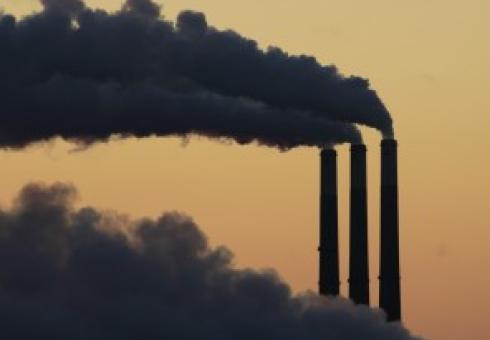
There are two ways to think about the cost of energy. There’s the dollar amount that shows up on our utility bills or at the pump. And then there’s the “social cost” — all the adverse consequences that various energy sources, from coal to nuclear power, end up foisting on the public.
Peter Dizikes, MIT News Office
As deficit hawks appear poised for victory at the polls, the MIT economics professor presents the case for more spending on infrastructure and R&D.
Government deficit spending has been a contentious issue during this year’s U.S. mid-term election campaigns. Yet some economists believe that additional government spending in certain areas is needed to help spur growth. MIT News asked Michael Greenstone, MIT’s 3M Professor of Environmental Economics, and director of The Hamilton Group, a Washington-based public-policy organization, about America’s spending priorities.
