
by James Ott
Aviation Week, May 20, 2011
A report from the Massachusetts Institute of Technology (MIT) should be required reading for environmental policymakers. “The Impact of Climate Policy on US Aviation” was issued this week by the Transportation Research Board. It is an independent assessment and takes no prisoners in the sometimes strange world of environmental protection.
The policy in question is the proposed American Clean Energy and Security Act of 2009 [H.R. 2454], also known as the Waxman-Markey bill. It looked like a sure winner for a while and prompted the study. But the plan to curtail greenhouse gas emissions failed in the Senate. Yet cap-and-trade programs are likely to come up again, says Niven Winchester, an MIT research scientist, so the conclusions of the report are connected to a likely future.
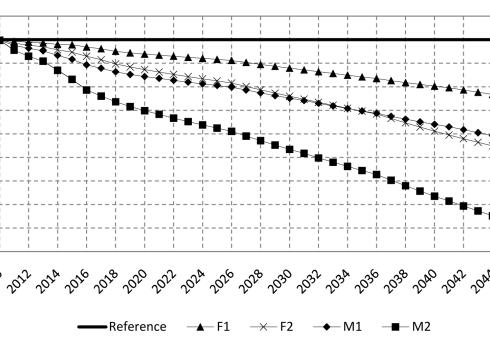
Based on traffic growth forecasts from the International Civil Aviation Organization (ICAO), emissions from aviation, if the law was passed, are estimated to increase between 97-122% between 2012 and 2050. This compares with 130% growth without a policy. The proposal would have affected all U.S. industries as the targets were refineries that would have been required to purchase allowances for each potential ton of carbon dioxide emissions. Aviation would have been heavily affected by this cap-and-trade deal because fuel represents 26% of total costs, and it is hard to make a shift to other sources. Other industries can shift relatively easily from coal to electricity, for example.
The study concludes that abatement options for aviation are costly relative to mitigation options in other sectors. In addition to increasing fuel price, the study indicates that the law would reduce fleet efficiency, “as increased air fares reduce demand and slow the introduction of new aircraft.”
An unsettled and contentious issue is how one nation’s climate policy will affect foreign carriers flying to and from that nation, the report said. The Air Transport Association of America (ATA) filed a suit, challenging the legality of requiring U.S. airline flights to and from the European Union to purchase allowances under the law there. It’s always interesting when one nation’s plans interfere with those of another.
The study was carried out by MIT’s Partnership for AIR Transportation Noise and Emissions Reduction, a center of excellence backed by the FAA, NASA and Transport Canada. A key conclusion compares favorably with the ATA’s concerns over the bill’s impact on profitability. ATA estimated that the fuel bill would increase airline costs by $5 billion in 2012 and $10 billion in 2020. The report cited 10 previous papers on the subject of environmental policy, largely using the EU experience. The latest is one of two related to U.S. environmental policy. The partnership’s web site is http://www.partner.aero
Joint Program Report 198: The Impact of Climate Policy on US Aviation
Aviation CO2 emissions in the reference and policy scenarios, 2066-2050