User account menu

  • Log in
MIT Joint Program On The Science and Policy of Global Change

Main navigation

  • About Us
    • Our Purpose
    • Our History
    • Leadership
    • Personnel
    • Support the Center
    • Contact Us
  • Research
    • Research Projects
  • Publications
    • All Publications
    • Annual Report
    • Global Change Outlook
    • Peer-Reviewed Research
    • Reports
    • Other Publications
    • Publication Search
  • News + Media
    • News Releases
    • In the News
  • Events
    • Upcoming Events
    • Past Events
    • Global Change Forum
  • Sponsorship
    • About Sponsorship
    • Our Sponsors
    • Sponsor Login

Error message

  • The link "../../../../people/all-personnel.php?id=55" is invalid. Valid URL's typically start with "https://" for external or "/" for internal links
  • The link "../../../../" is invalid. Valid URL's typically start with "https://" for external or "/" for internal links
  • The link "../../people/all-personnel.php?id=55" is invalid. Valid URL's typically start with "https://" for external or "/" for internal links

News and Outreach: Noelle Selin

nyt
In The News
New York Times
Dec 12, 2012
If Mercury Pollution Knows No Borders, Neither Can Its Solution

By: Kate Galbraith


AUSTIN, TEXAS — The harm that can be caused by consuming or breathing mercury is well known and terrible. A pregnant woman, eating too much of the wrong kind of fish, risks bearing a child with neurological damage. Adults or children exposed to mercury can experience mood swings or tremors, or sometimes even respiratory failure or death.

In January, representatives of dozens of countries will gather in Geneva to discuss combating mercury emissions, which are rising in Asia even as Europe and the United States have tightened controls. The meeting is the last of five negotiating rounds — the first took place in 2010 in Stockholm — and a legally binding treaty on mercury contamination is expected to come together next year.

The signing of that treaty is set to take place in the Japanese city of Minamata, where widespread mercury poisoning occurred in the mid-20th century after discharges from a factory contaminated the seawater.

But the extent to which countries will commit to reducing mercury, and whether they will follow through on those commitments, are open questions.

“What remains to be seen is the stringency of the requirements,” said Noelle Eckley Selin, an assistant professor of engineering systems and atmospheric chemistry at the Massachusetts Institute of Technology.

The negotiations “appear to be going in the direction of voluntary compliance,” said Leonard Levin, an air quality specialist with the Electric Power Research Institute, a nonprofit organization with headquarters in Palo Alto, California.

The negotiations in Geneva are being conducted under the auspices of the U.N. Environment Program and are to be followed in the summer by a major conference on mercury in Edinburgh, where scientists and policy makers will discuss how to implement a treaty.

Roughly one-third of the world’s mercury air emissions come from human activity, like coal-fired power plants. Another third of emissions come from natural sources, like volcanoes or wildfires, and the final third are “re-emitted” after their initial release.

Within the human-generated category, Asia contributes nearly 50 percent of mercury emissions, with North America at 7 percent and Europe and North Africa at 12 percent combined, according to Jerry Lin, a professor of environmental engineering at Lamar University in Texas. In addition to coal-fired power plants, a major source of mercury emissions is small-scale gold mining. Miners working on their own often use mercury to help extract gold and then boil it off, leaving behind dangerous contamination.

The effects of mercury contamination are not limited to the local environment. Mercury finds its way into the sea, affecting fish like bluefin tuna, and airborne emissions can travel between continents.

“The mercury today will continue to circulate in the system for a long time,” Dr. Selin said. “We’re talking decades to centuries.” Methyl mercury, the toxic form, even poses a substantial problem for the Arctic, she said, because it can accumulate in polar bears and seals.

Meanwhile, research into the health consequences of mercury “has been finding adverse effects at lower and lower exposures,” Philippe Grandjean, chair of environmental medicine at the University of Southern Denmark, said in an e-mail. New research has found that some people may be more sensitive to the effects of mercury, he said, because of factors like genetics.

The European Union has moved aggressively to combat mercury exposure. A ban on mercury exports began in 2011, and the Union has issued rules on storing mercury and restrictions on some products containing mercury, like thermometers. It is currently considering additional rules on mercury in dental fillings and batteries.

Sweden has “been really out in front” on national mercury regulations, Dr. Selin said. The country banned mercury from dental fillings and other products several years ago.

Starting in January, the United States will ban the export of elemental mercury, whose uses include gold mining. (The ban covers the Department of Defense and the Department of Energy, which keep large stockpiles.) The new policy results from the Mercury Export Ban Act of 2008, which was introduced by two senators — including Barack Obama, who represented Illinois at the time — and was signed into law by President George W. Bush.

In another key mercury development, last year, the Environmental Protection Agency in the United States completed its first rule aimed at mercury emissions from coal plants. The effect on the power industry is unclear, however.

The mercury limits are “probably achievable for existing plants,” said Mr. Levin of the Electric Power Research Institute. Additional rules, not yet completed, would cover emissions from new coal plants, and their effect is still being evaluated, he said.

Other regulations in the United States have also affected coal plants. Controls required for pollutants like nitrogen oxide and sulfur dioxide can also reduce mercury emissions, as a “co-benefit.”

For China, which is building new coal-fired power plants at a rapid rate, such “co-benefits” could prove crucial, said Dr. Lin of Lamar University. That is because it would be economically difficult to control only for mercury.

Researcher Profile
Jun 1, 2012
Noelle Selin: US Taking Leadership on Mercury in the Environment
Student Spotlight
Mar 1, 2012
Amanda Giang: Tackling Environmental Injustice by Reducing Mercury
Selin
News Release
MIT News
Jan 20, 2012
MIT researcher: U.S. taking leadership on mercury in the environment

By: Vicki Ekstrom, Joint Program on the Science and Policy of Global Change

Selin
SOURCE: EPA


Americans have long known the dangers of mercury in our environment, with doctors repeatedly warning pregnant women to remove fish from their daily diets. But despite this solid knowledge of the health impacts, the United States has never regulated mercury emissions from powerplants — our nation’s number one source of mercury — until now.

Last month, the Environmental Protection Agency (EPA) issued Mercury and Air Toxics Standards. The standards require coal-fired powerplants to install scrubbing technology that will cut 90 percent of their mercury emissions by 2015.

To better inform local residents about the new protections, Noelle Eckley Selin — an assistant professor in MIT's Engineering Systems Division and Department of Earth, Atmospheric and Planetary Sciences and a researcher in MIT’s Joint Program on Global Change — this week joined EPA Regional Administrator Curt Spalding and other public health experts at a public availability session at the East Boston Neighborhood Health Center.

“These mercury standards help prevent the developmental delays and neurological damages that could come from eating contaminated fish,” Selin said at the Thursday event.

At MIT, Selin looks at the pathways by which mercury reaches the environment and the effect it has on human health once it gets there. She also analyzes the steps regulators could take — and in some cases have taken — to prevent further contamination.

“There’ve been proposals for a long time to regulate these emissions from coal-fired powerplants,” Selin said in an interview with the Los Angeles Times when the rules were first released on Dec. 21, 2011. “The earlier incarnation of this was the Clean Air Mercury Rule, which was a cap-and-trade proposal for mercury, and that was challenged in the courts and then thrown out. And now this is another try at regulating, but it’s been a long time in coming.”

Massachusetts began controlling mercury in the 1990s. Since then, the state has reduced mercury emissions by 91 percent, according to Massachusetts Department of Environmental Protection Commissioner Kenneth Kimmell.

“It has been a major source of frustration for us that even though we’ve reduced our mercury rates by so much, many of our water bodies are still off limits to fishing because of pollution from upwind states,” Kimmell said at the Thursday event.


mercury
Selin, 2009 Annual Review

Massachusetts’s experience shows that tough standards can have a substantial effect on the environment, Selin said. But federal regulations such as the Mercury and Air Toxics Standards are necessary because of the pollution that comes from powerplants in coal mining and producing states.

Health benefits

Rachel Murphy of Cambridge has a 6-year-old daughter with severe asthma. Her daughter’s asthma is so bad that at times she coughs hard enough to burst blood vessels in her eyes.

“Rachel can get the best medicine possible, but she can’t control the air her daughter breathes,” New England’s American Lung Association President Jeffrey Seyler said at the event.

The air toxics standards are expected to help tens of thousands of children such as Murphy’s daughter by preventing 30,000 cases of childhood asthma symptoms and about 6,300 fewer cases of acute bronchitis among children each year, according to EPA estimates.

Vulnerable populations such as infants will also be helped specifically because of the mercury standards under the new rule.

“These will especially protect newborns who are at a greater risk during their development,” Selin said. “It’s estimated more than 300,000 newborns in the U.S. are exposed in utero to dangerous levels of mercury. This can cause lower IQ and neurological damages.”

Dr. Alan Woolf, the director of the Pediatric Environmental Health Center at Children's Hospital in Boston, agrees.

“Mercury is associated with long-lasting and potentially irreversible effects on the brain and nervous system,” Woolf said at the event. “These effects can reduce a child’s intelligence, can change their behavior, and can cause seizures, muscle weakness, paralyses and other neurologic injuries limiting their future as productive citizens.”

International implications

The United States’s leadership in regulating mercury comes at an important time, as countries around the world have been negotiating a global, legally binding mercury treaty since June 2010.

The third of five planned United Nations negotiating sessions occurred in November in Nairobi, Kenya, and Selin plans to attend the fourth in June in Uruguay. She will also be bringing six graduate students, as part of a National Science Foundation grant, to the final negotiating session set to take place in early 2013.


Participants
SOURCE: EPA


From Left to Right - Manny Lopes, Deputy CEO East Boston Neighborhood Health Center, Jeffrey E. Seyler, President and Chief Executive Officer, American Lung Association, New England, Dr. Alan Woolf, Director, Pediatric Environmental Health Center, Children's Hospital, Boston, Dr. Noelle Eckley Selin, Assistant Professor, Engineering Systems Division and Dept. of Earth, Atmospheric and Planetary Sciences at MIT, Kenneth Kimmell, Commissioner, Massachusetts Department of Environmental Protection, Curt Spalding, Regional Administrator, EPA New England, Jim Hunt, City of Boston Environmental and Energy Services

In an earlier interview with MIT News, Selin said domestic politics would likely continue to be a challenge for U.S. implementation of environmental regulations and international cooperation on mercury. But with these standards — now the most stringent mercury standards of its kind in the world — she says the country has proven their leadership.

“These standards show that the U.S. is taking leadership at home to address a widespread and substantial global problem.”

Selin
Researcher Profile
2013 Leopold Leadership Program
Jan 19, 2012
MIT Researcher Joins EPA Regional Administrator to Discuss Mercury Standards
Selin
SOURCE: EPA

Dr. Noelle Eckley Selin, an Assistant Professor at the Massachusetts Institute of Technology (MIT) and a researcher in MIT’s Joint Program on Global Change, participated in a public availability session to discuss the Environmental Protection Agency’s recent Mercury and Air Toxics Standards. Noelle was joined by EPA’s Regional Administrator Curt Spalding, New England’s American Lung Association President Jeffrey Seyler, Commissioner of the Massachusetts Department of Environmental Protection Kenneth Kimmell and other public health experts. The event was held at the East Boston Neighborhood Health Center.

The Mercury and Air Toxics Standards – issued December 21, 2011 – are the nation’s first standards to protect American families from power plant emissions of mercury and toxic air pollution like arsenic. To learn more about the standards, click here.

The following are Dr. Selin’s remarks from the event:

Thank you for having me here today. I’m pleased to be here to talk about these historic standards.

I’m at MIT and I do research in atmospheric science. I look at the pathways by which mercury actually reaches the environment and what it does once it gets there. So I’ve spent much of my career studying the ways in which mercury reaches the environment where it then affects human health. I’ve tracked the path that mercury travels from power plants – which are our nation’s number one source of mercury – through the air, into our waterways and then eventually the fish we eat.  And I’ve also analyzed the steps we could take to prevent further contamination. These standards do represent a strong step towards that goal.

These mercury standards help prevent the developmental delays and neurological damages that could come from eating contaminated fish. This is in addition to the tens of thousands of cases of asthma and acute bronchitis that are avoided by controlling other air toxics other than mercury. Specifically on the mercury standards, these will especially protect newborns who are at a greater risk during their development. It’s estimated more than 300,000 newborns in the US are exposed in utero to dangerous levels of mercury. This can cause lower IQ and neurological damages.

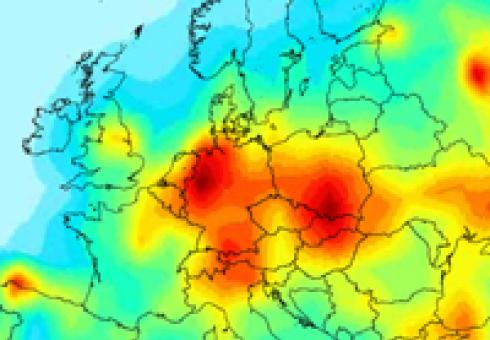
Importantly, this standard will have a large impact right here in the Northeast, especially for people who eat fish caught in local waterways. And that’s because mercury released from U.S. power plants contaminates what’s nearby. This standard will especially benefit residents here in Massachusetts and the Northeast because we’re down wind of the emitting power plants in coal mining and producing states. You can see this from our map (below), which shows the fraction of mercury entering the environment that comes from domestic sources.  Here in the Northeast, most of the mercury that enters our waterways comes from the sources in the US that will be controlled by these standards.

Here in Massachusetts, efforts to cut mercury from local power plants have led to significant mercury declines in fish in recent years. This experience has shown that tough standards can have a substantial effect on the environment. But these reductions are not enough, and mercury levels in fish here are still too high. Much of the mercury in our local fish comes from sources outside the region, which is why federal regulations are needed.

In addition, countries around the world are currently negotiating a global treaty to limit mercury pollution because mercury is a problem worldwide. These standards show that the US is taking leadership at home to address a widespread and substantial global problem.

mercury
Percentage contribution from North American primary anthropogenic sources to total (wet plus dry) annual mercury deposition simulated by the GEOS-Chem global mercury model for 2004–2005. Reproduced from the Selin, Global Biogeochemical Cycling of Mercury: A Review, Annual Review of Environment and Resources, 34: 43-63, 2009, MIT Joint Program on the Science and Policy of Global Change Reprint Series.


smokestacks
LA Times
Dec 21, 2011
EPA regulates emissions of mercury, arsenic and many other toxins
By Dean Kuipers
smokestacks

Finally, some sanity regarding smokestack emissions. After decades of political squabbling, on Wednesday the U.S. Environmental Protection Agency issued its Mercury and Air Toxics Standards, or MATS, which will dramatically cut the amount of highly toxic mercury and about 70 other pollutants released in the United States. The rules target the emissions from coal-fired power plants.

Mercury is the key element addressed by these rules, but it’s only one of many chemicals -- plus fine particulate matter, which plays a role in asthma and other respiratory illnesses nationwide -- that are regulated by MATS. Stack emissions from power plants were not regulated for most of these toxins until this ruling. The coal and power generation industries have lobbied fiercely -- and successfully -- against regulations since they were required by amendments to the Clean Air Act in 1990. Even in the last few months, a utility trade group tried again to delay implementation by another year, but failed.

Mercury, in particular, is a powerful poison that affects pregnant women and their babies, resulting in lowered IQ, reduced attention span, memory impairment and other effects in exposed infants.

“Mercury is emitted into the atmosphere and then gets deposited into ecosystems, where it gets converted into methylmercury in aquatic environments, that’s the toxic form, and is accumulated in fish that are then consumed by humans. So we’re mostly concerned about the effects on humans, and particularly pregnant women and children who eat fish high in methylmercury,” says Noelle Selin, assistant professor of engineering systems and atmospheric chemistry at MIT, who studies distribution and health effects of mercury.

Studies cited by Selin state that 300,000 to 600,000 children are born in the U.S. each year with blood levels of methylmercury above the EPA’s safety threshold. EPA studies have also shown that anglers, Asian Americans and Native Americans are at higher risk, as these populations eat more fish out of streams and lakes, particularly in the Midwest and Northeast, which are downwind of more coal-fired plants.

The MATS rules are not pussyfooting: They aim to reduce mercury released into the atmosphere by 91%. The standards also require dramatic reductions in other heavy metals, including arsenic, cadmium, hexavalant chromium, nickel and lead -- all dangerous toxins. Also regulated are acid gases, including hydrochloric acid and hydrofluoric acid, which contribute to acid rain and are known carcinogens. Previously existing sulfur dioxide and nitrous oxide standards are also updated and tightened.

Pollution control technology required to remove mercury from power plant emissions would also control most of these other toxins. A dozen states have heightened their emissions standards well ahead of these new rules and have proved that the regulatory goals are within reach.

“There’ve been proposals for a long time to regulate these emissions from coal-fired power plants. The earlier incarnation of this was the Clean Air Mercury Rule, which was a cap-and-trade proposal for mercury, and that was challenged in the courts and then thrown out. And now this is another try at regulating, but it’s been a long time in coming,” said Selin.

The EPA estimates that the improvements to health by controlling these toxins and fine particulate matter, as measured by reduced heart attacks, bronchitis, asthma, cancer and other illnesses, will save a total $59 billion to $140 billion in healthcare costs in 2016, the year all existing power plants will have to comply. That is $5 to $13 in health benefits for every dollar spent to reduce pollution.

Still, consumers have hard choices to make in order to reduce their mercury exposure. A study by Selin and other researchers found that most of the fish consumed in the U.S. is commercially caught, such as tuna and swordfish, which are ocean species not likely to be greatly affected by mercury reductions only in the U.S. Global regulation is needed to make all fish safer to eat.

Joint Program Logo
3 Questions
MIT News
Jun 7, 2010
Noelle Selin on curbing mercury

As U.N. negotiations begin this week on a global mercury treaty, an MIT atmospheric scientist explains the challenges ahead.

The first United Nations negotiating session for a global, legally binding mercury treaty begins today in Stockholm. Continuing through Friday, this is the first of five planned negotiating sessions that will address global controls on mercury, a toxin that causes neurological damage and impairs brain development in infants and children around the world. The sessions are expected to result in a global treaty to be signed in late 2013 that will address the emissions and use of mercury in products, wastes and international trade. Noelle Selin, an assistant professor of engineering systems in MITs Engineering Systems Division, with a joint appointment in atmospheric chemistry in the Department of Earth, Atmospheric and Planetary Sciences, studies the interactions between science and policy in international environmental negotiations. She sat down with MIT News to discuss the first negotiating session, and what she considers to be the biggest hurdles to signing a global treaty, which is "not a given" for the U.S.

Q. What do you see as the biggest challenge in the effort to reduce mercury emissions worldwide?

A. I see two major intersecting challenges: addressing the global spread of mercury emissions from coal-fired power plants in the context of the increasing demand for energy, and dealing with local impacts of mercury contamination.

The single largest source of anthropogenic mercury emissions is power generation, particularly from coal-fired power plants. A growing, worldwide demand for energy is increasing the use of coal, and this trend will lead to more mercury emissions if not controlled. About half of current anthropogenic emissions come from Asia, mostly from China, which is dramatically increasing its use of coal. Much of the coal used in China is also relatively high in mercury content. Recent research shows that future emissions of mercury to the atmosphere significantly depend most on how energy-based industrial development proceeds in Asia.

Dealing simultaneously with both local issues and long-range transport of mercury will also be a critical challenge for an international agreement. Mercury emitted in elemental form travels worldwide. At the same time, some other forms of emitted mercury deposit close to emission sources. Local impact also comes from the use of mercury in processes and products. Mercury is used extensively in artisanal gold mining in developing countries. Workers and local communities are exposed to some of the highest levels of mercury contamination in the world. Mercury also continues to be used in products, such as thermometers, thermostats, fluorescent light bulbs and a wide range of electronic equipment, including computer monitors and cell phones. Disposal of these products, particularly electronic waste (e-waste) in developing countries, can expose local populations to mercury.

Q. Even if an international treaty is passed, how will it be implemented or enforced?

A. In general, implementation and enforcement of international environmental agreements are difficult. Some countries simply do not have the intention or political will to meet their obligations. Furthermore, many developing countries lack the financial resources and technical capacity to effectively implement international environmental regulations. For this reason, some environmental agreements include mechanisms for capacity building, as well as the provision of financial assistance. However, this is often one of the most contentious topics of negotiation, and the availability of necessary resources for implementation are often limited as many developing countries argue that industrialized countries do not provide enough support for capacity building.

Another implementation challenge will be coordinating an international mercury treaty with other environmental agreements that already partly cover mercury and other hazardous substances. The Basel Convention on the Control of Transboundary Movements of Hazardous Wastes and Their Disposal controls the international trade and management of hazardous waste including waste containing mercury. The Rotterdam Convention on the Prior Informed Consent Procedure for Certain Hazardous Chemicals and Pesticides in International Trade sets out provisions for the import and export of hazardous chemicals, including mercury. Coordination with these two agreements will be important in addressing the entire life cycle of mercury, including mining and production, use, emission, disposal and cleanup.

Q. How would an international treaty affect developed countries like the U.S. that already regulate mercury emissions? How do current laws in the U.S. regarding mercury emissions and use compare to other industrialized nations?

A. The U.S. regulates mercury emissions from municipal-waste combustion and medical-waste incineration, but does not currently regulate mercury emissions from coal-fired power plants, which are the largest domestic mercury emission source. This is an area where U.S. regulations should be strengthened; the EPA is currently developing power-plant emissions standards for mercury.

European countries also have stronger regulations than the U.S. on mercury in many products, including a large number of common electronic goods. Sweden, for example, has banned mercury in almost all products, but there are some exceptions, including the use of mercury in compact fluorescent light bulbs. In the U.S., many efforts to phase out mercury in products are voluntary, although some states have more stringent regulations. In fact, California has largely copied European Union regulation on mercury and other hazardous substances in electronics, going beyond federal requirements.

For the U.S., any treaty ratification requires the advice and consent of the Senate, and must be approved by two-thirds of all senators. Over the past few decades, this has been an obstacle for U.S. participation in many multilateral environmental agreements. As a result, the U.S. has not ratified several important environmental treaties, including the Basel and Rotterdam conventions. Domestic politics is likely to be a continuing challenge for U.S. implementation of environmental regulations and international cooperation on mercury, and it is not a given that the U.S. would become a party to a mercury treaty.

[More... ]

Pagination

  • First page « First
  • Previous page ‹ Previous
  • …
  • Page 9
  • Page 10
  • Page 11

Inspired by our mission?

You can help to sustain our research by donating through Giving to MIT (search for fund 2045100).

Contact Information

MIT Center for Sustainability Science and Strategy
Massachusetts Institute of Technology • Cambridge, MA 02139

Follow Us

Quick Links

  • Contact Us
  • CS3 staff & students
  • Accessibility
  • Logout

Main navigation

  • About Us
    • Our Purpose
    • Our History
    • Leadership
    • Personnel
    • Support the Center
    • Contact Us
  • Research
    • Research Projects
  • Publications
    • All Publications
    • Annual Report
    • Global Change Outlook
    • Peer-Reviewed Research
    • Reports
    • Other Publications
    • Publication Search
  • News + Media
    • News Releases
    • In the News
  • Events
    • Upcoming Events
    • Past Events
    • Global Change Forum
  • Sponsorship
    • About Sponsorship
    • Our Sponsors
    • Sponsor Login

User account menu

  • Log in
Back to top