
News + Media

Ozone and higher temperatures can combine to reduce crop yields, but effects will vary by region.
By David L. Chandler
Many studies have shown the potential for global climate change to cut food supplies. But these studies have, for the most part, ignored the interactions between increasing temperature and air pollution — specifically ozone pollution, which is known to damage crops.
A new study involving researchers at MIT shows that these interactions can be quite significant, suggesting that policymakers need to take both warming and air pollution into account in addressing food security.
The study looked in detail at global production of four leading food crops — rice, wheat, corn, and soy — that account for more than half the calories humans consume worldwide. It predicts that effects will vary considerably from region to region, and that some of the crops are much more strongly affected by one or the other of the factors: For example, wheat is very sensitive to ozone exposure, while corn is much more adversely affected by heat.
The research was carried out by Colette Heald, an associate professor of civil and environmental engineering (CEE) at MIT, former CEE postdoc Amos Tai, and Maria van Martin at Colorado State University. Their work is described this week in the journal Nature Climate Change.
Heald explains that while it’s known that both higher temperatures and ozone pollution can damage plants and reduce crop yields, “nobody has looked at these together.” And while rising temperatures are widely discussed, the impact of air quality on crops is less recognized.
The effects are likely to vary widely by region, the study predicts. In the United States, tougher air-quality regulations are expected to lead to a sharp decline in ozone pollution, mitigating its impact on crops. But in other regions, the outcome “will depend on domestic air-pollution policies,” Heald says. “An air-quality cleanup would improve crop yields.”
Overall, with all other factors being equal, warming may reduce crop yields globally by about 10 percent by 2050, the study found. But the effects of ozone pollution are more complex — some crops are more strongly affected by it than others — which suggests that pollution-control measures could play a major role in determining outcomes.
Ozone pollution can also be tricky to identify, Heald says, because its damage can resemble other plant illnesses, producing flecks on leaves and discoloration.
Potential reductions in crop yields are worrisome: The world is expected to need about 50 percent more food by 2050, the authors say, due to population growth and changing dietary trends in the developing world. So any yield reductions come against a backdrop of an overall need to increase production significantly through improved crop selections and farming methods, as well as expansion of farmland.
While heat and ozone can each damage plants independently, the factors also interact. For example, warmer temperatures significantly increase production of ozone from the reactions, in sunlight, of volatile organic compounds and nitrogen oxides. Because of these interactions, the team found that 46 percent of damage to soybean crops that had previously been attributed to heat is actually caused by increased ozone.
Under some scenarios, the researchers found that pollution-control measures could make a major dent in the expected crop reductions following climate change. For example, while global food production was projected to fall by 15 percent under one scenario, larger emissions decreases projected in an alternate scenario reduce that drop to 9 percent.
Air pollution is even more decisive in shaping undernourishment in the developing world, the researchers found: Under the more pessimistic air-quality scenario, rates of malnourishment might increase from 18 to 27 percent by 2050 — about a 50 percent jump; under the more optimistic scenario, the rate would still increase, but that increase would almost be cut in half, they found.
Agricultural production is “very sensitive to ozone pollution,” Heald says, adding that these findings “show how important it is to think about the agricultural implications of air-quality regulations. Ozone is something that we understand the causes of, and the steps that need to be taken to improve air quality.”
Denise L. Mauzerall, a professor of environmental engineering and international affairs at Princeton University who was not involved in this research, says, “An important finding … is that controls on air-pollution levels can improve agricultural yields and partially offset adverse impacts of climate change on yields. Thus, the increased use of clean energy sources that do not emit either greenhouse gases or conventional air pollutants, such as wind and solar energy, would be doubly beneficial to global food security, as they do not contribute to either climate change or increased surface-ozone concentrations.”
The research was supported by the National Science Foundation, the National Park Service, and the Croucher Foundation.
Kerry Emanuel at MIT EAPS Tech Day 2014. Assessing the current understanding of the major climate processes and proposing new directions for climate research.
Human life has been so remarkably successful that its sustainability has become the major challenge of our age. Meeting energy needs in a sustainable fashion will require not only bringing together investors, corporations, scientists, and policy makers but new ways of thinking. Can economics be the catalyst in this?

New research examines regulations to cut carbon emissions and finds benefits to cap and trade system.
Evan Lehman
E&E reporter
It turns out that cap and trade might not be so bad after all.
New research shows that reducing carbon emissions through regulations like the administration's recent rules on power plants cuts less carbon at a higher price than the embattled climate policy Congress failed to pass in 2010. Cap and trade, or an equivalent carbon tax, would be economically easier on families, fairer to lower-income people and more flexible for emitters, according to a study by the Massachusetts Institute of Technology.
The study does not specifically examine U.S. EPA's newly proposed carbon rules, but it aims at the ballpark of all proposed rules. As such, it looks at regulatory options to cut carbon in the electricity sector, like a national renewable electricity standard and a clean energy standard, which permits nuclear power and natural gas. It also tested transportation regulations that already exist -- a fuel economy standard for new cars.
And it found that none of them works very well.
A renewable electricity standard and a transportation fuel economy standard would result in one-quarter of the emissions cuts attained by a cap-and-trade system. And all three would cost about the same, they said.
"Put differently, an equivalent level of emissions reduction could be achieved under a cap-and-trade system for less than 5% of the cost of either regulatory policy," said the researchers at the MIT Joint Program on the Science and Policy of Global Change.
If both regulatory plans were enacted -- one on electricity and the other on transportation -- their combined cost would be more expensive than a cap-and-trade system, the report says. But they would reduce just half the amount of emissions.
Take the transportation policy as an example. Increasing fuel efficiency only affects new cars, so carbon reductions can't be found in cheaper areas, like in agriculture or other industries, said Valerie Karplus, a research scientist with MIT and an author of the study.
"Any regulation that focuses on a subset of emissions reductions opportunities will therefore cost at least as much as an economy-wide cap-and-trade system, and often such targeted regulations actions can be much more costly," she said in an email.
Read more...
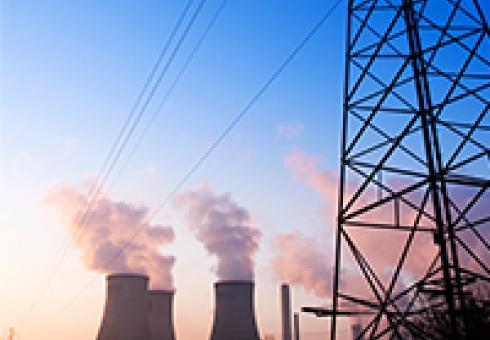
MIT researchers compare regulatory policies to a price on greenhouse gases and discover both the national and regional impacts.
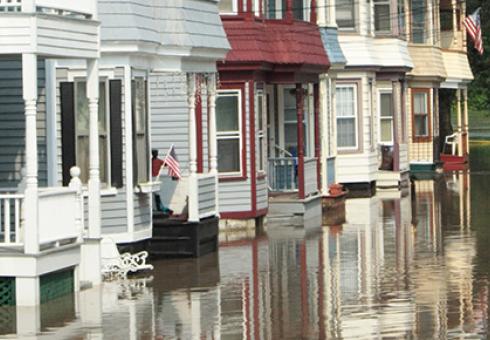
MIT study finds that springtime ozone levels are good predictors of summertime temperatures in the Southern Hemisphere.
By Jennifer Chu
For the past two summers, Australians have sweated through record heat waves, with thermometers climbing as high as 118 degrees Fahrenheit in parts of the country. In January, officials were forced to halt tennis matches during the Australian Open due to extreme heat — a decision made following several days of sizzling temperatures.
Now MIT researchers have found that the intensity of summer temperatures in Australia and elsewhere in the Southern Hemisphere may be better predicted as early as the previous spring by an unlikely indicator: ozone.
From their study, published in the Journal of Climate, the scientists found that as the springtime ozone hole’s severity varies from year to year, the temperatures in Australia and southern regions of Africa and South America reveal correlations: Years with higher springtime ozone experience hotter summers, and vice versa.
The results suggest that ozone levels may help meteorologists predict the severity of summertime temperatures months in advance.
“No one has actually looked at the variation of ozone as a way to forecast or predict the climate or the next summer’s temperature,” says lead author Justin Bandoro, a graduate student in MIT’s Department of Earth, Atmospheric and Planetary Sciences. “This could be especially important for farmers, and for areas like southeastern Australia, where most of that nation’s population resides.”
Bandoro’s MIT co-authors include Susan Solomon, the Ellen Swallow Richards Professor of Atmospheric Chemistry and Climate Science, and postdoc Aaron Donohoe, as well as David Thompson of Colorado State University and Benjamin Santer of Lawrence Livermore National Laboratory.
A spring forecast for summer temperatures
In 1987, countries around the world signed the Montreal Protocol, an international treaty that established a global phase-out of chemicals that cause ozone depletion. Because of the long lifetime of the chemicals, the ozone hole will continue to occur for many years, but it is expected to slowly begin to become less severe in the next several decades.
Bandoro and his colleagues analyzed annual ozone measurements, from 1979 through the most recent heat wave in 2013.
The team combined data from various sources, including a station in Antarctica that has measured total ozone levels in the same atmospheric column since the 1950s. The team performed a correlation analysis to identify links between ozone levels and variables such as temperature, precipitation, and wind patterns.
Although the ozone hole won’t close for many years, its intensity does vary somewhat from one year to another, and the depth of the hole affects an atmospheric phenomenon known as the Southern Annular Mode, which describes the wind patterns that circle Antarctica and influence the strength and position of fronts and storm systems in the Southern Hemisphere.
In years with high springtime ozone, the researchers found that winds shifted, bringing hotter summer temperatures to much of Australia and parts of southern Africa and South America. Lower ozone levels reversed this behavior, with winds leading to cooler summertime temperatures to these same regions.
Expect more extreme temperatures as ozone hole recovers
The link between springtime ozone and summertime temperatures is particularly strong for the present period, while ozone is still in a recovery phase. When the researchers examined this link from a period before the ozone hole had begun to form, they observed a much weaker correlation.
The implication, Bandoro says, is that as ozone levels likely rise in the coming decades, these parts of the Southern Hemisphere will probably experience systematically hotter summers.
“We can expect that these types of summers are going to be more frequent as the ozone hole recovers in coming decades,” Bandoro says. “When the ozone hole is deep, it essentially holds back climate change from showing its face, and Australia is just starting to feel this effect in the summertime in years with shallower ozone holes.”
David Karoly, a professor of earth sciences at the University of Melbourne, says the MIT group has shown, for the first time, a strong relationship between the severity of summer temperatures in Australia and the strength of the ozone hole the previous spring. The results, he says, point to a long-term warming trend in the Southern Hemisphere.
“As the ozone hole recovers this century, the masking effects of ozone depletion causing reduced summer warming over the Southern Hemisphere will disappear,” says Karoly, who did not participate in the study. “Then there will be an acceleration of the summer warming trends over Australia and South Africa, as the ozone hole recovers and the masking influence disappears.”