
News + Media

On eve of summit with President Obama, see Valerie Karplus in Columbia University panel discussion on meeting China's climate goals today at 12:30-2:00 pm.
On the eve of President Xi's visit to the US and summit with President Obama, Professor Karplus participated in the panel discussion on Meeting China’s Climate Goals at Columbia University today, September 21, 2015, at 12:30-2:00 p.m. David Sandalow, Inaugural Fellow, Center on Global Energy Policy, and former senior official at the White House, State Department, and U.S. Department of Energy moderated the discussion among the expert speakers who include Valerie Karplus, Assistant Professor of Global Economics and Management, MIT Sloan School, and Director of the Tsinghua-MIT China Energy and Climate Project; Zhu Liu, Fellow, Resnick Sustainability Institute, California Institute of Technology and Associate, Kennedy School, Harvard University; and Kelly Sims Gallagher, Professor of Energy and Environmental Policy, the Fletcher School, Tufts University, and former Senior Policy Advisor, Office of Science and Technology Policy, the White House.
A podcast of this event will be available three-five days after the date of the event through iTunes or via the Center on Columbia Global Energy Policy’s website.
Proposal takes aim at Rwanda's air pollution
Mark Dwortzan | MIT Joint Program on the Science and Policy of Global Change
Climate CoLab, an MIT-based crowdsourcing platform to advance climate change solutions through the power of collective intelligence, has named Langley DeWitt, a research scientist with the Center for Global Change Science, as a Judges’ Choice winner in one of 15 contests for 2015. DeWitt, who is also chief scientist of the Rwanda Climate Observatory, was recognized in the Transportation contest for her proposal to set up an inexpensive air quality sensor network in Kigali, Rwanda as part of an effort to reduce vehicular emissions and improve air quality.
DeWitt and other contest winners will present their ideas at MIT's Solve and Crowds & Climate conferences, October 5 and 6 on the MIT campus, where the $10,000 Grand Prize will be awarded.
Read more about DeWitt's proposal here.
Study: Pattern of winners and losers explains U.S. policy on fuel subsidies.
Peter Dizikes | MIT News Office
The politics of climate change are often depicted as a simple battle, between environmentalists and particular industries, over government policy. That’s not wrong, but it’s only a rough sketch of the matter. Now a paper co-authored by MIT economist Christopher Knittel fills in some important details of the picture, revealing an essential mechanism that underlies the politics of the climate battle.
Specifically, as Knittel and his colleagues demonstrate, at least one climate policy enacted by Congress — on transportation fuels — contains a crucial asymmetry: It imposes modest costs on most people, but yields significant benefits for a smaller group. Thus, most people are politically indifferent to the legislation, even though it hurts them marginally, but a few fight hard to maintain it. The same principle may also apply to other types of climate legislation.
In 2005, Congress introduced the Renewable Fuel Standard (RFS), which mandates a minimum level of ethanol that must be used in gasoline every year, as a way of reducing greenhouse gas emissions. Ethanol can indeed reduce emissions, but as Knittel and other economists have argued, it is not the most efficient way of doing so: He estimates that mandating ethanol use is at least 2.5 times as costly, per ton of greenhouse gas reduction, as a cap-and-trade (CAT) policy, which would price the carbon emitted by all transportation fuels.
But corn-based ethanol production has strong political support in the Midwest, where much of the corn industry is based. In the new paper, Knittel and his colleagues quantify that effect in unique detail. They model what U.S. fuel consumption would likely look like through 2022 under both RFS and CAT scenarios, among others. Compared with a cap-and-trade system, the average American would lose $34 annually due to the RFS policy. But 5 percent of U.S. counties would gain more than $1,250 per capita, and one county gains $6,000 per capita.
Thus, most people are indifferent to the shortcomings of the RFS policy, but those who care tend to support it vigorously.
“Because of the skew in the distribution, you have the typical voter who doesn’t find it in their interest to fight against the inefficient policy, but the big winners are really going to fight for the inefficient policy,” says Knittel, adding: “If the typical voter is losing $30 a year, that’s not enough for me to write to my congressman. Whereas if you have someone on the upper end who is going to gain $6,000 — that’s enough for me to write my congressman.”
The political economy of energy
As the study shows, some folks do more than write to their representatives. Knittel and his colleagues found that members of the House of Representatives in districts that gain greatly from the RFS policy received an average of $33,000 more from organizations that opposed one particular piece of legislation — the 2009 Waxman-Markey bill, which would have created a CAT system, and likely would have reduced ethanol use. That bill passed in the House in July 2009, but was never taken up by the U.S. Senate.
That difference in campaign contributions holds up strongly even when the researchers controlled for factors such as ideology, state, and overall emissions. That is, other things being equal, representatives of the specific areas benefitting most from RFS were given far more in donations from opponents of the Waxman-Markey bill than other congressmen. Representatives were also 39 percentage points more likely to oppose Waxman-Markey, other things being equal, if they were in districts that benefit strongly from the RFS policy.
“It’s a very robust finding,” Knittel says. “One interpretation is that these people or corporations who were donating money have a model very similar to ours, and are able to predict winners and losers under different policies. This is a very sophisticated group.”
On one level, the results confirmed something that was broadly understood: Areas with corn-based economies support ethanol. On another level, the study reveals the deep asymmetry that structures the politics of the issue: on one side, widespread indifference; on the other, narrow but deep support.
“It wasn’t until we got the results that we were able to think through the political economy of it,” Knittel says.
Tax the externality
The paper, “Some Inconvenient Truths About Climate Change Policy: The Distributional Impacts of Transportation Policies,” is forthcoming in the Review of Economics and Statistics.
The paper’s co-authors are Knittel; Stephen P. Holland of the University of North Carolina at Greensboro; Jonathan E. Hughes of the University of Colorado; and Nathan C. Parker of the Institute of Transportation Studies at the University of California at Davis.
To conduct the study, the researchers used modeling by Parker that estimates where ethanol production will be located in coming years, as well as projecting the overall costs of various potential transportation fuel policies, were they to be implemented. The work also drew extensively on methods the other co-authors have used in evaluating both the potential impact of biofuels as a gasoline replacement and the relationship between policy options and politics.
On the general question of picking the optimal emissions–reduction policy, Knittel says, “The efficient policy is to tax the externality.” That is, to tax the additional cost or problem imposed on people — in this case, greenhouse gas emissions. That forces consumers to account for the costs of their own decisions, such as buying fuel-efficient vehicles.
Other scholars in the field regard the paper as a significant contribution to the study of energy politics. Mark Jacobsen, an associate professor of economics at the University of California at San Diego who has read the paper, says the “voting and donations models are both quite convincing.”
Jacobsen adds: “A very important contribution of this paper is in pointing out that we need to be alert to distribution [of energy resources] across states, making sure that it does not stand in the way of otherwise good policy.”
Knittel suggests the same kind of political asymmetry is probably at work in other aspects of climate politics. When it comes to coal-burning power plants, most people are only marginally affected by policy changes — but people living in coal-mining areas are deeply affected, and so have a much larger impact on the policy debate.
“We hope this paper sparks a literature that can do the same thing for other fuels,” Knittel says.
A new study describes how irrigation development modifies local and regional climate.
Kelsey Damrad | Department of Civil and Environmental Engineering
With approximately 70 percent of all freshwater consumption worldwide used for agriculture, the reliance on large-scale irrigation development continues to spread and ultimately augments crop yields in many regions.
But the ongoing expansion of cropland irrigation, just as with any human-made land-cover change, holds potential for unintended consequences. The consequences of such human activity should be well understood before being implemented.
In a new paper, an MIT team in the department of Civil and Environmental Engineering (CEE) investigates the impacts of large-scale cropland irrigation on rainfall patterns in the East African Sahel around the Gezira Irrigation Scheme, now considered one of the largest irrigation projects in the world. The researchers piloted their exploration by combining theoretical modeling analyses with observational evidence gathered over several decades since 1930 — an unprecedented approach in previous studies.
The CEE team studied 60 years' worth of data of rainfall, temperature, and river flow to empirically deduce the atmospheric impacts of irrigation development.
"Large-scale development of irrigation systems is a good example of human activity that has changed land cover and the environment significantly in many regions of the world,” says co-author Professor Elfatih Eltahir, associate department head of CEE. “In all development projects, we need to better understand the potential impacts of our actions on the environment before we mindlessly develop.”
According to the theory developed by the researchers based on their investigation, when a large area is irrigated, surface air temperature is cooled and surface pressure increased. This reaction was conjectured to reduce rainfall over the irrigated land while generating a clockwise circulation that interacts with the prevailing regional wind. Depending on that interaction, the theory predicts that specific areas of convergence would be created, which would boost the rainfall in some of the surrounding areas.
After the researchers concluded their deep analysis of regional climate data, they concurred that large-scale irrigation development in the East African Sahel has consistently enhanced rainfall in areas to the east of the irrigated lands, while reducing rainfall directly over them.
Spatially and over time, the changes in rainfall and temperature matched up in a way that exceeded the group’s expectations and almost perfectly aligned with the original theory, says co-first author of the paper and CEE postdoc Ross Alter.
"You don’t often achieve that type of clear-cut match when attributing regional climate change from both theory and observations,” Alter says.
The team’s findings, says Eltahir, are indicative of the need for further consideration of potential agricultural, hydrological, and economic repercussions from irrigation expansion.
The paper was published today in the journal Nature Geoscience, by Alter, co-first author Eun-Soon Im of the Singapore-MIT Alliance for Research and Technology (SMART), and Eltahir.
Quantifying impacts
To define a climate, one must consider a breadth of at least 30 years' worth of data. Therefore, the team studied records gathered from 1930 to 1999, with a 10-year gap for irrigation system erection, in order to quantify the environmental impacts of irrigation.
The study’s first step was to employ a complementary analysis of numerical simulations and modeling. Using a sophisticated regional climate model — developed in the Eltahir group over the past 25 years, and which represents conditions in the atmosphere as well as over land — the authors conducted simulations using both irrigated and non-irrigated settings.
Their objective, in this regard, was to enumerate the effects of the irrigated land in the Gezira Scheme on the rainfall in a theoretical sense. The researchers then verified their conjectures by comparing with real occurrences observed throughout the 60-year span of time.
When the research team cross-compared their simulations to the collected empirical evidence, the mapped depictions of the changes in rainfall from pre- to post-irrigation expansion revealed strong decreases over the Gezira Scheme and distinct increases in eastern lands. The effects of enhanced rainfall are particularly apparent in Gedaref — a region east of Gezira. For the past half-century, concurrent with the irrigation expansion in the Gezira Scheme, Gedaref has received plenty of rainfall and has emerged as a successful rain-fed agricultural region.
This climate behavior is a stark contrast to the ongoing drought experienced by the majority of the African Sahel.
To pinpoint the impacts of irrigation on climate, it is important to identify areas of relative change, not absolute change,” Alter explains. “Because rainfall in that region strongly decreased overall, any larger changes in rainfall — even zero change between the two periods in question — would still be seen as increases.” Stable rainfall, in this case, is still better in comparison to the lands experiencing droughts.
Optimizing efficiency
Though the researchers acknowledge irrigation as an ideal solution to agricultural challenges, all agree that comprehension of human-made land-cover change and its influence on the natural environment is necessary for sustainable development.
“The knowledge gained from this study provides a more fundamental understanding of the impacts of land use and land cover changes on the atmosphere,” Alter says.
The researchers specify that their study does not take into account other possible processes than irrigation development that disturb the climate such as changes in the chemical composition of the atmosphere and the resulting global climate change.
Now with an established spectrum of probable impacts from significant irrigation development, the researchers suggest that this new knowledge about the impacts of land cover change on the climate system should help in achieving more rigorous attribution of the regional and local impacts of global climate change.
“While there are many studies that show landscape has such effects, the use of real-world observed data makes this a particularly important research contribution,” says Roger Pielke Sr., a senior research scientist of the University of Colorado not involved in this study. “Irrigated landscapes worldwide, indeed all human modified landscapes, based on the Alter et al. study, should be expected to play a major role in local and regional weather and climate. This human effect on the climate system has been underestimated in past assessments of climate change. The Alter et al. paper is a very significant contribution in expanding our understanding of the human role on the climate system."
“There is undoubtedly a pressing need for large-scale irrigation in Africa and other regions,” Eltahir says. “We now have a foundation of the likely impacts of human-induced land-cover changes, and can use this new knowledge in the design stage of irrigation systems as opposed to after the fact.”
Funding for this research was provided by the Cooperative Agreement between the Masdar Institute and MIT, and by the Singapore-MIT Alliance for Research and Technology.
Mark Dwortzan
MIT Joint Program on the Science and Policy of Global Change
MIT researchers find unintended consequences
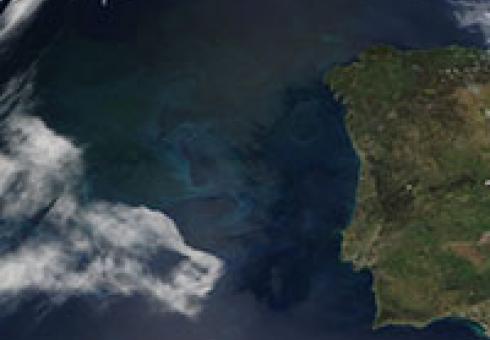
Like the leaves of New England maples, phytoplankton, the microalgae at the base of most oceanic food webs, photosynthesize when exposed to sunlight. In the process, they absorb carbon dioxide from the atmosphere, converting it to carbohydrates and oxygen. Many phytoplankton species also release dimethyl sulfide (DMS) into the atmosphere, where it forms sulfate aerosols, which can directly reflect sunlight or increase cloud cover and reflectivity, resulting in a cooling effect. The ability of phytoplankton to draw planet-warming CO2 from the atmosphere and produce aerosols that promote further cooling has made ocean fertilization—through massive dispersal of iron sulfite and other nutrients that stimulate phytoplankton growth—an attractive geoengineering method to reduce global warming.
But undesirable climate impacts could result from such a large-scale operation, which would significantly increase DMS emissions. The primary source of sulfate aerosol over much of the Earth’s surface, DMS plays a key role in the global climate system. In a study published in Nature’s Scientific Reports, MIT researchers found that enhanced DMS emissions, while offsetting greenhouse gas-induced warming across most of the world, would induce changes in rainfall patterns that could adversely impact water resources and livelihoods in some regions.
“Discussions of geoengineering are gaining ground recently, so it’s important to understand any unintended consequences,” says study co-author Chien Wang, a senior research scientist at MIT’s Center for Global Change Science and the Department of Earth, Atmospheric, and Planetary Sciences. “Our work is the first in-depth analysis of ocean fertilization that has highlighted the potential danger of impacting rainfall adversely.”
To investigate the impact of enhanced DMS emissions on global surface temperature and precipitation, the researchers used one of the global climate models that the Intergovernmental Panel on Climate Change (IPCC) uses, which simulates the evolution of and interactions among the ocean, atmosphere and land masses. Running simulations that compared two scenarios—one, known as RCP4.5, that the IPCC uses to project greenhouse gas concentrations, aerosol emissions and land use change based on policies that lead to moderate mitigation of greenhouse gas emissions over the course of the 21st century; the other identical to RCP4.5 except DMS emissions from the ocean were increased to the maximum feasible levels (about 2.5 times higher)—they found mixed results.
The simulations showed that enhanced DMS emissions would reduce the increase in average global surface temperature to half that of the RCP4.5 scenario, resulting in a net increase of 1.2° Celsius by 2100. But the cost would be a substantial reduction in precipitation for some regions.
“Generally, our results suggest that the cooling effect associated with enhanced DMS emissions would offset warming across the globe, especially in the Arctic,” says the study’s first author Benjamin Grandey, a senior postdoctoral associate in Wang’s group who configured the model simulations and analyzed the data. “Precipitation would also decline worldwide, and some parts of the world would be worse off. Europe, the Horn of Africa, and Pakistan may receive less rainfall than they have historically.”
Grandey and Wang warn that the lower rainfall could reduce water resources considerably, threatening the hydrological cycle, the environment and livelihoods in the affected regions.
The researchers hope their investigation—summarized in a video produced by Grandey—will inspire further studies of more realistic ocean fertilization scenarios, and of the potential impacts on marine ecosystems as well as human livelihoods. Further research will be needed, they say, to fully evaluate the viability of ocean fertilization as a geoengineering method to offset greenhouse gas-induced warming.
The study was funded by the Singapore National Research Foundation through the Singapore-MIT Alliance for Research and Technology Center for Environmental Sensing and Modeling, and grants from the National Science Foundation, Department of Energy, and Environmental Protection Agency.
Photo courtesy of Jacques Descloitres/NASA Goddard Space Flight Center.
Vulnerable coastal regions could face storm surges of unprecedented magnitude in the next century
Jennifer Chu | MIT News Office
"Grey swan" cyclones — extremely rare tropical storms that are impossible to anticipate from the historical record alone — will become more frequent in the next century for parts of Florida, Australia, and cities along the Persian Gulf, according to a study published today in the journal Nature Climate Change.
In contrast with events known as “black swans” — wholly unprecedented and unexpected occurrences, such as the 9/11 attacks and the 2008 financial collapse — grey swans may be anticipated by combining physical knowledge with historical data.
In the case of extreme tropical cyclones, grey swans are storms that can whip up devastating storm surges, beyond what can be foreseen from the weather record alone — but which may be anticipated using global simulations, along with historical data.
In the current paper, authors Kerry Emanuel, the Cecil and Ida Green Professor in Earth and Planetary Sciences at MIT, and Ning Lin of Princeton University simulated the risk of grey swan cyclones, and their resulting storm surges, for three vulnerable coastal regions. They found a risk of such storms for regions such as Dubai, United Arab Emirates, where tropical storms have never been recorded. In Tampa, Florida, and Cairns, Australia — places that experience fairly frequent storms — storms of unprecedented magnitude will be more likely in the next century.
“These are all locations where either no one’s anticipated a hurricane at all, such as in the Persian Gulf, or they’re simply not aware of the magnitude of disaster that could occur,” Emanuel says.
Beyond forecasts
To date, the world has yet to see a black swan or grey swan cyclone: Every hurricane that has ever occurred in recorded history could, in retrospect, have been predicted, given the previous pattern of storm activity.
“In the realm of storms, I can’t really think of an example in the last five or six decades that anybody could call a black swan,” Emanuel says. “For example, Hurricane Katrina was anticipated on the timescale of many years. Everybody knew New Orleans was going to get hammered. Katrina was not meteorologically unusual at all.”
However, as global warming is expected to significantly alter the Earth’s atmosphere and oceans in the coming decades, the track and magnitude of hurricanes may skew widely from historical patterns.
To get a sense of the frequency of grey swan cyclones in the next century, Emanuel and Lin employed a technique that Emanuel’s team developed 10 years ago, in which they embed a detailed hurricane model into a global climate model.
For this paper, the team embedded the hurricane model into six separate climate models, each of which is based on environmental data from the past, or projections for the future. For each simulation, they generated, or “seeded,” thousands of randomly distributed nascent storms, and observed which storms produced unprecedented storm surges, given environmental factors such as temperature and location.
From their simulations, the researchers observed that storm surges from grey swan cyclones could reach as high as 6 meters, 5.7 meters, and 4 meters in Tampa, Cairns, and Dubai, respectively in the current climate. By the end of the century, surges of 11 meters and 7 meters could strike Tampa and Dubai, respectively.
Changing risk
To put this in perspective, the last big hurricane to hit Tampa, in 1921, produced a devastating storm surge that measured 3 meters, or about 9 feet high.
“A storm surge of 5 meters is about 17 feet, which would put most of Tampa underwater, even before the sea level rises there,” Emanuel says. “Tampa needs to have a good evacuation plan, and I don’t know if they’re really that aware of the risks they actually face.”
Emanuel says that Dubai, and the rest of the Persian Gulf, has never experienced a hurricane in recorded history. Therefore, any hurricane, of any magnitude, would be an unprecedented event.
“Dubai is a city that’s undergone a really rapid expansion in recent years, and people who have been building it up have been completely unaware that that city might someday have a severe hurricane,” Emanuel says. “Now they may want to think about elevating buildings or houses, or building a seawall to somehow protect them, just in case.”
Upper limit shift
The team also found that as storms grow more powerful in the coming century, with climate change, the most extreme storms will become more frequent.
The team’s results show that the expected frequency for a grey swan cyclone with a 6-meter storm surge in Tampa would fall from 10,000 years today to as little as 700 years by the end of the century. Put another way, today Tampa has a one in 10,000 chance of being struck by a devastating grey swan cyclone in any given year — odds that will remain the same next week, or next year.
“Hurricanes, unlike earthquakes, are like a roll of the die,” Emanuel says. “Just because you had a big hurricane last year doesn’t make it more or less likely that you’d have a big hurricane next year.”
But in 100 years, Tampa’s odds of a 6-meter storm surge will be 14 times higher, as the world’s climate shifts.
“What that really translates to is, you’re going to see an increased frequency of the most extreme events,” Emanuel says. “Whereas the upper limit of hurricane wind speeds today might be 200 mph, 100 years from now it might be 220 mph. That means you’re going to start seeing hurricanes that you’ve never seen before.”
The group’s estimates of extreme storm intensity, while high, are not unrealistic for the coming century, says Greg Holland, senior scientist at the National Center for Atmospheric Research.
“This is an excellent example of the type of study needed to fill out our knowledge of what is possible with damaging events such as storm surge,” says Holland, who was not involved in the study. “Although the events listed are … rare, a knowledge of their possibility helps considerably with assessing more likely events in planning.”
This research was funded in part by the National Science Foundation.