
News + Media
Professors Jake Jacoby, Valerie Karplus, Tom Malone, and John Sterman discussed their COP21 experiences on a panel moderated by MITEI Deputy Director Rob Stoner.
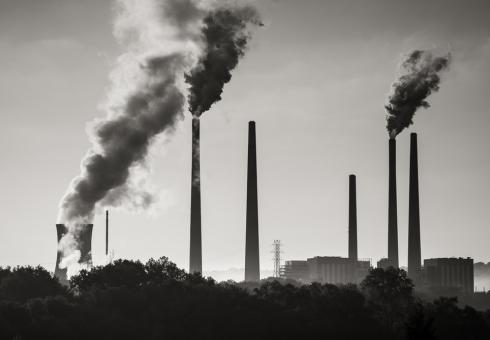
Noelle Selin, Amanda Giang share their perspective in The Conversation
Over 300,000 babies every year are born in the United States with levels of mercury that put them at risk of neurological and developmental problems. How much would you be willing to spend to reduce this number?
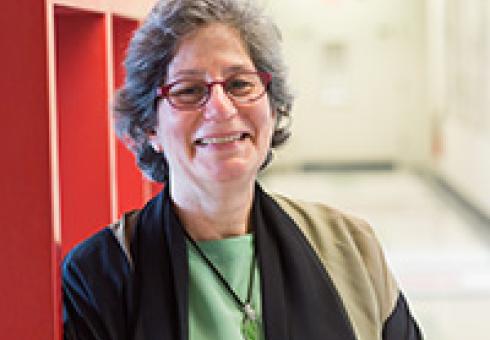
Susan Solomon co-authors study in Nature Climate Change
A large group of climate scientists has made a bracing statement in the journal Nature Climate Change, arguing that we are mistaken if we think global warming is only a matter of the next 100 years or so.
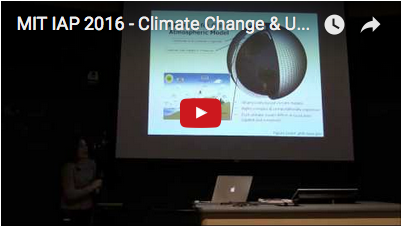
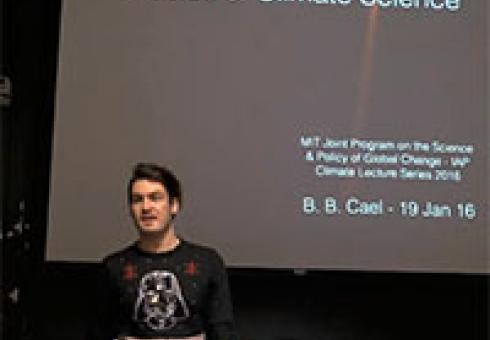
Megan Lickley - The 2016 Climate Change & Uncertainty course explores uncertainty in the rate of global warming, sea level rise and storm activity, and how uncertainty can propagate in climate models.
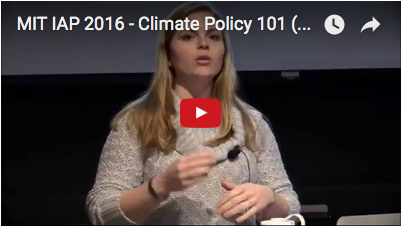
Sam Houston - The 2016 Climate Policy 101 course reviews policy options for climate mitigation, adaptation and geoengineering, and the tradeoffs involved.
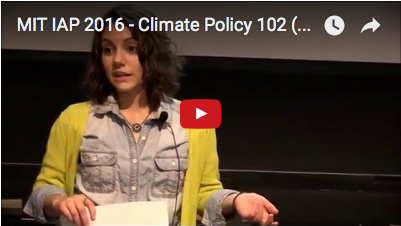
Katie Mulvaney - The 2016 Climate Policy 102 course surveys international, national and subnational climate governance, with an emphasis on COP21 and U.S. climate action plans.
Katie Mulvaney - The 2016 Climate Policy 102 course surveys international, national and subnational climate governance, with an emphasis on COP21 and U.S. climate action plans.
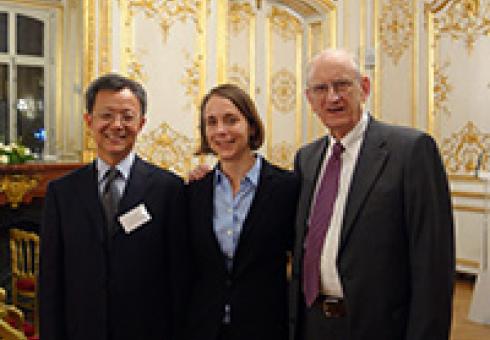

Auburn U., MIT researchers link lower crop yields to higher ozone levels
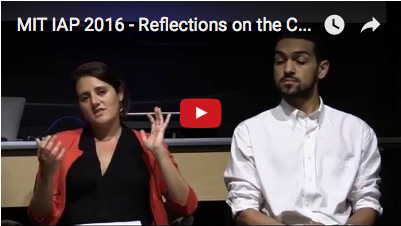
Amanda Giang - The 2016 course Dispatches from Paris: Reflections on the COP21 Climate Talks featured a panel discussion with members of the MIT community who participated as observers at the Paris climate negotiations.