
News + Media
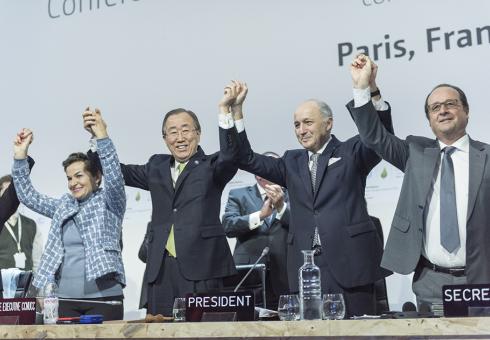
FactCheck.org: The 0.2 C figure “reflects only the incremental effect of Paris when built upon all the previous commitments made through the UNFCCC,” and “assumed no further strengthening of national commitments in years after 2030,” says MIT Joint Program Co-Director John Reilly.
New York Times: MIT Joint Program-affiliated CEEPR Executive Director John Parsons comments
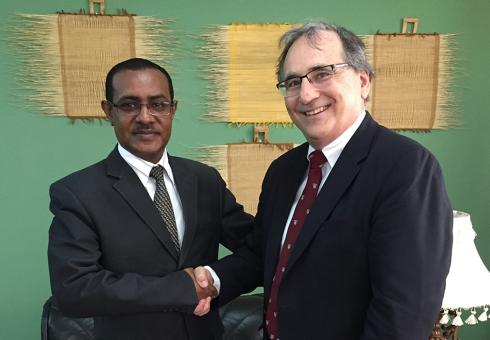
Kenneth Strzepek applies models to help decision-makers advance food security and sustainable development in a climate-compromised continent

IN THIS ISSUE: Future of forests under climate change / More extreme storms ahead for California / Charting a better future for Africa / Monitoring mercury

Amanda Giang models a pollutant’s pathways and assesses mitigation policies
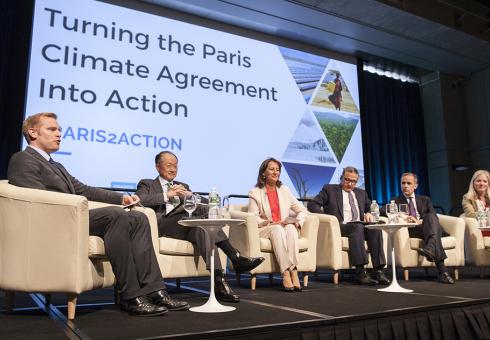
His administration cherry-picked my group's findings to help make their case.
Joint Program co-directors to Wall St. Journal: Your editorial references our research to draw what we consider to be the exact wrong conclusion about the importance of the Paris Agreement to addressing climate change.
In a letter to The Wall Street Journal, Prof. Ron Prinn and John Reilly, co-directors of the Joint Program on the Science and Policy of Global Change, explain why their research shows the importance of the Paris climate agreement. “Paris provides an unprecedented framework for global cooperation on this serious threat. In our view, U.S. withdrawal from it is a grave mistake.”

Award-winning paper by Arun Singh shows how one of the world’s fastest-growing economies can expand its energy consumption while limiting emissions

A message to the MIT community from MIT President L. Rafael Reif

Additional Coverage: CNN (6:40 - 9:34), Politifact, Washington Post, Scientific American

Correcting the record on the US President's reference to MIT research