
News + Media

Caleb Waugh, co-president of MIT’s Energy Club and a doctoral student in nuclear science and engineering, says that energy is the defining challenge of this generation.
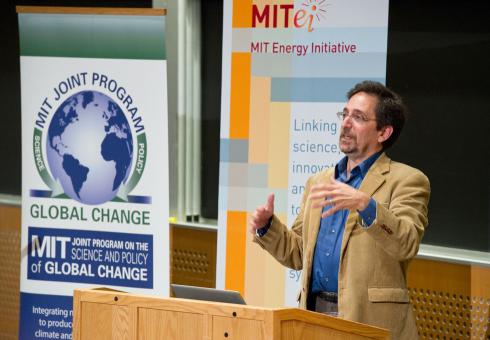
New York Times’ Andrew Revkin shares lessons with MIT faculty, students at Earth Day colloquium.
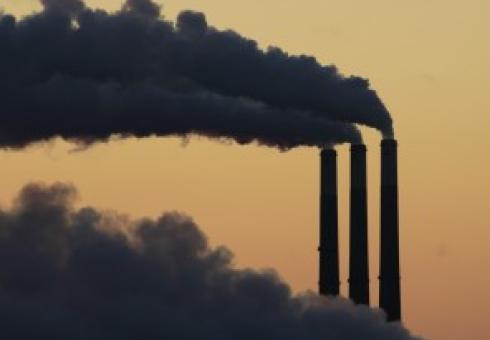
There are two ways to think about the cost of energy. There’s the dollar amount that shows up on our utility bills or at the pump. And then there’s the “social cost” — all the adverse consequences that various energy sources, from coal to nuclear power, end up foisting on the public.
New York Times’ Andrew Revkin shares lessons with MIT faculty, students at Earth Day colloquium.
From the high Himalayas to the poles, the world’s glaciers are melting. What does this mean for your community and our shared Earth? David Breashears presents his stunning new images of the Himalayan glaciers to mark the MIT Museum’s opening of its special exhibition by GlacierWorks: Rivers of Ice: Vanishing Glaciers of the Greater Himalaya. Along with David Breashears, the symposium brings together scientists and community members to debate your questions about our climate, environment, water supply and much more.
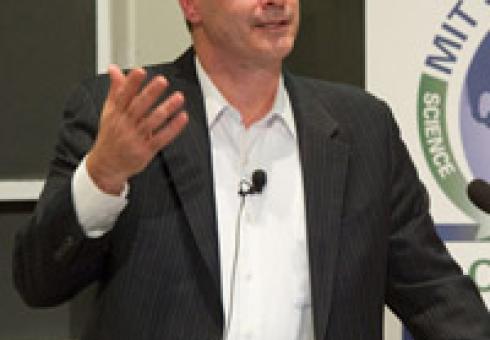
Toyota’s Tom Stricker shares his view with MIT students, faculty
Video: Watch the event
As gasoline prices continue to remain high, with the nationwide average jumping 19 cents a gallon in March, Americans and automakers alike are investing in alternatives. But what’s the most effective way forward for the auto industry? Toyota’s Tom Stricker — the company's Vice President, Technical & Regulatory Affairs — gave his take on Wednesday, April 18, during an event at MIT co-sponsored by the Joint Program on the Science and Policy of Global Change and the MIT Energy Initiative.
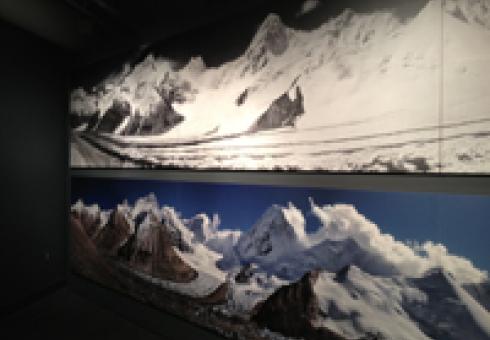
With the advisement of several Joint Program on Global Change researchers—including the co-director Ron Prinn and co-director emeritus Jake Jacoby—the MIT Museum opened a new exhibition “Rivers of Ice: Vanishing Glaciers of the Greater Himalaya.” The exhibit draws from mountaineer and filmmaker David Breashears’ breathtaking photographs, and places them in context with those of earlier mountaineer photographers—revealing the glacial melt that has occurred over time.
Breashears, who took the photos throughout his forty-five expeditions to the Himalaya, views the Rivers of Ice exhibition as an opportunity to trigger public dialogue as scientists and policymakers work to better understand what exactly is happening to the glaciers of the Greater Himalaya. Formed by the collision of continents, the water from the glacial ice melt in the Himalaya contributes to watersheds that serve the drinking, agriculture and business needs of more than 1 billion people throughout Asia. As the snow cover melts and the glaciers of the Greater Himalaya retract and change, the need for greater and more detailed understanding of their importance to human and ecological systems increases.
Breashears hopes the exhibit—and a related symposium taking place on Saturday, April 21—will provide insight into some of the groundbreaking research being done to better understand the glaciers’ potential impact on global environmental issues.
Rivers of Ice, once viewed, cannot be forgotten. By experiencing the photography 'in the round' and at large scale, by viewing artifacts from expeditions past and present, and by learning about the people who call the Himalaya home, MIT Museum visitors gain a deeper understanding of the grand beauty of these mountains, as well as their significance to the global challenges we face today.
The exhibit, which will be open from April 13, 2012 to March 17, 2013, is a collaboration between the MIT Museum, GlacierWorks, and the Asia Society and designed by ThincDesign.
More information about the exhibit can be found here: web.mit.edu/museum/exhibitions/rivers-of-ice.html

MIT researchers join Boston Globe panel in weighing climate risks and resolutions.
In an effort to share what is known, what isn't, and what can and cannot be done about climate change, MIT's John Reilly and Kerry Emanuel joined UMass Amherst researchers as part of a "Global Warning" panel convened by The Boston Globe.
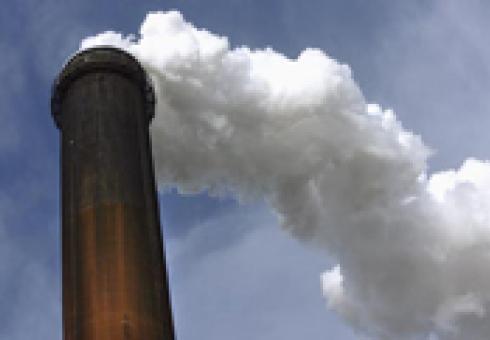
Proposed new emissions standards would limit carbon dioxide produced by new power plants, which would probably prohibit construction of any coal-fired facilities.
The Obama administration proposed rules limiting carbon dioxide emissions from new power plants, a move that could essentially bar new coal-fired electric generation facilities. Howard Herzog comments.