
News + Media
Cheap oil fuels other parts of the world economy
John Reilly | MarketWatch
The crash in the price of oil — from $108 a barrel in June 2014 to below $27 earlier this year — has rattled the stock market, triggered layoffs across the energy sector, and plunged many oil producing countries into crisis.
Oil has since rebounded significantly from its lows, to above $40 a barrel, but the price plunge since 2014 has put much pressure on oil companies. Reports have pointed to an increase in debt among oil producers, raising the specter of default on bankruptcy and default on debt, with follow-on effects beyond oil producers.
The upheaval also has sparked fears that oil’s troubles will spread across the globe, echoing the crash in U.S. housing markets that pushed the world economy to the brink of collapse in 2008. Yet despite the woes oil is experiencing, it is unlikely that the repercussions will trigger another global financial crisis.
Looking at the numbers, the mortgage-debt crisis dwarfs what is currently happening in oil. According to a report in the Financial Times, the global oil and gas industry’s debts rose to $3 trillion from $1.1 trillion between 2006 and 2014. Compare that to the $10 trillion of housing debt weighing on Americans in 2008.
Aside from the numbers, the impact will be different because of the nature of the oil industry and the role oil plays in the world economy. Boom and bust have been features of the oil business for many years. Companies that have been around for a while understand this, and have learned to adapt. Responding to earlier crises, they made significant cuts and improved efficiency. Because they run lean operations, these companies are better prepared to weather downturns. Also, the major players in the oil industry are not highly leveraged, and thus we have not seen anything like the cascade of failures among lenders and suppliers that made the housing bust so damaging.
It is also important to note that the marginal cost of extracting oil from the ground is relatively low once the initial cost of developing a field is sunk. Even if prices are low, companies can continue to make money. It won’t be as much as they would make in good times, but the businesses can still generate revenue and profits. When oil companies cut back, they halt or delay investments in new fields, but their existing wells continue to produce.
Although some smaller or newer oil companies have been forced out of business by the price collapse, the larger, established players are unlikely candidates for bankruptcy. What tends to happen in the oil business is consolidation, which has been a feature of the industry for nearly two decades: look at Exxon XOM, +0.71% and Mobil; Chevron CVX, +0.39% and Texaco; BP BP, -1.46% and Amoco, and other mergers that occurred in the 1990s and early 2000s — another time when oil prices were extremely low.
That round of mergers and acquisitions reduced the number of companies considerably, and so room for further consolidation may be limited. Also, many of the remaining companies are state-owned or state-controlled and thus not candidates for acquisition or merger unless governments that owned them decided to privatize the assets — an unlikely scenario. But smaller operators with potentially valuable mineral rights will become candidates for acquisition by cash-rich larger companies.
When weighing the fallout from the oil price collapse, it is important to remember that whatever direction oil prices move, there will be winners and losers. While today the oil industry struggles, other industries, including transportation and manufacturing, are enjoying the benefits of low-cost oil. The fortunes of regions also rise and fall with the price of oil. When the price is high, Texas booms and New England struggles. Falling prices bring the reverse.
Perhaps the most serious consequence of today’s cheap oil is the damage done to governments that rely heavily on tax revenue from oil production. Many of the big oil-producing countries depend heavily on oil revenue to deliver basic services. With the collapse in prices, governments have to cut support for everything from medical care to housing to road repair. Tight budgets, in turn, can fuel political unrest, which may destabilize governments.
The damage to governments is easy to see in Venezuela, Nigeria, and Russia. But it also is apparent in wealthy countries such as Saudi Arabia, which has had to trim its domestic budget and pull back on investment outside of the country. Foreign nationals who traditionally have made up a large part of the Saudi work force may find less opportunity there, which creates a spillover effect in their home countries.
But for most of the world, assessing the effects of the oil price collapse is a process of calculating the many pluses and minuses. Oil industry workers may have much lighter paychecks these days, but consumers have a bit more in their wallets after filling the gas tank.
John Reilly is a senior lecturer at the MIT Sloan School of Management and co-director of the MIT Joint Program on the Science and Policy of Global Change, Center for Energy and Environmental Policy Research.
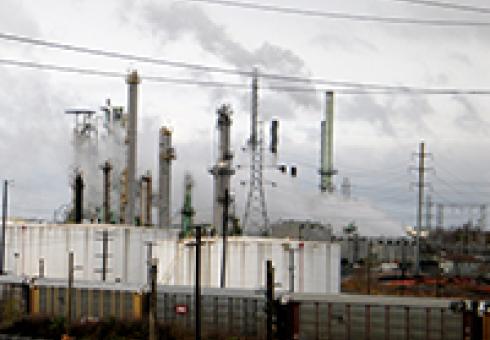
Photo: Detroit oil refinery (Photo courtesy of Grangernite)

Valerie Karplus, Sloan School of Management
Andrea Carter | Poets and Quants
Valerie Karplus
Assistant Professor, Global Economics and Management
MIT, Sloan School of Management
Forecasts suggest that rapidly developing nations such as China will be responsible for most of the growth in greenhouse gas emissions over the next 50 years. Valerie Karplus isn’t sitting back waiting for it to happen. Instead, she’s doing something about it now and using her expertise on China’s energy system – including technology and business model innovation, energy system governance, and the management of air pollution and climate change – to help correct the course we’re on. From 2011 to 2015, she directed the MIT-Tsinghua China Energy and Climate Project, a five-year research effort that focused on analyzing the design of energy and climate change policy in China, along with its domestic and global impacts.
Alongside her research, Professor Karplas teaches Entrepreneurship Without Borders and New Models for Global Business, along with co-developing an all new course at MIT on Global Energy Markets and Policy. She also serves the university as a faculty affiliate of the MIT Joint Program on the Science and Policy of Global Change and the MIT Energy Initiative.
Age: 35
At current institution since: 2006
Education: B.S. Molecular Biophysics and Biochemistry and Political Science, Yale University, 2002; M.S. Technology and Policy / Civil and Environmental Engineering, Massachusetts Institute of Technology, 2008; Ph.D. Engineering Systems, Massachusetts Institute of Technology, 2011
Courses you currently teach: New Models for Global Business, Entrepreneurship without Borders, Mentor for Global Entrepreneurship Lab, China Lab, and Global Organizations Lab
Professor you most admire: Elinor Ostrom
“I knew I wanted to be a b-school professor when…I discovered I could apply my diverse interests in the management of technology and innovation, the natural sciences and engineering, and global affairs and policy to advance solutions to major challenges facing society—a hallmark of scholarship at MIT.”
“If I weren’t a b-school professor…I would spend my days painting and writing novels.”
Most memorable moment in the classroom or in general as a professor: Leading the CEOs of the MIT Sloan Global Entrepreneurship Lab companies in the Marshmallow Challenge (a game that requires building a structure out of tape, string, and pasta, then placing the marshmallow on top within 18 minutes)—this exercise led to an abundance of creative designs and unexpected insights.
What professional achievement are you most proud of? Building a cross-border, multi-disciplinary research team involving energy economics researchers at MIT and Tsinghua University. Our team contributed to analysis that supported U.S.-China cooperation on climate change ahead of the 2014 Asia-Pacific Economic Cooperation Summit, where Presidents Obama and Xi jointly announced their intended pledges for climate action ahead of the Paris Climate Talks.
What do you enjoy most about being a business school professor? I thoroughly enjoy the variety of topics and challenges I am able to tackle as a business school professor. I also enjoy experimenting with a variety of interactive classroom formats, including simulations, business cases, and debates.
What do you enjoy least about being a business school professor? The fact that a day only has 24 hours—I could easily fill twice that much time with all of the exciting opportu
Fun fact about yourself: When I was young I used to draw cartoons everywhere.
Favorite book: The Giver
Favorite movie: The King’s Speech
Favorite type of music: Classical
Favorite television show: Top Gear
Favorite vacation spot: Big Sur, California
What are your hobbies? Skiing, Painting, Running, Yoga
Website: vkarplus.com
“If I had my way, the business school of the future would have…even closer integration between the classroom and practice. It would also serve jianbing (a Chinese fried-egg pancake often eaten for breakfast) in the canteen.”
Students Say…
“Prof Valerie Karplus, who served as my mentor, is highly approachable and supportive. She always inspires us to approach problems from different perspectives, and with an eye for detail. She teaches us how to think rather than what to think.”
Yuting Fang, MIT Sloan Master of Finance Program, Class of 2016
“At MIT Sloan, students typically have significant industry experience in addition to the required academic background. Accordingly, each student brings with them domain-specific knowledge from a variety of different disciplines, the benefit of having been exposed to a wide range of teaching styles, and varied life experiences. Given this diversity, finding ways to effectively reach all students is a challenge – Professor Karplus continually rose to the challenge. She made a concerted effort to connect the class to the subject matter using her insight, inclusive teaching style and current case studies, thus making the class concepts both meaningful and relevant. She also excelled at connecting us with our fellow classmates. I found her to be an extremely effective educator.”
Dave Whyte, MIT Sloan Ph.D.; currently Head of Cyber Security, Bank for International Settlements
“Professor Valerie Karplus is truly the guru of international strategy. Her classroom is always filled with the most dynamic and interesting discussions (and sometimes debates) of international strategy and culture. Drawing from examples as diverse as Xiaomi, CEMEX and Uniqlo, Professor Karplus helps students build the necessary frameworks to better analyze and think through different internationalization strategies. She challenges students to not only determine HOW companies should go global, but also answer the question of IF companies should go global at all. Professor Karplus is one of the most engaging and thoughtful professors, and her class – New Models for Global Business should be on the shortlist of must take classes.”
Jake Chen, MIT Sloan MBA Class of 2016
DON’T MISS: THE COMPLETE LIST: POETS&QUANTS’ 2016 MOST OUTSTANDING B-SCHOOL PROFS UNDER 40
Photo: Valerie Karplus
A new study points to the risk that China and India will be facing severe water shortages by 2050 due to a perfect storm of economic growth, climate change, and fast growing populations. Joint Program Deputy Director Adam Schlosser comments on the future of water stress in Asia.
Here's how to read the tea leaves
The latest numbers show China is using more coal and energy than previously thought, but the last two years of data suggest China’s coal use may be peaking earlier than expected.


Study finds high risk of severe water stress in Asia by 2050
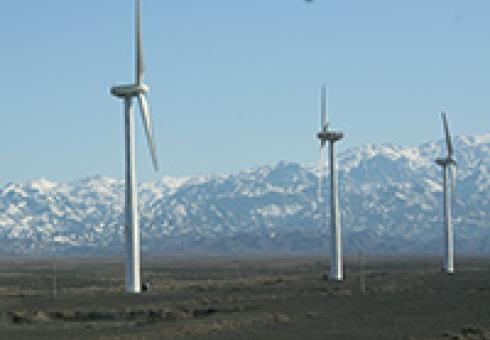
World's top CO2 emitter on track to reach key climate goal by 2030
Valerie Karplus | ChinaFAQs
Based on recent economic developments and the newly-released Thirteenth Five-Year Plan, China is well on its way to reaching its climate goal of peak CO2 emissions by 2030.
The Plan charts the overarching course of China’s economic and social development through 2020, and will be translated into plans for provinces and specific sectors like energy in the coming months and years. The national plan, by reflecting the government’s high-level priorities, provides important momentum toward meeting China’s climate change commitments.
In many respects, the Plan hews closely to the goals set out in the country’s previous long-term energy plans and its climate policy commitments for the Paris Agreement. China’s pledge included targets to reach peak CO2 emissions around 2030 (with the intention to peak earlier), by reducing the CO2 intensity of economic activity by 60-65% by 2030 relative to 2005, and raising the share of non-fossil energy in the country’s energy mix to around 20% by 2030.
In crafting the Plan, China’s policymakers have emphasized the role of both the expansion of low-carbon energy and continued improvements in energy efficiency. It suggests that even in the face of slower growth, top policymakers recognize that both strategies are consistent with the country’s latest growth targets.
Moving forward on climate and energy
Generally speaking, the Plan is in step with the country’s National Energy Development Plan, released in 2014, which calls for substantial increases in clean and renewable energy deployment through 2020. While the new Five-Year Plan does not mention targets for installed electricity generation capacity, it reaffirms the country’s existing target to raise the non-fossil share of energy use to 15% by 2020. To achieve this goal, China’s National Energy Administration has stated that China will need a total of 250 gigawatts (GW) of wind power capacity, and 150 GW of solar, which would exceed the targets set in 2014 by 50 gigawatts each. (China is also aiming for 350 GW of hydropower capacity by 2020.) Realizing the full generation potential of wind and solar capacity—and its contribution to the country’s non-fossil target—will require reforms that introduce greater flexibility in dispatch and allow balancing across larger grid areas.
Nuclear and biomass are also slated to expand substantially, by 38-49 GW and 30 GW, respectively (Bloomberg New Energy Finance). Expansion of the country’s natural gas infrastructure is also likely to facilitate increased use, which has not occurred as fast as anticipated through 2015.
Energy efficiency will also be critical, especially realizing efficiencies in the parts of the economy that policy doesn’t easily reach. Indeed, many of the large energy users and emitters have cleaned up substantially in recent years in response to energy efficiency directives and technology upgrades. While there may be little low hanging fruit left in some segments of the economy, finding, reaping, and quantifying the remaining opportunities for energy efficiency improvement will be an important task in the Thirteenth FYP.
The creation of a national carbon trading market—focused on large enterprises in high-emitting sectors—will help to support this transition. Set to launch in 2017, the system will price in a portion of the damages of fossil energy use, encouraging clean energy substitution and innovation over the longer term. Finding ways to expand the coverage of the carbon price to smaller and more distributed emitters offers a promising way to expand cost-effective reductions, while preventing “leakage” of emitting activities from covered to un-covered sectors.
As in past Plans, the Thirteenth FYP lays out energy and CO2 intensity reduction targets. The plan targets an energy intensity reduction of 15% (the Twelfth FYP targeted 16%, while the Eleventh FYP targeted 20%). The targeted CO2 intensity reductions of 18%, compared to 17% for the Twelfth Five-Year Plan, will boost the contribution of low-carbon sources in the energy mix and support further decoupling of China’s economic growth from its reliance on fossil energy. This shift is already well underway—China’s share of coal in primary energy has dropped from over 72% in 2007 to 64% in 2016. The CO2 market will be designed to contribute substantially to sustaining reductions in CO2 intensity, in line with the 18% goal.
A shift toward consumption and services
A shift away from investment and exports toward consumption and services as key economic growth drivers in the coming years now seems to be underway in earnest, and will further contribute to reductions in emissions, relative to a no-shift scenario. In this regard, the government’s objectives are aligned with domestic environmental goals. China’s progress provides lessons for emerging economies generally to help in avoiding an emissions-intensive development path.
All of these developments, while not surprising, are reassuring. Combined with the 6.5%/year average annual growth the Plan targets, the latest energy and CO2 intensity goals could translate into a CO2 emissions peak well before 2030, in keeping with China’s pledge to make best efforts to peak early.
Author Information: Dr. Valerie J. Karplus, a ChinaFAQs expert, is an Assistant Professor in the Global Economics and Management Group at the MIT Sloan School of Management, and is the Faculty Lead of the China Energy and Climate Project in the MIT Joint Program on the Science and Policy of Global Change.
ChinaFAQs is a project facilitated by the World Resources Institute that provides insight into critical questions about Chinese policy and action on energy and climate change. The ChinaFAQs network is comprised of U.S.-based experts, including researchers at U.S. universities and government laboratories, independent scholars, and other professionals.
Photo: Kaj17 via Flickr Creative Commons License