
CS3 In the Media

By Henry (Jake) Jacoby
Introduction
Mitigating climate change doesn’t sound as monumental as ending, or reversing climate change. But with global phenomenon already “contributing to the deaths of nearly 400,000 people a year and costing the world more than $1.2 trillion… annually,” according to the Climate Vulnerability Monitor, MIT professor Henry “Jake” Jacoby explains why efforts to mitigate climate change may be crucial to determining the next generation’s quality of life.
Henry (“Jake”) Jacoby is William F. Pounds professor emeritus in the MIT Sloan School of Management, and former co-director of the MIT Joint Program on the Science and Policy of Global Change.
Talking about mitigating climate change risk is a bit like the story of the man arrested for murder whose lawyer said to him, “I’ve got good news and bad news. The bad news is the blood found at the crime scene matches your DNA. The good news is your cholesterol level is down to 160.”
First, the bad news about climate change: The quantity of greenhouse gases humans have pumped into the atmosphere since the dawn of the industrial age is already changing the earth’s climate and raising global temperatures. What’s not widely recognized is that simply stabilizing global greenhouse gas emissions at today’s levels will not stabilize their atmospheric concentrations and effects on climate. Much deeper cuts will be required. Moreover, even if we succeed in reducing future emissions drastically, our children and grandchildren will have to live with the consequences of global warming –not just higher temperatures, but more severe storms, sea level rise, fire, drought and other environmental changes.
With no additional mitigation policy, we estimate there’s about a 50/50 chance that global temperatures will rise by as much as 5 degrees Celsius by the end of this century. There’s almost a one in four chance global temperatures will rise by 6 C or more.
Over the past two decades, diplomats have tried to negotiate a deal to limit atmospheric concentrations of “Kyoto gases” (carbon dioxide, methane, nitrous oxide and other industrial gases). Their ultimate goal: to curb global temperature increases to 2 C by the year 2100. However, after analyzing the data, the objective looks daunting.
Whatever we and the other nations do, climate change will adversely affect future generations. By steadily pressing ahead to create a non-carbon-based economy by whatever means available, we can limit the damage.
For example, one specific target is to limit atmospheric concentrations to about 450 parts per million (ppm). But given that the concentration of these gases has already risen from 275 ppm in the late 18th century to around 440 ppm today, and is climbing steadily, it’s doubtful we can achieve that goal.
But all is not lost. According to our calculations at MIT’s Joint Program on the Science and Policy of Global Change, even if we limit atmospheric concentrations of the Kyoto gases to a more modest 650 ppm, the high-end risks of climate change — temperature increases of 5 to 7 C — disappear. In other words, our grandchildren would still have to live with the disruptive effects of climate change, but they wouldn’t have to face the most catastrophic scenarios.
That’s the good news about climate change: almost anything we do to limit greenhouse gas emissions has its biggest effect on the worst possible outcomes. That’s why it’s worth keeping up the fight to reduce greenhouse gas emissions even though some targets will be hard to meet.
Here in the U.S., despite the national gridlock on climate change policy, energy-related carbon dioxide emissions have dropped in recent years — in part because of the recession but also due to a shift from coal to natural gas as a power source. The fact that President Obama talked about climate change in his inaugural address, plus the effect of recent storms and drought on public understanding of the risk, may help shift the debate toward a more aggressive policy response.
Right now, the U.S. has a cobbled together quilt of state, regional and national policies — automobile mileage standards, appliance efficiency ratings, renewable energy subsidies — that indirectly limit greenhouse gas emissions. From an economic perspective, the cheapest and best way to reduce emissions would be with a carbon tax, or a cap-and-trade system that places a price on carbon emissions. It’s a win/win/win solution. It would 1.) lower greenhouse gases emissions and oil imports, 2.) increase revenue which could be used to cut other taxes, and 3.) have a neutral-to-positive effect on economic growth. If a price penalty for emitting greenhouse gases is not politically feasible, then more expensive regulatory measures are going to be the way forward.
Whatever we and the other nations do, climate change will adversely affect future generations. By steadily pressing ahead to create a non-carbon-based economy by whatever means available, we can limit the damage.

Big deal, little fanfare over global pact on mercury controls
By Carol J. Williams
January 23, 2013
It’s a highly toxic element that travels the world in mysterious ways, respects neither manmade nor natural boundaries and rapidly accumulates in people and the food they eat.
Mercury’s risks for human and environmental health have slowly but steadily come to light over the centuries, leading to ad hoc phase-outs of mercury-filled thermometers, dental amalgam and the felt-hat-shaping compound that caused brain damage in 19th century milliners, giving rise to the term “mad as a hatter.”
U.S. and European governments have invoked strict regulations in recent decades to reduce mercury emissions. But fresh research by the United Nations Environmental Program and U.S. and European scientists has documented a concurrent rise in mercury emissions in Asia, Africa and the Arctic Ocean region, underscoring that mercury is a global problem in need of a collaborative solution.
A legally binding agreement to reduce emissions that was reached this past weekend at U.N.-sponsored talks in Geneva drew little notice or fanfare, probably because it still faces the rigors of ratification in 140-plus countries that will take another two to four years.
Still, getting so many states with competing economic agendas and disparate means to commit to the plan was no small feat--and not a minute too soon, in the view of environmental advocates spooked by mounting evidence of mercury’s dangers.
A European Union-coordinated study of 4,000 residents in 17 countries over the last two years found mercury levels in one-third of the test group to be above the amount considered safe, suggesting a causal link with brain damage in newborns.
“Mercury has been known as a toxin and a hazard for centuries, but today we have many of the alternative technologies and processes needed to reduce the risks for tens of millions of people, including pregnant mothers and their babies,” said Achim Steiner, the U.N. Environment Program chief, in heralding the successful conclusion of the decade-long International Negotiating Committee on Mercury.
Studies released by the U.N. agency ahead of the culminating negotiations lent urgency to the forum’s mission. In the world body’s "Global Mercury Assessment 2013," emissions of toxic metals from artisanal gold mining were shown to have doubled since 2005. Researchers attributed some of the rise to more thorough reporting from developing nations, but blamed more of it on the lure of record prices commanded for the precious metal.
A separate U.N. study said coal burning was responsible for about 24% of mercury emissions globally each year, with a heavy concentration in Asia, where smokestacks lack the emissions-scrubbing equipment widely used in North America and Europe.
Franz Perrez, international affairs division chief for Switzerland’s environmental office, attributed the unusual unity of purpose that secured the mercury pact in Geneva to a forum less subject to the rich-poor divides bedeviling the world body’s pursuit of a climate change treaty.
“There are some differences over financing and burden-sharing and over the compliance mechanism, but these are typical,” said Perrez, adding that he heard nothing to suggest ratification would be a problem.
Horse-trading remains to be done on helping developing countries switch to technologies that capture mercury emissions at the source and phase out antiquated and dangerous mining practices, said Noelle Selin, a professor of engineering systems and atmospheric chemistry at the Massachusetts Institute of Technology.
Mercury controls have been practiced on a voluntary basis by leading industrial countries in recent years, but “the advantage of having a treaty is that it is a strong legal statement that mercury is a problem and sets guidelines and timelines for reducing its major sources,” Selin said in a phone interview from the Geneva forum.
Selin and Harvard University colleague Elsie Sunderland published an appeal in the journal Environmental Health this month for aggressive emissions reductions and pointed to the European Union study showing as many as 2 million children born on the Continent each year with mercury-induced IQ deficiencies. The study calculated that the mental health damage costs European society $12 billion a year in lost income.
How mercury that has accumulated in the environment for millennia migrates the globe and transforms as it mixes with air, soil and water isn’t well understood, said James Hurley, director of the University of Wisconsin Aquatic Sciences Center. But an experiment he conducted over the last seven years found that new emissions from industrial activities and mercury released from melting Arctic ice and thawing permafrost were far more hazardous to the food chain than deposits in the ground.
Mercury released from coal-fired plants that falls into lakes or watersheds converts to methylmercury in water and is absorbed first by plankton, then by the fish that feed on it. To determine how quickly the element enters the food chain, Hurley put about three times the amount of mercury into one of Canada’s Experimental Lakes as would naturally make its way into the water body from rainfall and adjacent wetlands.
“We got a rapid response to new mercury added to the lake,” Hurley said. “More and more of the stable isotope kept accumulating in predator fish.”
Even more significant, he said, was the finding that as soon as researchers ceased adding mercury to the lake, absorption of it in fish responded with a parallel decline.
“By eliminating the amount of mercury in the atmosphere, we hopefully will be seeing improvement in mercury levels in fish,” Hurley said, predicting what passes for rapid rewards in environmental recovery if the global compact on mercury regulations moves ahead.
A foreign correspondent for 25 years, Carol J. Williams traveled to and reported from more than 80 countries in Europe, Asia, the Middle East and Latin America.

Paint Pigment, Violent Raccoons and Other Surprising Mercury Trivia
Delegates gathered in Geneva this week to negotiate for a global treaty to regulate the toxic chemical mercury.
I want to call your attention to a blog on "issues relevant to mercury pollution," run collectively by a group of MIT graduate students. They have been attending the United Nations talks on mercury in Geneva, Switzerland, which are due to wrap up today. Their posts are clever, funny and packed with interesting facts.
For example, did you know that the use of mercury dates as far back as 5,000 B.C.? In Spain, the Romans relied on slave labor to mine mercury, which they used as pigment in their paint. In fact, mercury-laden paint was found in homes "buried by the volcanic ash of Mount Vesuvius in 79 A.D.," the post reads. Cool, huh?
In the blog, the students document mercury's presence in popular culture, with a nod to a 1979 horror film called "Prophecy" in which "mercury waste from a logging company creates violent raccoons, salmon large enough to eat a duck and, worst of all, a giant bear-monster that may also be a reincarnated, evil forest spirit." Here's a clip.
They write of the not-so-subtle music choices -- namely Queen's "Under Pressure," which has been broadcast repeatedly over the conference loudspeaker. After noting the Freddie Mercury connection, they suggest a more appropriate playlist, which includes "Running out of Time" by Hot Hot Heat and "Mercury Poisoning" by Graham Parker and the Rumour.
And there's this gem, written from the perspective of a mercury atom floating in a delegate's water bottle.
And most importantly, they address how little people know about mercury and the risks it poses to the environment and human health. Neurological problems, memory loss and kidney, thyroid and pulmonary system problems can occur as a result of exposure to high concentrations. Vaporized mercury can easily pass from your lungs into your blood stream and damage tissues, according to this post. A growing body of evidence, this post notes, indicates a causal relationship between methylmercury and cardiovascular disease, such as heart attacks and increased blood pressure. People working in mercury mining and refining, thermometer production, dentistry, and in the production of mercury-based chemicals are at increased risk.
Plus, here's mercury in seafood, explained.
In brief, mercury is methylated to methylmercury (CH3HgX) by bacteria in the ocean and then accumulates in fish and marine mammals. Long-lived predatory fish at the top of the food-chain, such as swordfish, tilefish, shark, and tuna, can accumulate dangerously high concentrations of mercury. The US EPA lists guidelines for safe consumption of fish. Women who are pregnant or who could become pregnant should be especially careful about eating mercury contaminated fish because the mercury can be harmful to the developing fetus.
As United Nations delegates end their mercury treaty talks today, scientists warn that ongoing emissions are more of a threat to food webs than the mercury already in the environment.
At the same time, climate change is likely to alter food webs and patterns of mercury transport in places such as the Arctic, which will further complicate efforts to keep the contaminant out of people and their food.
University of Wisconsin researchers recently found that mercury added to a lake reached top predators faster than the mercury that already existed in their environment.
“It was amazing how fast the mercury got into the fish,” said James Hurley, project researcher and director of the university’s Water Resources Institute in Madison.
And this was no lab experiment – researchers put mercury into Lake 658, part of the Experimental Lakes area in Ontario, Canada. Over a year, they put about three times the amount normally received through rainfall and nearby wetlands.
For mercury to show up in top lake predators, it has to be converted to methylmercury – mercury’s toxic form -- by organisms. Then it has to move up through the food web.
At Lake 658, this happened within months.
“We started seeing the isotope we added in June accumulate in yellow perch by early fall,” Hurley said. “By the start of the second year, we were clearly seeing it even in predatory fish.”
Before this study, researchers didn’t have any idea about how long it took for mercury to move through the environment, said David Krabbenhoft, a research hydrologist with the U.S. Geological Survey’s Wisconsin Water Science Center.
Once researchers stopped adding mercury, the concentrations in fish dropped quickly.
The discovery that new mercury seems to be more of a threat than old mercury could add impetus for reducing global emissions. Critics of mercury rules often say that because mercury is an element that recirculates, new emissions have minimal impact compared with historic and natural ones.
The United Nations today adjourns a meeting in Geneva where governments of about 130 nations have been debating a mercury reduction treaty.
Asia is by far the largest source of new mercury emissions, and coal-burning power plants are the top contributor. Small-scale gold production and residential heating from other fossil fuels are other major sources.
Exposure to high levels of mercury, often from consumption of fish and other seafood, can damage developing brains, reducing children’s IQs. It also has been linked to cardiovascular effects in some adults and children.
The UN released a report leading up to the conference that showed the amount of mercury in the world’s oceans has doubled in the past century.
And global emissions are rising. An increase equivalent to about one-quarter of the 2005 human-caused mercury emissions, or about 500 tons per year, is expected by 2020 if there are no major changes in economic trends or emissions, according to a 2011 report by the Arctic Monitoring and Assessment Programme.
Climate change complicates transport
Human-driven emissions of another kind – carbon – are expected to further complicate how mercury makes its way around the planet, especially in the Arctic.
Since 1979, average Arctic sea ice has declined about 7.5 percent per decade. Loss of ice would mean more mercury in the air would land directly on water, instead of bouncing back as a gas. Conversely, the waters may purge more mercury as a gas. The net effect of these two factors is unknown.
“Thawing permafrost is already releasing significant masses of largely inorganic mercury to lakes and the Arctic Ocean,” wrote the authors of a 2011 study from Canada’s Freshwater Institute.
Warmer water coupled with the increased nutrients from permafrost and soil runoff could bolster aquatic life. More bacteria would hasten mercury turning into its dangerous form.
Harvard researchers found that twice as much of the mercury in the Arctic Ocean originates from the rivers as from the atmosphere, according to a 2012 study.
"At this point we can only speculate as to how the mercury enters the river systems, but it appears that climate change may play a large role," said Daniel Jacob, a co-author of the study, in a prepared statement. "As global temperatures rise, we begin to see areas of permafrost thawing and releasing mercury that was locked in the soil.”
Climate could alter the feeding habits of ocean creatures. A longer food chain for top predators such as polar bears, belugas and walruses means they would be more highly exposed to mercury, since it magnifies each step up.
For some fish, temperature change would bolster growth rates, decreasing mercury accumulation. For other cold-loving fish, such as char and lake trout, growth could be stunted, increasing their mercury concentrations.
Persistent in food webs, people
Living in a region that acts as a sink for global pollutants and relying on wildlife for their diet, Arctic people have long been exposed to some of the highest levels of mercury.
Inuit pregnant women, mothers and women of childbearing age had about seven times more mercury in their blood than what the U.S. Environmental Protection Agency says will cause health problems for their children, according to a 2011 study. In some parts of Greenland, about 90 percent of women of childbearing age had blood mercury levels over the EPA’s limit.
Mercury has been linked to attention problems, reduced IQs and altered heart rates in children living in the Arctic and sub-Arctic.
But it’s not just a problem in the far north.
Between 1.5 and 2 million European children are born each year with mercury exposures above what the World Health Organization considers safe, according to a study in this month’s Environmental Health journal. Human health impacts are the reason an emissions treaty is so vital, experts say.
“For ocean fish and people eating them, it may take decades to see the benefits,” said Noelle Selin, an engineering professor at the Massachusetts Institute of Technology. “But without a treaty, things are only going to get worse.”
David Streets, a senior scientist who studies historic mercury emissions at the Argonne National Laboratory in Illinois, said mercury emissions have gone down in the United States and Europe, but a rush in coal use in some fast-growing countries like China, and a resurgence of artisanal gold mining in places like Africa, is offsetting the reductions.
In 2005, the top emitter of human-caused mercury was Asia, at 65 percent of global emissions. Next highest was North America at 8.3 percent, according to U.N. data.
“This stuff cycles around so much, comes to the ground, goes back into the air, gets in people,” Streets said. “A treaty is a good start.”
Using available control technologies for coal, global mercury emissions could be reduced by up to 60 percent by 2020 compared with today’s practices, according to the 2011 Arctic Monitoring and Assessment Programme report.
Despite climate question marks, Hurley points to his recent research as evidence of what decreasing emissions could do.
“Global reductions would mean less mercury in fish, lakes and people,” Hurley said. “And, as we demonstrated, it would happen pretty quickly.”

By Juliet Eilperin
As winter begins to tighten its grip on much of the United States, air conditioning doesn’t seem like much of a survival strategy. But a new study has found that home air conditioning played a key role in reducing American death rates over the past half-century, by keeping people cool on extremely hot days.
The installation of air conditioning in American homes is the reason why the chances of dying on an extremely hot day fell 80 percent over the past half-century, according to an analysis by a team of American researchers.
The findings, based on a comprehensive analysis of U.S. mortality records dating from 1900, suggests the spread of air conditioning in the developing world could play a major role in preventing future heat-related deaths linked to climate change. Very few U.S. homes had air conditioning before 1960; by 2004, that figure had climbed to 85 percent.
A team of researchers from Tulane University, Carnegie Mellon University, the National Bureau of Economic Research and the Massachusetts Institute of Technology examined patterns in heat-related deaths between 1900 and 2004. The group found that days on which temperatures rose above 90 degrees Fahrenheit accounted for about 600 premature deaths annually between 1960 and 2004, one-sixth as many as would have occurred under pre-1960 conditions.
“It’s all due to air conditioning,” said MIT environmental economics professor Michael Greenstone, one of the paper’s co-authors, adding that factors including increased electrification and health-care access did not affect heat-related mortality.
The likelihood of a premature death on an extremely hot day between 1929 and 1959 was 2.5 percent, the academics found, dropping to less than 0.5 percent after 1960. The paper, which is under review at an academic journal, compared days on which temperatures exceeded 90 degrees Fahrenheit with days when they ranged between 60 and 69 degrees Fahrenheit.
Matthew E. Kahn, an economics and public policy professor at UCLA’s Institute of Environment, called the study “a very strong paper” that could show one strategy for adapting to increasingly frequent bouts of warmer weather. The U.N. Intergovernmental Panel on Climate Change issued a report this year linking the increase in heat waves to human-generated greenhouse gas emissions, predicting the frequency of these events will increase in the coming decades.
“We have to begin to wake up to the new normal,” Kahn said. “Rational people have to learn how to duck and take action so we don’t get rolled by Mother Nature.”
The study’s results could be particularly important for nations such as India, where only a small portion of the population has residential air conditioning. The typical person in India experiences 33 days per year where the temperature rises above 90 degrees Fahrenheit; that could increase by as much as 100 days by the end of the century, according to some climate projections.
Anand Patwardhan, a visiting professor at the School of Public Policy at the University of Maryland in College Park, said he expects home air conditioning to become more common in India, but not as a conscious response to global warming.
“While it is certainly the case that residential air-conditioning helps in reducing mortality due to temperature extremes, the rapid growth of air-conditioning in the past is perhaps more due to rising incomes and increasing affordability of air-conditioning,” he wrote in an e-mail.
The spread of air conditioning has one obvious problem, Greenstone noted, since many of these units will likely be powered by fossil fuels and will therefore increase the world’s carbon output.
“The painful part of that is the solution involves more energy consumption,” he said. “And that is going to exacerbate the problem of increased temperatures.”
Andrew Steer, president of the World Resources Institute, said that although there is no question about “air conditioning growing in leaps and bounds in developing countries with rising temperatures,” policymakers also need to explore “ecological” adaptation strategies that yield environmental benefits instead.
Indian Institute of Technology professor Ambuj Sagar wrote in an e-mail that the world should focus on improving appliance efficiency in the face of warmer weather.
“To me, if there is any policy relevance of this study, it is that the developing countries, in their drive for a comfortable life (which will also help adapt to hotter temperatures) are following the same pathway that their industrialized-country counterparts because they don’t have any other pathway available,” Sagar wrote.

By Justin Gillis
I would guess a few Green readers had the experience, over the holidays, of arguing yet again about global warming with a parent or brother-in-law who thinks it’s all a big hoax. Maybe there’s some undiscovered substance in roast turkey that makes people want to pick fights around the dinner table.
Fortunately, the M.I.T. climate scientist Kerry Emanuel has provided us with a solution to this problem: an updated edition of “What We Know About Climate Change,” his 2007 book explaining the science of global warming.
I’m happy to report that the new edition of this slender volume is an improvement — perhaps even the single best thing written about climate change for a general audience. It is a little longer than the first edition, 93 pages instead of 85, but it’s still an easy read — most people will get through it in a single sitting.
The new version updates the science to the latest numbers, of course, but it also adds a couple of chapters about the potential solutions to climate change and the bizarre politics that have cropped up around it in recent years.
The book is dead accurate, not only presenting scientifically what we know, but also leveling with readers about what we don’t. It conveys the risks posed by that ignorance. Yet Dr. Emanuel manages to keep the language so taut and simple that nobody is likely to be intimidated by the book or to feel put out at being asked to read it.
The point, he said in an interview, is to give people some ammunition when they encounter the kind of contrarianism about climate change that has become pervasive in the United States.
“Young adults who are disputing this problem with their own parents or an uncle or something — they can hand the book to them and say, ‘Will you at least read this?’ ” Dr. Emanuel said. “One at a time, you might change minds.”
The book is officially scheduled for publication on Tuesday, by M.I.T. Press, but it has long since moved into retail channels and is widely available in hardcover for $11. At Dr. Emanuel’s behest, the publisher set an especially low price, $7.50, for the digital edition.
He does not talk much about this in the book, but for anybody who plans to give it to a political conservative, it might be worth pointing out to them that Dr. Emanuel spent most of his adult life as a registered Republican. He changed his registration to independent recently, but he told me that his convictions have not shifted much — he was driven out of the Republican Party by its embrace of global warming skepticism, among other recent positions.
“I came of age in the 1960s and ’70s,” Dr. Emanuel said. “A lot of what was actually going wrong in the country was because of rigid ideology, and a lot of what I considered rigid ideology was on the left. Now I think it’s the right that’s guilty of that, that’s really gone off on this ideological tangent.”
Conservatives will find a few points in the book that especially resonate. For instance, while Dr. Emanuel assails the irrationality of dismissing an entire branch of science as some kind of elaborate hoax — many Republicans have done lately — as he also takes green groups to task on certain points, including their skepticism about nuclear power.
He sees nuclear energy as one of the few ways to reduce carbon dioxide emissions, which contribute to global warming, on a large scale. And he is doubtful that renewable energy sources like wind and solar power can be ramped up fast enough to meet the challenge.
If Dr. Emanuel has been talking about his politics more lately, so have some of his colleagues, like Richard Alley of Penn State, one of the country’s most notable explainers of climate science, who describes himself as a churchgoing Republican.
These scientists are hoping that their conservative credentials will help open some otherwise closed minds, but their ultimate point is that the science itself has nothing to do with politics — and everything to do with physics.
A Win for Energy and America
By John Reilly
THE NEW - STILL DIVIDED - CONGRESS reconvenes this month, and its first order of business is the looming federal deficit. The president made his desires clear in his victory speech: "We want our children to live in an America that isn't burdened by debt . that isn't threatened by the destructive power of a warming planet." Meanwhile, congressional leaders recognize the need for compromise.
Some suggest that closing the deficit would require both budget cuts and increased revenue. The riddle in any tax reform is the need to reduce the tax burdens on wage earners and investors, while generating revenue for essential government services. A carbon tax might answer this riddle. It could help avoid some tax hikes and spending cuts, while stimulating the economy, securing America's energy future, and giving utilities and energy companies greater certainty.
The Congressional Budget Office found that a tax on carbon dioxide, starting at $20 per ton, could raise $1.25 trillion over the next decade. Our research puts those numbers higher - at $1.5 trillion - while cutting emissions by more than 20 percent by 2050. With the money raised, Congress could maintain income tax cuts and avoid serious cuts to social programs.
Lowering taxes and maintaining funding for social programs would give Americans more money to spend, boosting the economy. This is particularly true in the short term, if tax cuts and spending are skewed toward lower income households, which spend more of their income, stimulating weak consumer demand. On the other hand, cutting these programs and raising other taxes would drag down our economy, so much so that the loss would more than offset the cost of a carbon tax.
When it comes to the pure economics, a carbon tax makes the most sense. But what is a win for our economy is also a win for the energy industry. For years, many in the industry have called for a clear, market-based approach to secure America's energy future. Instead, they've received mixed signals and patchwork regulations. Meanwhile, narrow tax incentives have allowed the government - not the market -to choose winners and losers. This approach has been inefficient and ineffective.
A carbon tax, if part of broad tax reform, could bring an end to this approach, providing certainty to utilities and energy companies and allowing these businesses to make the investments needed to usher in America's clean, prosperous and secure energy future. A carbon tax would provide a clear market signal for U.S. businesses and consumers, giving them the flexibility to choose technologies that save energy and money, boosting sales of more fuel-efficient cars and other goods. With greater efficiency, fuel and energy costs could actually go down - not up - as the U.S. economy turns from spending and borrowing to saving and investing in our future.
Partisan gridlock and the political fear of anything labeled a "tax" may make this sensible solution seem impossible. But because it makes the most economic sense, it is receiving support from both sides of the aisle.
As the chairman of President George W. Bush's Council of Economic Advisers, Greg Mankiw, has said, "Economists have long understood that the key to smart environmental policy is aligning private incentives with true social costs and benefits. That means putting a price on carbon emissions, so households and firms will have good reason to reduce their use of fossil fuels and to develop alternative energy sources." There are usually hefty trade-offs and hard-set winners and losers in politics. This time, that doesn't have to be the case.
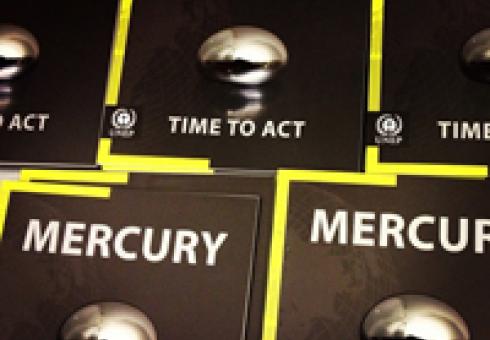
Get the inside scoop and follow LIVE reports from Geneva by twitter and blog.
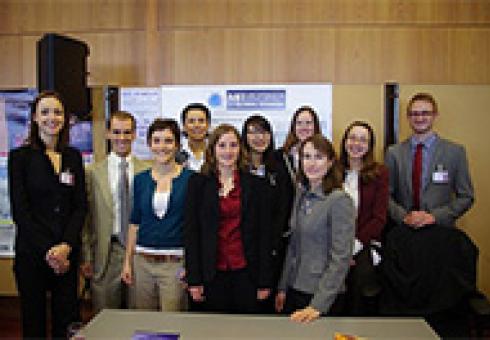
Ten MIT students are having an experience of a lifetime as they join officials from around the world for the fifth and final meeting to address global controls on mercury – taking place January 13-18 in Geneva, Switzerland. It is expected that a global treaty on mercury will be finalized during the talks.
Funded through part of a U.S. National Science Foundation grant, the students hope to help negotiators by presenting the latest scientific results (See more).
The students will be reporting on the progress of the talks and their experiences on their blog. Keep updated on the day-to-day action: mit.edu/mercurypolicy.
They’ll also be tweeting LIVE from Geneva. Follow them @MITMercury, #MITMercury.
They are joined by their instructor Noelle Selin, an assistant professor of engineering systems and atmospheric chemistry. Of the experience, Selin says: “Knowledge about the policy-making process is a critical skill for the next generation of scientists. This is a unique opportunity for science students to see treaty-making firsthand, at the history-making session that is expected to finalize a global mercury treaty.”
Student Leah Stokes, a PhD candidate in MIT’s Environmental Policy and Planning program says, "Attending the mercury treaty negotiations is a rare chance to see international environmental policy-making in action and learn how scientists and policymakers work together to produce results.”
Fellow student Julie van der Hoop, who is getting her doctorate in the MIT/WHOI Joint Program in Oceanography, adds, "As a doctoral student who studies human interactions with marine mammals, I’m excited to observe the role of scientists at these negotiations to learn how to best share my own research in the future. It's forums like this where I hope my work will have an impact someday. “
The other students attending include: Alice Alpert, PhD student in the MIT/WHOI Joint Program in Oceanography; Ellen Czaika, PhD candidate in the Engineering Systems Division; Bethanie Edwards, PhD student in the MIT/WHOI Joint Program in Oceanography; Amanda Giang, SM candidate in the Technology and Policy Program; Danya Rumore, PhD student in Environmental Policy and Planning; Rebecca Saari, PhD Candidate in Engineering Systems; Mark Staples, SM candidate in the Technology and Policy Program; and Philip Wolfe, PhD Candidate in the Department of Aeronautics and Astronautics. Learn more about the students and their instructor Noelle Selin Here.
Learn about the latest mercury research out of MIT: Strategies to Reduce Mercury Revealed Ahead of International Talks.

By: Kate Galbraith
AUSTIN, TEXAS — The harm that can be caused by consuming or breathing mercury is well known and terrible. A pregnant woman, eating too much of the wrong kind of fish, risks bearing a child with neurological damage. Adults or children exposed to mercury can experience mood swings or tremors, or sometimes even respiratory failure or death.
In January, representatives of dozens of countries will gather in Geneva to discuss combating mercury emissions, which are rising in Asia even as Europe and the United States have tightened controls. The meeting is the last of five negotiating rounds — the first took place in 2010 in Stockholm — and a legally binding treaty on mercury contamination is expected to come together next year.
The signing of that treaty is set to take place in the Japanese city of Minamata, where widespread mercury poisoning occurred in the mid-20th century after discharges from a factory contaminated the seawater.
But the extent to which countries will commit to reducing mercury, and whether they will follow through on those commitments, are open questions.
“What remains to be seen is the stringency of the requirements,” said Noelle Eckley Selin, an assistant professor of engineering systems and atmospheric chemistry at the Massachusetts Institute of Technology.
The negotiations “appear to be going in the direction of voluntary compliance,” said Leonard Levin, an air quality specialist with the Electric Power Research Institute, a nonprofit organization with headquarters in Palo Alto, California.
The negotiations in Geneva are being conducted under the auspices of the U.N. Environment Program and are to be followed in the summer by a major conference on mercury in Edinburgh, where scientists and policy makers will discuss how to implement a treaty.
Roughly one-third of the world’s mercury air emissions come from human activity, like coal-fired power plants. Another third of emissions come from natural sources, like volcanoes or wildfires, and the final third are “re-emitted” after their initial release.
Within the human-generated category, Asia contributes nearly 50 percent of mercury emissions, with North America at 7 percent and Europe and North Africa at 12 percent combined, according to Jerry Lin, a professor of environmental engineering at Lamar University in Texas. In addition to coal-fired power plants, a major source of mercury emissions is small-scale gold mining. Miners working on their own often use mercury to help extract gold and then boil it off, leaving behind dangerous contamination.
The effects of mercury contamination are not limited to the local environment. Mercury finds its way into the sea, affecting fish like bluefin tuna, and airborne emissions can travel between continents.
“The mercury today will continue to circulate in the system for a long time,” Dr. Selin said. “We’re talking decades to centuries.” Methyl mercury, the toxic form, even poses a substantial problem for the Arctic, she said, because it can accumulate in polar bears and seals.
Meanwhile, research into the health consequences of mercury “has been finding adverse effects at lower and lower exposures,” Philippe Grandjean, chair of environmental medicine at the University of Southern Denmark, said in an e-mail. New research has found that some people may be more sensitive to the effects of mercury, he said, because of factors like genetics.
The European Union has moved aggressively to combat mercury exposure. A ban on mercury exports began in 2011, and the Union has issued rules on storing mercury and restrictions on some products containing mercury, like thermometers. It is currently considering additional rules on mercury in dental fillings and batteries.
Sweden has “been really out in front” on national mercury regulations, Dr. Selin said. The country banned mercury from dental fillings and other products several years ago.
Starting in January, the United States will ban the export of elemental mercury, whose uses include gold mining. (The ban covers the Department of Defense and the Department of Energy, which keep large stockpiles.) The new policy results from the Mercury Export Ban Act of 2008, which was introduced by two senators — including Barack Obama, who represented Illinois at the time — and was signed into law by President George W. Bush.
In another key mercury development, last year, the Environmental Protection Agency in the United States completed its first rule aimed at mercury emissions from coal plants. The effect on the power industry is unclear, however.
The mercury limits are “probably achievable for existing plants,” said Mr. Levin of the Electric Power Research Institute. Additional rules, not yet completed, would cover emissions from new coal plants, and their effect is still being evaluated, he said.
Other regulations in the United States have also affected coal plants. Controls required for pollutants like nitrogen oxide and sulfur dioxide can also reduce mercury emissions, as a “co-benefit.”
For China, which is building new coal-fired power plants at a rapid rate, such “co-benefits” could prove crucial, said Dr. Lin of Lamar University. That is because it would be economically difficult to control only for mercury.

By:Elizabeth Kolbert
It’s been almost a century since the British economist Arthur Pigou floated the idea that turned his name into an adjective. In “The Economics of Welfare,” published in 1920, Pigou pointed out that private investments often impose costs on other people. Consider this example: A man walks into a bar. He orders several rounds, downs them, and staggers out. The man has got plastered, the bar owner has got the man’s money, and the public will get stuck with the tab for the cops who have to fish the man out of the gutter. In Pigou’s honor, taxes that attempt to correct for this are known as Pigovian, or, if you prefer, Pigouvian (the spelling remains wobbly). Alcohol taxes are Pigovian; so are taxes on cigarettes. The idea is to incorporate into the cost of what might seem a purely personal choice the expenses it foists on the rest of society.
One way to think about global warming is as a vast, planet-wide Pigovian problem. In this case, the man pulls up to a gas pump. He sticks his BP or Sunoco card into the slot, fills up, and drives off. He’s got a full tank; the gas station and the oil company share in the profits. Meanwhile, the carbon that spills out of his tailpipe lingers in the atmosphere, trapping heat and contributing to higher sea levels. As the oceans rise, coastal roads erode, beachfront homes wash away, and, finally, major cities flood. Once again, it’s the public at large that gets left with the bill. The logical, which is to say the fair, way to address this situation would be to make the driver absorb the cost for his slice of the damage. This could be achieved by a new Pigovian tax, on carbon.
In the past several weeks, as New York and New Jersey have continued to dig out from under the debris left by Hurricane Sandy, the possibility of a carbon tax has come to seem more likely than ever, that is, not very likely, but also not entirely out of the question. The reason for this is not so much the terrible cost of the storm, now estimated at more than sixty billion dollars. (The other day, Governor Andrew Cuomo said that Sandy had caused forty-two billion dollars’ worth of damage in New York State alone.) It’s that, as Washington edges toward the fiscal cliff, it has become obvious to just about everyone, except maybe House Republicans, that Washington needs more revenue.
Not long ago, the Congressional Research Service reported that, over the next decade, a relatively modest carbon tax could cut the projected federal deficit in half. Such a tax would be imposed not just on gasoline but on all fossil fuels—from the coal used to generate electricity to the diesel used to run tractors—so it would affect the price of nearly everything, including food and manufactured goods. To counter its regressive effects, the tax could be used as a substitute for other, even more regressive taxes, or, alternatively, some of the proceeds could be returned to low-income families as rebates (although, of course, this would cut down on the amount that could go toward deficit reduction).
Shortly after the C.R.S. report came out, the conservative American Enterprise Institute teamed up with its liberal counterpart, the Brookings Institution, to host a seminar on the subject, a collaboration that prompted the Wall Street Journal’s Web site to declare, “CARBON TAX IDEA GAINS WONKISH ENERGY.” “I think the impossible may be moving to the inevitable without ever passing through the probable,” Bob Inglis, a former Republican representative from South Carolina and a carbon-tax backer, told the Associated Press.
Perhaps because a carbon tax makes so much sense—researchers at M.I.T. recently described it as a possible “win-win-win” response to several of the country’s most pressing problems—economists on both ends of the political spectrum have championed it. Liberals like Robert Frank, of Cornell, and Paul Krugman, of Princeton, support the idea, as do conservatives like Gary Becker, at the University of Chicago, and Greg Mankiw, of Harvard. (Mankiw, who served as chairman of the Council of Economic Advisers under President George W. Bush and as an adviser to Mitt Romney, is the founding member of what he calls the Pigou Club.) A few weeks ago, more than a hundred major corporations, including Royal Dutch Shell and Unilever, issued a joint statement calling on lawmakers around the globe to impose a “clear, transparent and unambiguous price on carbon emissions,” which, while not an explicit endorsement of a carbon tax, certainly comes close. Even ExxonMobil, once a leading sponsor of climate-change denial, has expressed support for a carbon tax. “A well-designed carbon tax could play a significant role in addressing the challenge of rising emissions,” a spokeswoman for the company said recently in an e-mail to Bloomberg News.
One key player who has not embraced the idea is Barack Obama. The White House spokesman, Jay Carney, was asked about the tax last month, en route, as it happens, to visit storm-ravaged areas of New York with the President. “We would never propose a carbon tax, and have no intention of proposing one,” Carney told reporters. This was taken by some to mean that Obama was opposed to the tax and by others to mean just that he was not going to be the one to suggest it.
In either case, the White House is making a big mistake. Pigovian taxes are rarely politically popular—something they have in common with virtually all taxes. But, as Obama embarks on his second term, it’s time for him to take some risks. Several countries, including Australia and Sweden, already have a carbon tax. Were the United States to impose one, it would have global significance. It would show that Americans are ready to acknowledge, finally, that we are part of the problem. There is a price to be paid for living as we do, and everyone is going to get stuck with the bill.

By: David Frum
Editor's note: David Frum, a CNN contributor, is a contributing editor at Newsweek and The Daily Beast. He is the author of eight books, including a new novel, "Patriots," and his post-election e-book, "Why Romney Lost." Frum was a special assistant to President George W. Bush from 2001 to 2002.
Global emissions of carbon dioxide hit a record high in 2011, scientists from the Global Carbon Project reported last week.
Another record is expected in 2012.
The earth continues to warm, and to warm fast, with serious consequences for human life and welfare. 2012 saw the worst drought in the United States in half a century. Russia suffered its second bad drought in three years. Climatic shocks to these two countries are raising food prices worldwide, posing an especially acute threat to the world's poorest. Major storm events strike harder and more often, because warming oceans create conditions for fiercer hurricanes.
The New York Times reported Friday:
"Emissions continue to grow so rapidly that an international goal of limiting the ultimate warming of the planet to 3.6 degrees, established three years ago, is on the verge of becoming unattainable."
This ominous news arrives as delegates gather in Doha, Qatar, for the latest annual round of climate talks sponsored by the United Nations. Few expect the Doha talks to produce much decision.
Yet there is good news on the environmental front, important news.
Carbon emissions in the United States have declined since 2009 -- not emissions per person (those have been declining for decades), but emissions in absolute terms. The weak economy explains part of the decline, but the real hero of the story is the natural gas fracking revolution.
A decade ago, half of all the electricity generated in the United States was generated by burning coal, the most carbon-dense fuel of them all. Today, coal's share of the electricity mix has plunged to one-third, as utilities substitute cheap natural gas. Gas production has become much cheaper with the growth of fracking -- forcing open rocks by injecting fluid into cracks. Gas emits about half as much carbon per unit of energy as coal.
Environmentalists have responded warily to the advent of gas. They prefer zero-emissions power sources like wind and solar -- sources made more uncompetitive than ever by ultracheap natural gas. (Today's price: about $3.50 per thousand cubic feet, down about 70% from the prices of the mid-2000s.)
Moreover, natural gas does little (as yet) to address emissions from automobile tailpipes.
But maybe there's a way to cheer environmentalists up. Take three worrying long-term challenges: climate change, the weak economic recovery, and America's chronic budget deficits. Combine them into one. And suddenly three tough problems become one attractive solution.
Tax carbon. A tax of $20 a ton, rising at a rate of 4% per year, would over the next decade raise $1.5 trillion, according to an important new study from the Massachusetts Institute of Technology. That $1.5 trillion is almost twice as much as would be recouped to the Treasury by allowing the expiration of all Bush-era tax cuts for upper-income taxpayers.
The revenues from a carbon tax could be used to reduce the deficit while also extending new forms of payroll tax relief to middle-class families, thus supporting middle-class family incomes.
Meanwhile, the shock of slowly but steadily rising prices for fuel and electricity would drive economic changes that would accelerate U.S. economic growth.
The average age of U.S. cars and trucks has reached nearly 11 years, a record.
Millions of Americans want new cars. They are waiting for market signals as to what car to buy. They want to know that if they choose a fuel-efficient vehicle, they won't feel silly three years from now when their neighbor roars past them in a monster truck because gas has plunged back to $2 a gallon.
After five years of depression, the housing market is also ready for renewal. Again, Americans are waiting for market signals: Should they buy smaller houses nearer to work? High and rising fuel prices will encourage developers to build more mixed-use complexes that allow more people to live car-free: walking to work, entertainment, and shopping. The surest way to reduce fuel costs is to drive less.
The return to more urban living is a trend big enough to sustain America's next great economic boom. To the extent researchers can measure, the daily commute appears to be the single worst recurring source of unhappiness in American life.
If changes in city shape can offer more Americans the opportunity to walk to work through an attractive shopping mall, rather than waste 50 minutes in a car in a traffic jam, those changes will advance human happiness, spur new construction work, and incidentally save the planet.
A carbon tax will also enable the United States and Europe to press China and India to reduce their carbon emissions. A properly designed tax would apply not only to domestic goods and services, but to imports as well.
China and India would discover that their products no longer seem so cheap when a carbon tax at the border adds back the environmental costs of dirty manufacturing. To export to the world's richest consumers, China and India will have to clean up their act -- an incentive more persuasive than a hundred Doha conferences.
More jobs and growth; reduced deficits without raising income taxes; lower taxes for middle-class families; a kick in the pants to Chinese polluters; and more happiness for American commuters -- one policy instrument can do it all. What's not to love about a carbon tax?
MIT researchers, using field practices, find emissions from shale gas production to be significantly lower than previous estimates.

While the United States lags in developing a broad-based climate policy, the nation’s carbon emissions reached a 20-year low this year. Many have attributed some of that drop to a booming supply of low-carbon natural gas, of which the United States is the world’s largest producer. But does natural gas – and specifically the quickly-developing production of shale gas – create other emissions, such as methane, that could be just as harmful? A new study by MIT researchers shows the amount of methane emissions caused by shale gas production has been largely exaggerated.
“While increased efforts need to be made to reduce emissions from the gas industry overall, the production of shale gas has not significantly increased total emissions from the sector,” says Francis O’Sullivan, a researcher at the MIT Energy Initiative and the lead author of the study released this week in Environmental Research Letters.
The research comes amidst several other reports on the impact of “fugitive” methane emissions – gas leaked or purposefully vented during and immediately after the stage of shale gas production known as hydraulic fracturing. While many of these reports studied the amount of potential emissions associated with the hydraulic fracturing process, the MIT researchers stress that this is only part of the puzzle. Consideration must also be given to how this gas is handled at the drilling sites, the study shows.
“It’s unrealistic to assume all potential emissions are vented,” O’Sullivan says, “Not least because some states have regulations requiring flaring as a minimum gas handling method.”
Sergey Paltsev, the study’s co-author and the assistant director for economic research at the MIT Joint Program on the Science and Policy of Global Change, says companies also have an economic reason for wanting to capture this “fugitive” gas.
“When companies vent and flare methane they are losing gas that they could have captured and sold” Paltsev says. “When we compared the cost of installing the right equipment to capture this gas to the loss in revenue if it isn’t captured, we found that the majority of shale wells make money by capturing the potential ‘fugitive’ emissions.”
In talking with industry representatives and officials at the U.S. Environmental Protection Agency (EPA), O’Sullivan and Paltsev found that companies are already capturing about 70 percent of potential “fugitive” emissions. In factoring that into their analysis, the researchers find emissions from shale gas production to be strikingly lower than previous estimates of potential emissions.
Their analysis was based on data from each of the approximately 4,000 wells drilled in the five main U.S. shale drilling sites during 2010. Wells in two of those sites, Texas’ Barnett shale and the Haynesville shale on the Texas-Louisiana boarder, had been studied by Robert Howarth from Cornell University last year when he looked at potential emissions released by the industry. His study garnered much attention because it claimed the greenhouse gas footprint of shale gas was larger than that of conventional gas, oil, and, over a 20-year time frame, coal. That study, however, used very limited well datasets.
In studying potential emissions, Howarth found 252 Mg of methane emissions per well in the Barnett site and 4,638 Mg per well in the Haynesville site. The MIT researchers, using their comprehensive well dataset, found that the potential emissions per well in the Barnett and Haynesville sites were in fact 147 Mg of methane (273 thousand cubic meters of natural gas) and 633 Mg (1,177 thousand cublic meters of gas), respectively. When accounting for actual gas handling field practices, these emissions estimates were reduced to about 35 Mg per well of methane from an average Barnett well and 151 Mg from an average Haynesville well.
According to Adam Brandt, an assistant professor at Stanford University, this analysis “provides an important contribution to the literature by greatly improving our understanding of potential shale gas emissions using a very large dataset.”
Brandt says, “Previous studies used much smaller and more uncertain datasets, while O'Sullivan and Paltsev have gathered a much larger and more comprehensive industry dataset. This significantly reduces the uncertainty associated with potential emissions from shale gas development.”
A U.S. Department of Energy study released in August confirmed that while electricity generated by gas produces half the emissions of coal generation, natural gas production does make up 3 percent of the nation’s total emissions. While the overall benefits far outweigh the small increases during production, Paltsev believes the EPA’s efforts to reduce those emissions through new air quality standards are a “step in the right direction.”
Read an op-ed by MIT researchers in response to the Howarth study here.