In The Media
Climate Feedback
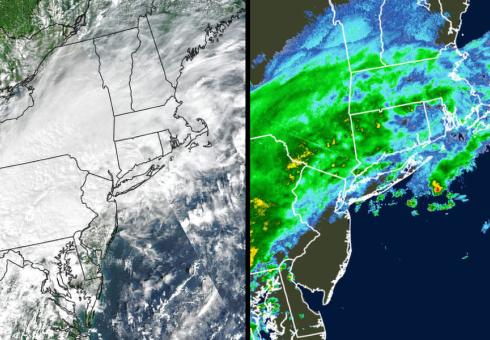
MIT Joint Program Deputy Director C. Adam Schlosser helps explain regional variations in warming (Climate Feedbacks)

MIT Joint Program Deputy Director C. Adam Schlosser helps explain regional variations in warming (Climate Feedbacks)
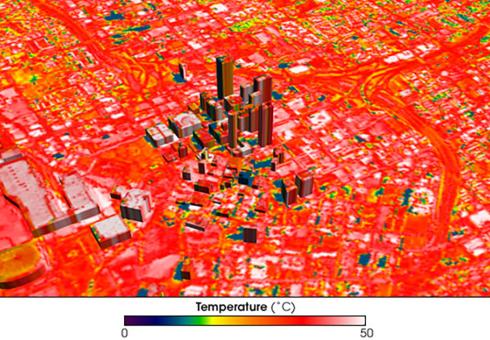
Commentary cites Joint Program Report on the climate mitigation potential of U.S. urban infrastructure albedo enhancement (The HIll)
To put global climate modeling at the fingertips of local decision-makers, some scientists think it’s time to rethink the system from scratch. Five Joint Program-affiliated researchers will help advance an MIT Climate Grand Challenges flagship project to do just that. (WBUR)
A new platform will unite climate models, impact predictions, random control trial evaluations, and humanitarian services to bring cutting-edge tools to Bangladeshi communities. MIT Climate Grand Challenges flagship project includes seven Joint Program-affiliated contributors. (MIT Lincoln Laboratory)
To better inform local policy in the face of changing weather extremes, MIT researchers--including seven affiliated with the Joint Program--seek to advance the modeling of long-term weather risks (MIT School of Science)
To put global climate modeling at the fingertips of local decision-makers, some scientists think it’s time to rethink the system from scratch. Five Joint Program-affiliated researchers will help advance an MIT Climate Grand Challenges flagship project to do just that. (MIT School of Science)
Earth Day release underscores the program's mission to advance a sustainable, prosperous world
Joint Program researchers participating in three: Bringing Computation to the Climate Challenge, Preparing for a new world of weather and climate extremes, and The Climate Resilience Early Warning System (MIT News) (Coverage: Boston Business Journal)
Key takeaways from the XLIV (44th) MIT Global Change Forum
MIT Joint Program research scientists are co-investigators on one-third of the selected projects, with a focus on decarbonizing complex industries and preparing for climate extremes. (MIT News)
The MIT Joint Program uses MGHPCC computing resources to make projections of future risks to the sustainability of energy, food, water and climate systems under different policy scenarios (MGHPCC)