User account menu

  • Log in
MIT Joint Program On The Science and Policy of Global Change

Main navigation

  • About Us
    • Our Purpose
    • Our History
    • Leadership
    • Personnel
    • Support the Center
    • Contact Us
  • Research
    • Research Projects
  • Publications
    • All Publications
    • Annual Report
    • Global Change Outlook
    • Peer-Reviewed Research
    • Reports
    • Other Publications
    • Publication Search
  • News + Media
    • News Releases
    • In the News
  • Events
    • Upcoming Events
    • Past Events
    • Global Change Forum
  • Sponsorship
    • About Sponsorship
    • Our Sponsors
    • Sponsor Login

News and Outreach: John Marshall

In The News
MIT News
Jun 20, 2016
Solving the Mystery of the Antarctic's Missing Heat

New research may explain why sea temperatures around Antarctica haven’t risen as much as surface temperatures around the globe

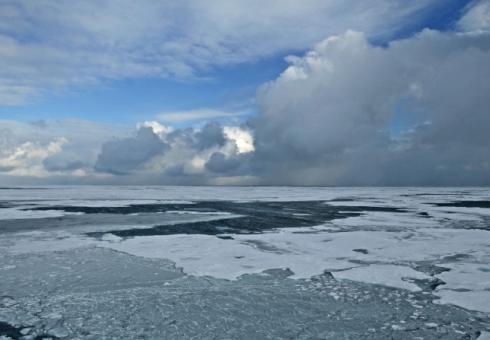
Around the globe, ocean surface temperatures have been rising due to global warming, but the seas around Antarctica haven’t changed much. Now, researchers may have discovered why.

In The News
MIT News
Jan 25, 2016
MIT on Climate = Science + Action

MIT will host a daylong symposium to address the nexus of science and action on climate change.

Helen Hill | EAPS

The MIT Department of Earth, Atmospheric and Planetary Sciences (EAPS), together with the Lorenz Center and the MIT Alumni Association, are hosting a climate symposium on Jan. 27 in the Kirsch Auditorium of the Stata Center (Room 32-123).


While this event is now fully subscribed, the day's proceedings will be available via a live webcast. (Register to watch.)

Taking action on climate change has become a dominating issue — globally, nationally, locally, and even here at MIT. Yet so many questions remain. How much and how quickly will climate change? How will these changes manifest, and where? What are the greatest risks posed by a changing climate and how likely are these worst-case outcomes? What is the science behind climate change, and how can basic research inform our efforts to avert, mitigate and adapt to its impacts?

Essential knowledge built through basic climate research lies at the core of all these questions. We would not even recognize that Earth’s climate is changing were it not for the cumulative efforts of climate scientists over the past five decades, many of them here at MIT. And we cannot hope to improve the climate outcome for ourselves and future generations without the vital, ongoing contributions of fundamental climate science research.

Touching on everything from the essentials of planetary climate through the complexities of Earth’s climate system to the challenges of finding the will to act on our knowledge to address current climate change, the symposium features talks and discussion by faculty experts from across the spectrum of climate research at MIT, plus keynote speakers Marcia McNutt (editor-in-chief of Science) and Justin Gillis (environmental science writer for The New York Times).

Speakers include:

Daniel Cziczo, MIT Department of Earth, Atmospheric and Planetary Sciences
Elfatih A. B. Eltahir, MIT Department of Civil and Environmental Engineering
Lindy Elkins-Tanton, Arizona State University
Kerry Emanuel, MIT Earth, Atmospheric and Planetary Sciences
John Fernandez, MIT Environmental Solutions Initiative
W. Eric L. Grimson, MIT Chancellor for Academic Advancement
Valerie Karplus, MIT Sloan School of Management
Thomas Malone, MIT Sloan School of Management
John Marshall, MIT Department of Earth, Atmospheric and Planetary Sciences
David McGee, MIT Department of Earth, Atmospheric and Planetary Sciences
Ronald Prinn, MIT Department of Earth, Atmospheric and Planetary Sciences
Sara Seager, MIT Department of Earth, Atmospheric and Planetary Sciences
Noelle Selin, MIT Institute for Data, Systems and Society and Department of Earth, Atmospheric and Planetary Sciences
Lawrence Susskind, MIT Department of Urban Studies and Planning
Dennis Whyte, MIT Department of Nuclear Science and Engineering
Maria Zuber, MIT vice president for research

For more information and a detailed agenda, visit the EAPS symposium website.

Image: Jennifer Fentress/EAPS

Around Campus
Apr 14, 2015
An Ocean of Opportunity

Mick Follows uses tiny marine microbes to model climate change.

Jennifer Chu | MIT News Office

Dip a beaker into any portion of the world’s oceans, and you’re likely to pull up a swirling mix of planktonic inhabitants. The oceans are teeming with more than 5,000 species of phytoplankton — microscopic plants in a kaleidoscope of shapes and sizes. Together, phytoplankton anchor the ocean’s food chain, supplying nutrients to everything from single-celled organisms on up to fish and whales.

Through photosynthesis, these tiny organisms supply more than half the world’s oxygen. When these plants die, they drift to the ocean bottom, or evaporate into the air as carbon — a process that generates more than half the world’s cycling carbon.

Phytoplankton play a fundamental role in regulating Earth’s climate. But figuring out exactly how these organisms contribute to climate change is a tricky undertaking, primarily because they are so diverse: Any given species may have a set of genetic or physical characteristics entirely different from any other, leading to different behaviors and habitats.

Such diversity can appear, at the outset, “bewilderingly complex,” says Mick Follows, an associate professor of oceanography in MIT’s Department of Earth, Atmospheric and Planetary Sciences (EAPS). He says wrestling such diversity into global climate models is a futile task. But lumping phytoplankton into a big “black box” can be equally unenlightening.

Instead, Follows is working at an intermediary level, developing models of marine microbes at the cellular and community levels, to tease out fundamental processes that may be worked into global climate models.

“We’re starting to open up the black box of simple models,” Follows says. “There’s a balance: Do you want to understand every detail of the world, or do you want to be able to stand back and have a big picture view? Somehow you have to keep circling around it from both directions to develop that view.”

For more than 20 years, Follows has worked as a research scientist at MIT, answering such questions. He was granted tenure as an associate professor in 2013.

“I’m now interacting with undergraduates in a way I wasn’t doing in my little research hole, and I have a whole new appreciation for the broader aspects of MIT,” Follows says. “I feel much more connected to the Institute as a whole.”

An ocean of opportunity

While growing up, Follows didn’t expect he would end up in academia: School wasn’t a priority then. 

Follows grew up in a small town in the British region of East Anglia, and fondly remembers “riding bikes around the countryside, and living quite freely.”

His father was a typesetter at a local newspaper, and his mother worked in a men’s clothing shop. Both his parents have roots in Manchester — “a downtrodden, post-industrial place,” Follows says — where his mother was nevertheless able to win a scholarship to a good public school.

“She worked in shops, and in the field, but would be quoting Shakespeare,” Follows says of his mother’s path.

Follows was less inclined toward school, and ended up leaving high school. “I don’t think people think of me this way now, but I was a bit of a loudmouth,” Follows recalls.

He ultimately continued his studies at a community college, and spent a year at an art school — a fact that he’d rather overlook: “My work was rubbish — terrible!”

He then decided to pursue studies in math and physics at the University of Leeds. “I liked the organization [the subjects] brought to the world,” Follows says. While exploring graduate programs, he was particularly drawn to atmospheric science. Follows enrolled at the University of East Anglia, where he earned a master’s degree and a PhD in atmospheric sciences, studying atmospheric circulation of ozone. In his research, he began to see parallels between the atmosphere and the oceans.

“How ozone gets down from the stratosphere to troposphere, there’s an analogous process, flipped, when you think of how nutrients get from the subsurface to the surface of the ocean, and I started thinking more about the ocean,” Follows says.

In particular, Follows felt there was an opportunity to contribute to a then-emerging field. “While coupled circulation and chemistry models were established for the atmosphere, the same was just spinning up in the oceans,” Follows says. “It seemed the ocean world was a bit less crowded, and there were interesting problems.”

Follows credits his colleague John Marshall, now the Cecil and Ida Green Professor of Oceanography, for providing his path to MIT. Follows was still at the University of East Anglia when he first met Marshall, then a postdoc at Imperial College London.

“Being as I was the local guy, I said, ‘I’ll show you a place where we can go get a meal,’” Follows recalls. “I sat next to John and said, ‘Are you looking forward to going to MIT?’ And he kind of frowned as he does, and said, ‘You want to go?’”

A few weeks later, Marshall called Follows about a postdoc position opening up at Imperial College. Follows accepted the position, and then after a year, received a similar call from Marshall, this time to MIT. In 1992, Follows arrived on campus as a postdoc, and stayed for the next 20 years as a research scientist.

From a black box to the real world

At MIT, Follows has devoted his research to understanding the biological processes of phytoplankton and other microbes that contribute to the Earth’s carbon cycle. Initially, though, every microbe seemed to blur together.

He eventually teamed up with Sallie “Penny” Chisholm, the Lee and Geraldine Martin Professor in Environmental Studies at MIT, who discovered Prochlorococcus —the most abundant photosynthetic organism in the world. Chisholm was studying subpopulations of Prochlorococcus, and mapping individual communities in the ocean.

“Suddenly there was a beautiful system where organisms that are almost the same, but not quite, are taking different habitats, occupying different niches in the environment,” Follows says.

Chisholm’s data of diverse microbes stirred up an idea: What if the diversity in phytoplankton could be modeled based on natural selection? Could one predict the makeup of a microbial community, based on its inhabitants’ traits? It was a simple idea, and yet no one had attempted to realize it in global models.

Follows and his group developed a model — essentially a virtual ocean environment — in which a realistic set of microorganisms with diverse traits can interact and compete. The model determines which traits are the fittest phenotypes — the ones that will dominate in a given ocean community.

“I think that in the field, we had reached a bit of a stalemate, where you would just keep adding more parameters and tuning more knobs to fit the real world,” Follows says. “We turned around and said, ‘Let’s build a videogame — make an environment, throw some players in, ask how the system organizes itself, and acknowledge that in the real world, there is a huge diversity of organisms.’”

This radical thinking earned Follows a grant from the Moore Foundation in 2007, which he used to start the Darwin Project, a cross-campus collaboration between oceanographers, biogeochemists, and marine microbiologists at MIT to develop global ocean-circulation models built around fundamental microbial processes.

Follows is continuing to run the Darwin Project, and just recently became a member of SCOPE — the Simons Collaboration on Ocean Processes and Ecology — a five-year project based at the University of Hawaii. He and his fellow researchers will measure and model ocean communities around Hawaii, which are thought to be representative of a large swath of the North Pacific. Their goal is similar to Follows’ original vision: to elucidate how such tiny organisms can have such huge climatic impacts.

“The climate system is incredibly tied up with life,” Follows says. “You can think of man in the same way as those first photosynthetic bacteria that changed the planet in a radical way, to a completely different set of requirements if you wanted to survive on that planet. Are we that thing now? Or are we a blip? It’s interesting to put it in perspective.”

In The News
Aug 22, 2014
Solving the Polar Climate Conundrum

According to MIT researchers, ocean circulation explains why the Arctic feels the effects of global warming much more than the Antarctic.

Genevieve Wanucha
MIT News

Over recent decades, scientists have watched a climate conundrum develop at the opposite ends of Earth: The Arctic has warmed and steadily lost sea ice, whereas Antarctica has cooled in many places and may even be gaining sea ice. Now, MIT researchers have a better understanding of the elemental processes behind this asymmetric response of the polar regions to the effects of human-induced changes to the climate.

In a paper published in Philosophical Transactions of the Royal Society, John Marshall, the Cecil and Ida Green Professor of Oceanography at MIT, and his group investigated this phenomenon by considering ocean dynamics. The ocean, because of its ability to absorb and transport enormous amounts of heat, plays a critical role in climate change. The authors argue that ocean circulation can explain why the Arctic has warmed faster than the Antarctic.

In MIT computer simulations of the ocean and climate, excess heat from greenhouse gas emissions is absorbed into the Southern Ocean around Antarctica and in the North Atlantic Ocean, but it doesn't linger. Instead, the moving ocean redistributes the heat. In the Southern Ocean, strong, northward-flowing currents pull the heat towards the equator, away from the Antarctica. In the North Atlantic Ocean, a separate northward-flowing current system shunts the heat into the Arctic. So while Antarctica warms only mildly, the Arctic Ocean’s temperature increases quickly, accelerating sea-ice loss and warming the Arctic atmosphere.

The model results reveal the differing responses to greenhouse gases in each region, with the Arctic warming more than twice as rapidly as the Antarctic. They also add confidence to the existing predictions of enormous future changes up north. By mid-century, the Arctic may warm so much that the oceans could go sea-ice free in the summers.

Marshall’s group also showed that the ocean's response to the ozone hole can help explain the lack of warming to date around Antarctica. The millions of square feet of deterioration in the ozone over Antarctica was caused by emissions of the man-made pollutants chlorine and bromine, chlorofluorocarbons, which peaked at the turn of the century and are now slowly dwindling.

When they introduced an ozone hole into their model, the winds over the Southern Ocean grew faster and shifted southward, consistent with the observed wind changes around Antarctica. They found that this intensification of winds initially cools the sea surface and expands sea ice, but then a slow process of warming and sea ice shrinkage takes over. This warming happens, they suggest, because the stronger winds eventually dredge up to the surface relatively warm waters from the deep ocean. “Around Antarctica, the ozone hole may have delayed warming due to greenhouse gases by several decades,” Marshall says. “I'm tempted to speculate that this is the period through which we are now passing. However, by 2050, ozone hole-effects may instead add to the warming around Antarctica, an effect that will diminish as the ozone hole heals.”

"The researchers present a useful and timely reminder that the ocean is not a passive bath tub when it comes to climate change, but play an active role in shaping the spatial structure of climate change," says Richard Seagar, the Palisades Geophysical Institute/Lamont Research Professor at the Lamont-Doherty Earth Observatory, who was not involved in the study. "The work will likely motivate a lot of future work to better determine how the spatial patterns and temporal evolution of past and future climate change are influenced by an active ocean and its coupling back to the atmosphere."

The framework offers a new ocean-centric picture of the effect of greenhouse gases and the ozone hole on polar climates. The slight cooling measured around Antarctica today might be a consequence of the temporary cooling influence of the ozone hole. But as the century proceeds, both of the human-induced effects on the climate may combine to warm the waters around Antarctica. This MIT model joins several other recent demonstrations of the concerning, but uncertain, future effects of climate change on Antarctic sea ice and glaciers and, in turn, ecosystems and sea-level rise.

This work was jointly supported by the MIT Joint Program on the Science and Policy of Global Change. 

For more information on the Joint Program's recent research on how the ocean affects climate, see:

The Ocean's Role in Regional Climate Change: Why the Arctic is warming faster than the Antarctic 

Related publications: 

The ocean's role in the transient response of climate to abrupt greenhouse gas forcing
Reprint 2014-20 

The ocean's role in polar climate change: asymmetric Arctic and Antarctic responses to greenhouse gas and ozone forcing
Reprint 2014-21


clouds hr
In The News
Oceans at MIT
Mar 24, 2014
How the ocean reins in global warming

By Genevieve Wanucha
Oceans at MIT

The ocean plays a critical role in climate change, especially in setting the climate's response to increasing anthropogenic emissions of greenhouse gases. As excess heat accumulates in various parts of the Earth system, most of that thermal energy goes into the ocean instead of into the lower atmosphere and land.

“We can compare the ocean to a cold compress that a parent applies to the forehead of a child with a fever,” says Yavor Kostov, a graduate student in the Program in Atmospheres, Oceans, and Climate (PAOC) within MIT’s Department of Earth, Atmospheric and Planetary Sciences (EAPS). “In that this wet towel can absorb some of the heat, giving partial relief until the towel itself becomes saturated with heat.” Similarly, the ocean’s enormous capacity to store heat temporarily slows down global warming.

In recent years, a hot topic in climate science has arisen over the fact that climate models vary widely in their representation of ocean heat uptake. The oceans in some models absorb more or less heat in high-latitude regions such as the North Atlantic and Southern Ocean; some store heat at different depths. According to two new papers published in Geophysical Research Letters, those details matter a great deal to the predictions of global warming over the coming centuries.

Understanding ocean circulation

One of these papers focuses on the deep overturning circulation in the North Atlantic Ocean, better known as AMOC, which transports and buries atmospheric heat in the ocean. Kostov, working with Kyle Armour, an EAPS postdoc, and John Marshall, MIT professor of oceanography, investigated how the various assumptions about this major ocean feature affect model predictions. To do so, he compared a set of new-generation models that the Intergovernmental Panel on Climate Change (IPCC) uses in their projections.

Kostov found that models featuring a deeper and stronger AMOC have a greater capacity to store heat and delay long-term global warming due to increasing levels of carbon dioxide. In other words, a stronger overturning circulation in a model tends to promise a cooler world in one hundred years.

There are other even greater sources for the differences in climate predictions across models, such as cloud responses to greenhouse gases, Kostov notes, “but all aspects of the climate system are important, and we have to take into account the role of the ocean in order to improve our predictions for future warming.”

These results led the MIT group to conclude that models must better represent the AMOC and its future changes, based on real-world measurements that extend over time and geographical location. Unfortunately, there is not a long record of observations in the AMOC, thanks to the enormous technical difficulty of probing the ocean’s deep layers. However, Kostov notes his excitement that a few large-scale oceanographic projects, including U.K. RAPID and U.S. CLIVAR, have started to continuously monitor how the circulation varies with depth in an effort to fill this scientific void.

Climate connection

Along with depth, the geographical location of ocean heat uptake matters to climate change. Observations suggest that much of the heat enters the ocean in high-latitude regions such as the North Atlantic and Southern Ocean. In 2010, modeling by Michael Winton of the NOAA/Geophysical Fluid Dynamics Laboratory showed that ocean heat uptake at high latitudes tends to cool the Earth significantly more than heat uptake in tropics. Yet, it is unclear why heat uptake at the poles provides the most efficient air conditioning for the entire planet or how this sensitivity should be represented in models.

Offering an explanation is Brian Rose, MIT PhD ‘10, an assistant professor at the SUNY Albany Department of Atmospheric and Environmental Sciences, along with MIT's Kyle Armour and David Battisti, professor of atmospheric sciences at the University of Washington, whose new study implicates the activities of low lying clouds above the ocean. Using idealized configurations of several IPCC models, they found that when heat enters the ocean in the tropics, clouds change shape to allow more sunlight to be absorbed by the planet. This cloud transformation doesn't happen in the high latitudes, which the authors suggest as a potential reason why heat uptake in these regions is so good at cooling the planet.

“The authors show that valuable insights can be gained by considering the atmospheric response to an imposed change in the ocean,” comments Timothy Merlis, Assistant Professor at McGill University, who was not involved in the study. “And it will be important to understand why the clouds respond differently to the different regions of ocean heat uptake.”

Ultimately, the study critiques how the field uses observations in estimating the climate’s sensitivity to greenhouse gases. "A common way to calculate climate sensitivity simply combines recent observations of global surface temperature changes, heat uptake, and greenhouse gas forcing," says Armour, "which misses the details of how heat is getting into the ocean. One implication is that we can’t actually estimate long-term warming from present-day observations unless we take into account how the pattern of ocean heat uptake might change with time."

And change it will. For example, the Southern Ocean takes up a lot of heat now. But as the ocean warms over hundreds to thousands of years, the deep ocean currents will become saturated with heat and the Southern Ocean heat sink will eventually shut off. “Neglecting to account for where heat enters the ocean means that we could experience much more warming than anticipated,” Armour says.

Showing how we must look up to the clouds and down to the deep North Atlantic to improve long-term predictions of global warming, these studies converge in a new case for ocean-enlightened climate modeling.

Photo: WHOI/Knorr Cruise, KN178
 

John Marshall
In The News
MIT News
Mar 5, 2014
A Gold Medal in Oceanography

Genevieve Wanucha
Oceans at MIT

John Marshall, Cecil and Ida Green Professor of Oceanography, recently accepted the 2014 Sverdrup Gold Medal of the American Meteorological Society for his “fundamental insights into water mass transformation and deep convection and their implications for global climate and its variability."

Marshall is an oceanographer with broad interests in climate and the general circulation of the atmosphere and oceans, which he studies through mathematical and numerical models of physical and biogeochemical processes. His research has focused on problems of ocean circulation involving interactions between motions on different scales, using theory, laboratory experiments, and observations as well as innovative approaches to global ocean modeling pioneered by his group at MIT.

The Sverdrup Gold Medal recognizes Marshall’s influential ideas about deep convection in the ocean, the process by which, in certain polar regions, cooling water descends, transporting properties such as oxygen, salt, carbon, and heat into the ocean’s deep interior. Marshall, in a 1990s collaboration with his graduate students Sonya Legg and Helen Hill, née Jones, and the late Professor Friedrich Schott of the University of Kiel, in Germany, demonstrated that the convective process in the ocean occurs slowly enough for it to be influenced by Earth’s rotation. This insight overturned the prevailing view that convection in the ocean was an upside-down version of atmospheric convection.

Marshall’s work on rotating convection in water mass transformation triggered a vast amount of research, including the Labrador Sea Deep Convection Experiment, a major field program in 1996 that provided the most comprehensive set of measurements of ocean convection. The dataset collected on this international expedition led to insights into the convective process in the ocean and its representation in models in light of Marshall’s theoretical descriptions. This body of work also motivated the development of the MIT General Circulation Model (MITgcm), which Marshall’s group first used to simulate deep convection fluid dynamics at high resolution. The algorithms used to represent convection drive the modern-day MITgcm, one of the most widely used global ocean models in the world.

To gain a broader understanding of Earth’s fluid dynamical system, Marshall shifted focus to contemporary issues in global ocean circulation. “I’ve always tried to move forward,” Marshall says. “Even though this work on water mass transformation was enjoyable, I stopped it and moved on to study the role of the Southern Ocean in climate.” Marshall has now spent 10 years revising the scientific understanding of the Antarctic Circumpolar Current (ACC). In particular, his updated modeling shows that the ACC brings up deep water and buried carbon to the surface around Antarctica, leading him and colleagues to suggest that the Southern Ocean is the window by which the interior of the ocean connects to the atmosphere, and is thus a powerful mediator of climate.

Professor Marshall received a PhD in atmospheric sciences from Imperial College London in 1980. He joined MIT’s Department of Earth, Atmospheric and Planetary Sciences in 1991 as an associate professor and has been a professor in the department since 1993. He was elected a Fellow of the Royal Society in 2008. He is coordinator of Oceans at MIT, a new umbrella organization dedicated to all things related to the ocean across the Institute, and director of MIT’s Climate Modeling Initiative (CMI).

In The News
MIT Earth, Atmospheric and Planetary Sciences
Sep 30, 2013
John Marshall awarded American Meteorlogical Society Sverdrup Medal

The Sverdrup Gold Medal is "granted to researchers who make outstanding contributions to the scientific knowledge of interactions between the oceans and the atmosphere." The award, in the form of a medallion, will be presented at the AMS Annual Meeting to be held on 2–6 February 2014 in Atlanta, GA.

John Marshall is an oceanographer with broad interests in climate and the general circulation of the atmosphere and oceans, which he studies through the development of mathematical and numerical models of physical and biogeochemical processes. His research has focused on problems of ocean circulation involving interactions between motions on different scales, using theory, laboratory experiments, and observations as well as innovative approaches to global ocean modeling pioneered by his group at MIT.

Current research foci include: ocean convection and subduction, stirring and mixing in the ocean, eddy dynamics and the Antarctic Circumpolar Current, the role of the ocean in climate, climate dynamics, aquaplanets.

Professor Marshall received his PhD in atmospheric sciences from Imperial College, London in 1980. He joined EAPS in 1991 as an associate professor and has been a professor in the department since 1993. He was elected a Fellow of the Royal Society in 2008. He is coordinator of Oceans at MIT, a new umbrella organization dedicated to all things related to the ocean across the Institute, and director of MIT’s Climate Modeling Initiative (CMI)

Joint Program Logo
MIT News
Mar 17, 2010
Weather in a Tank

A curriculum built around a rotating-tank experiment could improve weather and climate education

In recent years, U.S. undergraduates have shown an increasing interest in introductory meteorology, oceanography and climate classes. But many students find it difficult to grasp the non-intuitive nature of rotating fluids, which is critical to understanding how weather systems and climate work. Part of the problem, it turns out, is that instructors usually have to teach these abstract concepts using only equations or computer simulations because of the limited resources available for lab experiments.

That may be about to change, thanks to the work of two educators from the Department of Earth, Atmospheric and Planetary Sciences. For nearly a decade, Lodovica Illari, an EAPS senior lecturer, and John Marshall, professor of atmospheric and oceanic sciences, have been developing an undergraduate weather and climate curriculum that's now being adopted by dozens of schools — and could have a wide impact on science education at many levels.

Known as "Weather in a Tank," the experiment-based curriculum was designed by Illari and Marshall in 2001 after they began offering an introductory weather and climate class that would also fulfill their students' lab requirements.

Since 2006, the curriculum has been tested in a project funded by the National Science Foundation (NSF), which involves MIT and five other universities. The intent was to bridge the gap between real-world weather phenomena and the theories and equations that describe those phenomena. Illari says that we should think of lab experiments as the third leg of a three-legged pedagogical stool that includes observation and theory.

[More... ]

Joint Program Logo
MIT News
Mar 29, 2007
MIT Darwin Project will model ocean microbes

A new program to develop computational models of how marine microbes live and evolve in the global ocean has been launched to help researchers understand and simulate the relationships between climate change, marine ecosystems and the ocean carbon cycle. The collaborative effort is led by Mick Follows, and includes participants Penny Chisholm, Stephanie Dutkeiwicz, John Marshall and Chris Hill, among others. (More about the Darwin Project.)

Pagination

  • First page « First
  • Previous page ‹ Previous
  • Page 1
  • Page 2

Inspired by our mission?

You can help to sustain our research by donating through Giving to MIT (search for fund 2045100).

Contact Information

MIT Center for Sustainability Science and Strategy
Massachusetts Institute of Technology • Cambridge, MA 02139

Follow Us

Quick Links

  • Contact Us
  • CS3 staff & students
  • Accessibility
  • Logout

Main navigation

  • About Us
    • Our Purpose
    • Our History
    • Leadership
    • Personnel
    • Support the Center
    • Contact Us
  • Research
    • Research Projects
  • Publications
    • All Publications
    • Annual Report
    • Global Change Outlook
    • Peer-Reviewed Research
    • Reports
    • Other Publications
    • Publication Search
  • News + Media
    • News Releases
    • In the News
  • Events
    • Upcoming Events
    • Past Events
    • Global Change Forum
  • Sponsorship
    • About Sponsorship
    • Our Sponsors
    • Sponsor Login

User account menu

  • Log in
Back to top